 |
Chapter 1
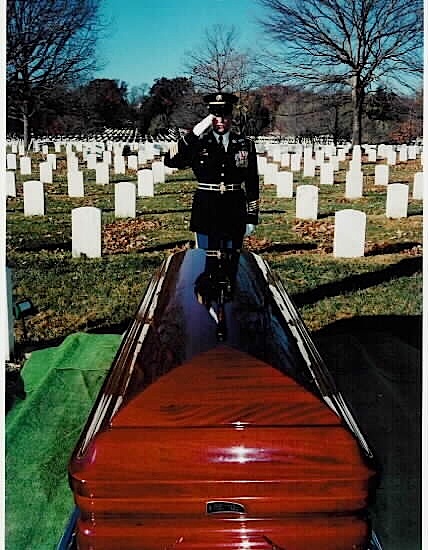
The lines of white marble dominoes marched across the low, rolling hills in stately geometric formation; ramrod-straight rows of stark headstones. They were interspersed with others that were only apparently scattered haphazardly on the leaf-covered lawn. Here and there the hoary oaks stood silent guard, stoically raising their naked branches into the cold, lead colored sky of Arlington National Cemetery.
Martha Brent, formerly Martha Devine, formerly Martha Borden, stood next to me on the threadbare green outdoor carpet. She was staring silently at the polished walnut casket that contained all that remained of a man who had controlled my life for over sixty years. Martha was a little older than I remembered, a little grayer, a little more somber. She looked a lot like I remembered her father.
All the girlish rebelliousness that had been her defining characteristic when I first met her was gone now, replaced by the simple, naked grief of a middle-aged daughter, newly orphaned. A black straw hat shadowed her face, casting a dark crescent on the front of her crisp, black smock, emphasizing the bulge of new life within her. I knew that she was uncomfortably old to be bearing another child, but she and Michael had been trying so long that it seemed to me that she deserved her chance at becoming a mother of a little girl.
"I can't believe he's gone, Matt," she sniffed. "I know it's corny, but I just can't believe it. It's worse than when Mom died! He's always been there, always! What are we going to do now?"
I was a question that had been bothering me, too. Mac had always been, well, Mac, a gray man in a gray suit in a gray office in a gray world. He had seen me through a war, a failed marriage, and the deaths of too many people in my life to count, including that of my oldest son. I knew he was older than any of us who worked for him, but the fact that he kept on living and working while we kept on dying made him seem somehow immortal. A world without Mac? I knew there had once been one, at least for me, but I couldn't remember it at all!
"I don't know," I said. "I'm having trouble believing it myself."
"He'll never see his granddaughter," Martha continued. "He was so excited about it. I think it's what kept him alive, toward the end. Now they'll never know each other!"
"It's not the end of the world, honey," Michael interrupted, putting his arm around her. "At least she'll have a good one to grow up in. It might have been very different, had it not been for her grandfather. Some day we'll be able to tell her that. She'll be proud! Those guys saved the world!"
He was right, I reflected. Mac had been the head of a government organization that didn't officially exist, even though I had been an unofficial member of it for almost all my adult life. Since it doesn't exist, it doesn't have a mission or purpose, but those of us who weren't officially members of it were in the business of getting rid of people who were just too dangerous to have around. The few times when we had to refer to our job, we called it "counter assassination," the process of taking out people who took out ours. When the FBI or CIA or other federal agencies found they were losing people for apparently sinister reasons, they called on Mac and he assigned one of us to the case. Off the record we were also in the business, perhaps the main business, of getting rid of people simply because they needed getting rid of. Sometimes, preferably, we did it even before they got rid of ours. Counter assassination was at least tolerated in higher levels of government, while assassination, simply taking someone out who needs taking out, is definitely frowned upon as un-American. The People still seem to think that it is better to kill someone after he has killed or raped or tortured or crippled someone else rather than instead of. It's a theory I have never been able to understand.
Michael turned to me. "He left something for you, Matt," he said, pulling an envelope from his coat. I know what's in the will, but I don't know what else is in there. Whatever it is, you know you can count on both of us. Don't hesitate to ask."
I straightened up, putting my weight on both legs, hooked the cane I had been using to steady myself over my left arm, and tore the envelope open. Inside were three pieces of paper.
Last Will and Testament
of
Arthur Macgillivray Borden
I, Arthur Macgillivray Borden, being an adult resident citizen of the City of Washington, District of Columbia, over the age of eighteen years and of sound and disposing mind and memory, do hereby make, declare, and publish this to be my Last Will and Testament, any and all Wills or Codicils made by me as well as any document being presented as same being hereby revoked.
I. I do hereby nominate and appoint my daughter, Martha Borden Brent, to act as Executrix and to serve without fee or bond and without the necessity of inventory or appraisal. I direct my Executrix to pay all my funeral expenses in full through my estate. In the event other lawful debts exist, I direct my Executrix to pay such debts through my estate as provided by law.
II. I hereby give, devise and bequeath to my daughter, Martha Borden Brent, all the property of my estate, real, personal and mixed, including but not limited to any bank accounts, negotiable instruments and other personal property, whether tangible or intangible, including the proceeds of any life or accident insurance policy or any debt owing to me that may become an asset of my estate, except as otherwise provided for below.
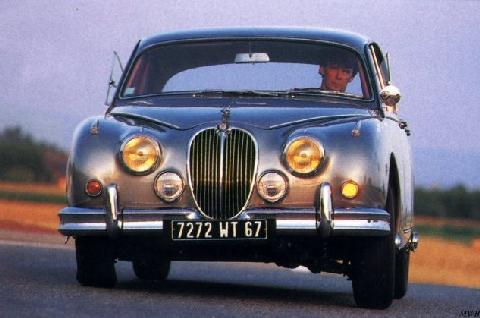
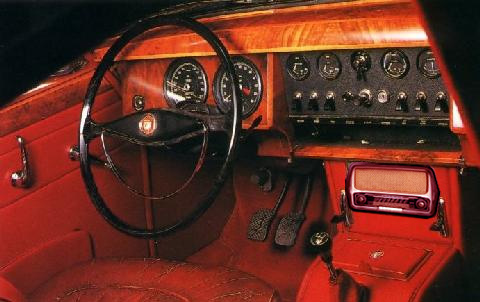
III. To my best friend and faithful employee, Matthew Helm, I give, devise and bequeath my 1962 Jaguar Mark II sedan and my M1 carbine, serial number 127465. I know he will derive as much pleasure as I did from the former and will treat the latter with the respect it deserves, in spite of his prejudice against it.
IV. Upon my passing, I desire that anyone who wishes to donate any contribution to my memory to make such donation to the Christian Children's Fund, Inc., of Richmond, Virginia.
V. I have endeavored during my lifetime to be a responsible citizen, a stalwart soldier, a valued public servant, a devoted husband, a loving father, and a faithful Christian, and to the extent I have failed in any of these things, I ask pardon. I should like to be remembered as a disciple of Jesus Christ who traveled light, stayed only where he was welcome, and ate what was set before him. Finally, I commend my spirit unto the loving and merciful care of Almighty God, whom it has been my honor and privilege to serve in this mortal life, in the sure and certain hope of the resurrection unto eternal life through our Lord and Savior Jesus Christ, at whose glorious coming to judge mankind, the sea shall yield up her dead, and the earth her burdens, in the world to come.
Farewell.
IN WITNESS WHEREOF, I do hereby sign, publish and declare this to be my Last Will and Testament consisting of 2 pages including the Attestation of the persons in the presence of whom it was witnessed at my request on this, the 3rd day of July, 2004.
Arthur Macgillivray Borden
"Holy cow!" I said. "He left me the Bradley Rifle! Martha, you should have this. I mean, it's really, seriously valuable!..."
"No, Matt," she interrupted, "I know he wanted you to have it, but I don't know any more about it than that. What do Michael or I know about firearms?"
I happened to know that Michael knew a good deal more about firearms than the average person, but if Martha chose to ignore it, I wasn't going to press the matter.
"But you could give it to a museum..."
"Matt, if you want it in a museum, give it to one," she responded.
"What's a Bradley Rifle?" Michael wanted to know. "Who's Bradley?"
"General Omar Bradley," I answered. "It's an M1 carbine, Mac's most prized possession. Bradley, Eisenhower and Churchill test fired three of the brand new ones when they were first issued to the Normandy Invasion troops. Nobody knows who fired which, but Ike gave one of them to General Bradley. Bradley gave it to Mac after the war. He said Mac had earned the right to have it, even if he hadn't been anyplace where he could have used it. It's a platoon leader's weapon. It's just a glorified pistol, really, but it's historically priceless. Mac considered it a small rifle, like the 'Bradley squad.' The mechanized infantry squad in the Bradley Fighting Vehicle has fewer soldiers than a conventional squad due to the limited space for them. He said that any long gun fired by Ike, Bradley or Churchill deserved to be called a rifle regardless of its size or caliber. I didn't agree, but we ended up referring to this particular weapon as the 'Bradley Rifle.' I can't believe he'd give it to me."
"Well, we all know he thought a lot of you," Michael declared. "I'd consider the intent. Who better than you?" He patted Martha's arm. "Certainly not us pacifists."
I read the other page.
Eric,
If you have received this letter, circumstances have prevented me from saying goodbye in person and telling you how much I have valued our association and friendship over the years.
I count it a singular blessing of my life to have had the opportunity to work with you and share with you the task of protecting our great Country from the threats we have encountered together. I agree with President Calvin Coolidge, that to live under the American Constitution is the greatest political privilege that was ever accorded to the human race. I am proud and honored to have served with you to provide that privilege to future generations of Americans. I believe that one serves his Creator best by serving his fellow man. I like to think that we have shared in that service.
Presently you will be introduced to a gentleman to whom I have recommended you. I suspect that he will make you an offer that you may find difficult to refuse. Please be assured of my absolute faith and trust in you, and my utmost confidence that you and the United States will do well for you to accept his offer. I have informed him that you and I have different ways of doing things, but that yours will be as good as, or perhaps better than, mine. When you're in command, command.
It is a sad fact of life that all good things must come to an end. The best thing that has happened to me in my life is to have been your friend and fellow soldier these many years.
Mac.
I folded the three pages neatly along their original creases and put them back in the envelope and stuck it in my coat pocket. I hadn't ever thought of Mac as a religious man, especially considering the business we were both in, and his references to "religion" and "blessing" had me badly rattled. Mac a disciple of Jesus Christ? How often had I blasphemed in front of him? And other things, too! And yet he had called me his "best friend!" I was suddenly ashamed!
My real name is Matthew Helm, just as his was Arthur Borden, but my code name when working for him was Eric. His had always been Mac. I found out his real name by accident. Longer ago than I cared to think about, I once had occasion to trace the ownership of the sporty British car that was now mine. I guess he had thought of me, even when facing his own death, as Eric, or maybe this was his way of letting me know I was still working for him in some mysterious way. He had always had an oblique way of getting to the point. I did think of myself as his friend. Not necessarily his best friend, but we had definitely been friends, in spite of the fact that friends in our business are a definite liability.
As if reading my mind, Martha said, "He did consider you his best friend, Matt. He didn't have many, you know, just you and Hank Priest, and he didn't have Uncle Hank after, after..."
"After I killed him," I completed the thought for her.
"Yes, after you killed him. It was a great loss to him, I know; he and Uncle Hank had been buddies for a very long time. I know for a fact that he realized that it had to be done. He was, well, kind of -- kind of grateful to you for doing it; so he didn't have to. That may have been the greatest thing you ever did for him."
"Hell of a world," I said, putting my weight back on my cane. My leg still hurt from my most recent injury.
"Yeah," Martha stared down at the casket, "Hell of a world. But it could be a lot worse. It would have been a lot worse without him and you, Matt, and all the other people who work for him."
"Worked. With Mac gone, we're all out of a job."
"Oh, no, Matt! Nobody except us knows. Well, a few, perhaps. But he left strict instructions. No one who doesn't absolutely need to know is to be told of his death until after his successor is appointed. Can you imagine what some people would do if they knew he was gone?"
"So we're back to the old 'need to know,'" I said. "Well, that explains the lack of mourners. Who's supposed to be in the box?"
"My cousin, once removed, I think," Michael volunteered. "Dear, departed Sergeant what's-his-name. No family other than me and Martha. Mac wouldn't have known him. I never met him, supposedly. Poor fellow died in Iraq a few days back. Fell off a truck, I'm told. No medals, no salutes, no visitors with scrambled eggs or gold braid. No government dignitaries. Just a Government Issue casket for an old soldier. You guys can manufacture a fictitious dead Army sergeant, can't you?"
"I suppose so, " I told him, "I don't know for certain. I've always been in the disposal end of the business. Right now I'm on leave from almost getting disposed of myself."
"Well, I'm glad you're here," Martha said, "It means a lot to me."
"To both of us," Michael added. What are you going to do now?"
"I've got two more weeks of convalescent leave," I said, transferring the cane to my right hand from my left, which had fallen asleep. "After that I'm supposed to go back to the Ranch for some therapy of some kind, assuming that it will still be there and that I'll still have patient privileges. Ma -- I mean, whoever's running things, knows where to find me. I generally don't plan beyond the current assignment."
It suddenly occurred to me that with Mac gone I was probably going to have to learn to make longer range plans than going back for further treatment to the Arizona safe haven we call "the Ranch." I wasn't sure that I knew how to do that after all these years of his devious machinations. Life was going to get a lot simpler, but in some ways it was going to get a lot more complex. There might be some kind of course I could take in how to be a normal citizen. I'd probably have to start at grade school level and work my way up, possibly with a tutor of some kind....
"Maybe I should retire!" The words just popped out.
"Retire?" Michael and Martha echoed each other. "Matt," Martha continued," how can you even think of such a thing! What would you do?"
"I don't know," I said. "I was a pretty fair writer and photographer once. I even had a few assignments using that profession as cover. I could do it again. Probably better, now that I've had all these interesting, noteworthy experiences, courtesy of your dad. Besides, writing articles and taking pictures is probably more my speed nowadays. I'm getting too old for all this secret agent stuff." I was getting too old, I reflected. If my latest injury was any indication, I'd better be more careful if I expected to get much older.
"Well, you can always count on us," Martha patted my arm as she and Michael turned away toward the blue sedan parked next to the paved path. "You know all you have to do is ask, Matt. We owe you a lot."
"Especially me," Michael said. "If it hadn't been for you, we'd have never met. You know you're always welcome at our house, Matt. Any time."
"I'll keep that in mind," I said, sliding painfully into my rental import with the automatic transmission that allowed me to drive in spite of my banged up left leg. "Right now I'm going back to my room and soak this bum leg of mine in a nice hot bath. I'll be in touch before I leave."
"I'll call Nigel about the Jag," Martha called. Let me know when you would like to pick it up. He'll have it ready."
"It may have to wait," I explained, getting myself settled in the too small seat." I won't be able to drive a car with a clutch for a while yet."
"Well, let us know before you leave town," Martha continued. "We'll want to say goodbye."
I waved as a reply and started the quiet little engine that came to life with a muted purr. There is something to be said about fuel injection, that's for sure. I don't ordinarily like Japanese cars, especially ones that shift for themselves, but I had to admit that this little beast was OK for a guy with a gimpy leg, even if it was a little cramped for a gent my six foot four size. As I drove away, the rows of headstones seemed to be realigning themselves, for me, almost like they were marching, passing in review. I figured I must be a little bit in shock. Mac dead! Religious assassination agency chiefs! Self-shifting cars! Marching gravestones seemed to fit right in!
Chapter 2
I had just finished filling my hotel room bathtub with moderately hot water when the telephone rang. Normally I'm an in and out shower man. In a profession with the life expectancy ours has, one doesn't waste a lot of time just getting clean. However, my bad leg had been bothering me. I found that soaking it in steamy hot water eased the pain and made it easier to walk for the exercise, which the attending physicians at Bethesda Naval Medical Center thought was a good idea.
Normally we're treated for minor wounds received in the line of duty at any local facility that has the resources. I had initially been taken to a very efficient hospital in Beaufort, North Carolina. My injury had involved a bullet wound with some nasty complications. In the short time I was there before being whisked away quietly to Washington, my treatment records had kind of gotten lost. Mac prefers -- preferred -- to have such injuries treated where the hospital staff didn't feel any remorse or potential liability for not complying with the new reporting protocols. These require them to turn over patients' personal medical records regarding bullet holes to the snoopy local police. We don't always feel the cops need to know about our business, such as it is. Besides, I wasn't that far away from Washington when I'd gotten hurt, and the military doctors are the world's best at treating combat injuries, which mine usually are.
The real problem with being wounded in our line of work is that it gives the other side a powerful incentive to try to take us out while we're less able to stop them from doing that. That's the other reason for treating us at a government, and preferably military, facility. The physical security there can be as tight as it needs to be. We're also looked in upon from time to time by new recruits whom we haven't had a chance to know and who haven't yet acquired too many skills beyond bodyguard. Mac likes -- liked -- to let the newbies see what happens to agents who are a little slow on the trigger or manage to get themselves in the wrong place at the wrong time. It tends to discourage some and make the others a bit more cautious. We usually don't get to know them. The less the washouts know about us the better. The ones who go on to become agents sometimes get new identities that make it dangerous for former casual contacts to know the old ones. I found that out the hard way, when I left Mac's organization briefly after the War.
In my case, I had a little extra advantage in the shiny new cane I carried. It looked like a normal, if slightly heavy, aluminum cane with a soft plastic handle containing a clever little compartment for pills and an elongated, rubber covered foot. The "aluminum" was in fact brushed stainless steel. In addition, it had eighteen inches of lead in the bottom end. It not only made it a genuine physical therapy device (with a written prescription, in case anyone asked), but also a very effective club. The handle provided a lot of leverage and control if I wanted to jab with it, and the rubber foot could be pulled off to expose about four inches of 7/32nd inch diameter tool steel rod. Used this way, it had almost the striking power of a bullet. I had reason to know that from my combat training in kindo, which is normally performed with a wooden pole, the jodo, about the same size. Normally, I prefer a rifle, but a kindo stick is much better than nothing, and it was more than capable of breaking any bone in the human body, except for the femur, and possibly the pelvis, which are pretty well padded in most people. This one could poke .22 caliber holes, as well.
Getting an unexpected telephone call in my rented room involved certain considerations other people normally don't have to live with. Unlike the way we're portrayed in the movies, our identity isn't secret at all; most of the opposition knows me better than my own mother would, if she were still alive. Hopefully, they know it's not wise to mess with us without a really good reason. The rule is that we take out at least one of theirs for losing one of ours. Most of us like to make the ratio significantly better than that. So far, we've done pretty well in that respect. We go about our private lives with the assumption that, in addition to our own bodyguards, we are being watched over by people on the other side. They make it their business to know where we are when we don't have a good reason for keeping them from knowing that. We're not always being watched and our telephones aren't always bugged, and unknown callers aren't always up to no good, but that's usually the smart way to bet.
I didn't think I had ever heard the flat, expressionless voice on the telephone before, but I'm not an expert on voice recognition, especially on a landline phone. The fact that I was receiving any kind of call was a little unusual. Few people knew I was here and only a few of those had anything to talk to me about, or so I assumed. The baby-sitters usually just show up. This guy seemed to know who I was, though, which gave him an advantage.
"Mr. Helm," he began, after I admitted who I was, "My name is Carl Morgan. I represent the Royal and Sun Alliance Companies in Bridgeport, Connecticut. I have an insurance check for your boat, but I need to tie up a few loose ends before I can give it to you. I'm in town for the day; could I see you for a few minutes at your convenience?"
"I have a few errands to run this afternoon," I said. "It looks like it's going to be a Texas-sized rain later on. I'd like to get them done before then. I can meet you this evening, though."
"Yeah." He hesitated just a moment, "I was going fishing this afternoon, but I didn't feel like getting drenched. This evening will be fine. Would seven o'clock at your hotel room be convenient?"
"That'll be fine," I assured him.
"OK, then, I'll see you then. It's been nice talking to you, Mr. Helm." He hung up.
Well, it looked like I was still employed after all, at least for the moment. "Carl Morgan," which was almost certainly not his real name, had just informed me that he was another government agent who probably had nothing to do with the Royal and Sun Alliance Companies, even if there were any. He probably didn't have a check for my boat, either. Officially, the Lorelei III, a twelve ton ketch rigged motor sailor of recent Finnish vintage, had belonged to me, and I had all the necessary papers to prove it. It was a hell of a boat for a transplanted desert-loving Swede like me. I also had an official US Coast Guard report that little Lorelei had sunk off the North Carolina Coast in six hundred feet of water. If anybody wanted to send a robot operated vehicle or whatever those deep-sea camera things are called down there, he would find her resting quietly on the muddy bottom. Her hull was smashed in from her collision with a big sports fisherman, Gulf Streamer, if it matters, which had also met its watery demise and was probably lying not too far away.
On closer inspection, the robot camera might find a number of ugly bullet holes that would be difficult to explain. It also had a smashed cabin door that had been held permanently shut with a number of very substantial brass wood screws. They had been installed by a gentleman whom I had later donated to the sharks, along with his buddies on Gulf Streamer. I didn't think that anyone would do that much investigating, especially in such deep water. Anyway, no real insurance company was going to be interested because the boat had been purchased with untraceable government funds. The last thing said government would have wanted was to have filed any insurance claims. We prefer to let sleeping dogs, and sunken boats, lie.
"Carl Morgan" had given me the code words involving sun and Connecticut. I had answered with the correct remark involving rain and Texas. The previous countersign had been compromised, so we changed the countersign but not the sign. Had I responded with something about fog in Maine, the previous correct response, "Carl Morgan" would have been warned to assign a couple more agents to me. They would have wanted to find out just who I really was and why I was using a compromised recognition code. Sometimes the responder is simply behind the times, but we occasionally catch a ringer that way. It usually turns out to be very bad for the ringer. Of course, he might not have been who he claimed to be; there was no way for me to know that he knew my response was the correct one. But he had replied correctly to my remark about meat in the evening, even though I had thrown him a curve, perhaps a little more pronounced than the one he had thrown me. He had remarked about fish in the afternoon (eggs in the morning and potatoes at night would have worked, too). I figured tentatively that he was not who he claimed to be, but that I knew basically who, or at least what, he actually was.
Not that I was going to bet my life on it, of course; these silly codes are far from foolproof. The exchange had told me a lot, though. I would accept as a working hypothesis, for the time being anyway, that I was being contacted by an operative from a different agency for reasons yet to be determined. Like I said, "tentatively."
He arrived right on the dot, which earned him a couple of points. In our business seven o'clock means within 29 seconds either way, not some other time. He didn't look much like an insurance agent, unless insurance agents work out a lot and have exceptionally good reflexes and very cold eyes. His handshake was firm without the crush one usually gets from guys as fit as he was. This guy obviously didn't think he had to prove anything to me, handshake-wise. He carried a large briefcase, almost a suitcase, of expensive looking burgundy colored leather in his left hand. As soon as I closed the door, he opened it and took out a tan windbreaker that just happened to be, surprise, surprise, my exact size.
"I didn't know if you had one of these," he began as he selected one of the polished wooden coat hangers with the little chromed knob and hung the jacket and hanger on its matching ring in the closet. "There's a radio velcroed into the right breast pocket. The earpiece is in a little pocket in the collar. Leave the whole thing alone until you're inside the pickup vehicle, then insert the earpiece and flick the little switch toward you. If the green light comes on, you're set. Just leave it on. If you wonder if everything's working, flick the switch the other way. The yellow light will come on and you'll hear an echo of everything going on around you in the earpiece. That means you're receiving and sending OK. The switch that way is spring loaded to return to off, so you'll have to turn it on again. It's best to just leave it on and forget about it. Uh, you've got prescription sunglasses, haven't you?"
"Yes."
"Good; wear those," he continued. "We want you to blend in. We'll pick you up outside tomorrow at 11:10. Wear matching slacks and a sport shirt, not too gaudy. The cab driver will be a little bit back of the cab lane cleaning bird crap off his windshield. When you come out, look around a bit, walk over to him and say, 'They ought to do something about these pigeons.' He'll say, 'Yeah, but then the tourists will have to throw popcorn to the politicians. Nobody likes fat politicians.' Then just get in and relax; he'll take it from there."
"What if I don't want to go?" I asked.
"Oh, sorry," he said, closing the closet and stepping back toward the door. "I'm getting ahead of myself." You have an interview tomorrow at 11:30. I can't tell you where, 'cause I don't know. I'd advise you to eat a late breakfast though; you may not get lunch. Once you get in the cab, stick the earpiece in your ear and someone will tell you what to do if anything unexpected happens. The guy at the other end can hear everything you can. You can talk to him if you like, but usually he doesn't say much; it's his job to listen and tell other people if need be, not necessarily to talk to you."
"Perhaps I didn't make myself clear," I repeated. "What if I don't want to go? I don't have any interviews planned."
"Well, for the record you're going bike riding. Supposedly it'll be a perfect day for it. You can ride a bike, can't you?"
"Not with this leg," I assured him.
He was instantly alert, like a cat watching a mouse crawl out of a hole in the woodwork. "What? What's wrong with your leg?"
"It's my hip," I told him. I broke it. I can walk, after a fashion, but I'm kind of wobbly and I can't push down with it. I don't think I can ride a bike."
"Oh, shit!" He exclaimed. "I was told you got shot! Broke a rib and punctured a lung, but that was pretty much all healed up." He looked at me accusingly, as if it was my fault I busted my hip, which maybe it was."
"Don't blame me," I told him. "It was an accident. I was walking out of the Naval Center and missed a step and just fell over. I heard the bone crack, kind of like a piece of wood breaking. They put a pin in it at Bethesda. I was laid up for two weeks and used a crutch for about six. Now I have a cane. I can walk without it, if I have to, but not very far and I hope I don't have to."
The last part was true enough, but I had fibbed about the first part. Well, just a little. The Navy doctors and nurses had wanted me to ride out in a wheelchair and I had told them I didn't feel like being treated like an invalid. Hell, I'd been wounded worse lot of times. Besides, like the man said, I was all healed up. They had insisted and we both got huffy and I had literally stomped out the door, and...well, as I said, I had missed a step.
"Well, we'll just have to work around it," he mused. "It's too late to change now. Just stick to the plan and we'll take care of everything." He didn't look as confident as he might have, I thought, especially since "everything" covers an awful lot of stuff.
"You still haven't answered my question," I prompted. I don't know about any interview."
He opened the door and gave me a worried grin, the first time I had seen him show any expression.
"You do now," he declared.
I watched him walk quickly down the corridor and around the corner to the elevators after I checked the other way, as you learn to do, to make sure there wasn't anybody who might take advantage of my diverted attention. There wasn't. "Carl Morgan" was awfully sure of himself. That wasn't necessarily bad, but it wasn't necessarily good, either. He had clearly expected me to be fit enough to ride a bicycle. "Bike riding" didn't sound like it involved motorcycles. Normally in such situations, I called Mac for instructions, but Mac wasn't there; there wasn't anyone to call. We're on duty all the time, convalescent leave or no convalescent leave, so this could be just another bizarre assignment. The signs and countersigns had been correct, and the planned conversation with the cab driver sounded like something made up by the same person, or perhaps the same agency. I had no reason to be suspicious, but he still hadn't answered my question.
I closed and bolted the door to the hallway, opened the flimsy closet door, and stared at the windbreaker. It was a perfectly ordinary light jacket made of some slick, tough fabric that probably kept wind and rain out but let sweat moisture escape. The label read "Ultimate Defense Outerwear, Inc.," which probably meant "government issue." We're not the only agency with a limited budget. A little gray box, about the size of a deck of cards but half as thick, was where it was supposed to be. There was a little pocket in the collar that had a coiled cord attached to what looked like a flesh colored Walkman earphone. There was also a little hood that folded flat inside the jacket. I stuck the earphone in my ear and flipped the single switch. The green light came on.
"Testing, testing," I said.
"Not now, Mr. Helm," a voice uttered in my ear. "You'll wear down the batteries. Be a good boy and put the toy away until you get in the cab. Uh, I'm supposed to say 'please.' So please put the goddamn toy away until you get in the fucking cab!"
I turned the thing off and the tiny green light went out. After all, he had said "please!"
The bath water had gotten cold. I let most of it out and filled it from the one-armed government mandated device that lets you select the temperature or the flow, but not both at the same time. I was just easing myself into the hot water when my cell phone began to chime.
I considered just letting it ring, but not answering it would probably have caused more trouble than I wanted. Junior agents are cautioned not to give their cell phone numbers to anybody who doesn't need to know them, so when they get a call, they know it's important. Senior agents are allowed a little more latitude, but we usually follow the same rule to preserve security and avoid having to change compromised numbers very often. Whoever was calling was probably somebody I would eventually wish I had talked to anyway; everyone seemed to know I was available. I heaved myself out of the tub (being extraordinarily careful I didn't slip and fall), wrapped the fluffy cotton bath towel around me. I hobbled into the adjoining room, and pulled the phone out of my pants pocket. Unlike "Carl Morgan," this voice had plenty of emotion!"
"Matt, this is Michael," he began as soon as I flipped it open. "Look, Martha's gone into labor! She's a month early, and, well, you understand. I'm going to be preoccupied for the foreseeable future. I wanted to let you know in case you called and I was out. Martha wanted me to tell you that your Jag is at that Jaguar and Land Rover place at Leesburg Pike and Spring Hill Road, just off the Dulles Airport Access Road. You can't miss it. The place looks like the parking lot at the Ascot Races. Brit cars all over! Ask for Nigel. Matt, I'm really sorry...." he seemed to wind down.
"That's OK," I tried to reassure him. "Don't worry about it. And don't worry about Martha, either. One month premature isn't too bad and Martha comes from good stock. The first one is often early. You all will do fine! Give Martha my best."
"Thanks, Matt," he sounded relieved. "I'll give you a call." He hung up, obviously out of things to say.
About the only nice thing to be said about cell phones, in my opinion, is that they allow people to keep in touch without leaving forwarding numbers. When I'm President, they aren't going to be allowed to make noise unless they're connected to a charger. I hate having to listen to "The 1812 Overture" or the theme from "Star Wars" when I'm watching a movie or sitting in a restaurant where I'm expecting civilized, respectful quiet. Michael and Martha had my number and could reach me anywhere in the US, probably anywhere in the world, and just possibly on the International Space Station. I wasn't worried about losing track of just about the only family I had.
I decided I could take my soothing bath in the morning and that my early generous dinner would last until then. I took a couple of extra strength aspirin tablets and went to bed. The last thing I remember before falling asleep was that it was too bad Mac hadn't been able to last another week to see his only grandchild.
Chapter 3
After a hearty breakfast, which I planned to last most, if not all, of the day, I was feeling contented and mellow as I stepped onto the bustling sidewalk in front of the ornate building. Most of the hotels in the city cater to tourists and people on expense accounts. They charge extra for amenities like drawing cutsey initials in the sand in the cigarette butt receptacles next to the elevators or artistically folding the ends of the toilet paper in the bathrooms. They also have doormen who expect a tip for waving at a taxicab for you even if it's parked at the curb with the motor running. I don't smoke, fold my own toilet paper, and don't have any problem getting a cab. I stay at places where all they charge for is a nice clean bedroom and bathroom and a restaurant with good food. There are also a number of lodgings in the District that provide female (or male) companionship for an extra fee, but I don't stay at those, either.
The sidewalk was crammed with small, black- or gray-haired Asian people liberally festooned with complicated photographic equipment. As a professional photographer, I long ago learned that a still photographer rarely needs more than one good camera unless he's taking both monochrome and color photographs. Tourists seem to need several different kinds, perhaps in case one or more of them doesn't work the way they expect. Nowadays, of course, most people have digital cameras, but professional photographers prefer real film that still has considerably higher resolution and isn't as likely to get accidentally erased. These people were snapping everything in sight, including me, which raised my situational awareness level to full active mode and tracking. Normally we don't like to be photographed, especially by strangers. Getting one's attention diverted by someone taking his picture has been known to distract him from some other person sneaking up to do him no good. Fortunately, I didn't have any difficulty looking over the top of them and finding my taxicab right where it was supposed to be.
The guy working industriously at the smeared white blotch on the left windshield was a small, dark, wrinkled gentleman with a short, neatly trimmed black mustache. A single bushy black eyebrow went unbroken from one side of his forehead to the other. He was wearing what looked like an unseasonably heavy jacket and a white brimless lace or crocheted cap that reminded me of the lace doilies favored by my grandmother. The vehicle itself was an elderly light gray luxury sedan that had seen a lot of better days, in that stretched body style that I believe is known as an executive limousine.
I wasn't consciously counting the dozens of heads around me, but I was instantly aware when one of them disappeared, accompanied by a loud screech! The head in question was one of the grayer ones, and belonged to what appeared to be a short, elderly lady wearing a dark print dress in some kind of floral pattern and a light blue button down sweater. She was temporarily leashed to a well-muscled, dark young man by what appeared to be camera and purse straps. As the crowd parted, I got a more informative view. The burly, caramel colored kid was bare to the waist, and was wearing a raggedy pair of weather-beaten denim long shorts or short pants, take your pick. They covered him from low on his butt to just below his knees. The low slung pants exposed about four inches of his butt crack, excuse me, "gluteal furrow." I briefly wondered how he kept his pants on. His otherwise bare feet were stuffed into huge, complicated, blue canvas monstrosities with untied floppy white laces. I think they are commonly referred to as "running shoes," although I've never seen such heavy accessories on a real runner. His long hair was matted and tangled, a dirty, untidy mess that, to my probably prejudiced eye, gave him a wild and dangerous look.
It took him about a second to wrench the purse and camera paraphernalia free, which sent the old lady sprawling. He turned and sprinted headlong toward me with his booty, as the crowd scurried to get out of his way. If he had been a smaller kid, I might have just stepped aside to let him by. This guy was about 250 pounds of determined wild animal charging toward me at about 15 miles per hour. The decision just kind of made itself.
I threw up my left hand, ostensibly to protect myself, but actually to cover my face from the forest of cameras that were already panning toward me. With my right hand, I swung the heavy cane in a low, underhanded jabbing kindo arc. It caught the left shinbone of the fleeing kid just as his right foot struck the ground, adding the momentum of his left leg to that of the heavy steel pipe. He screamed as the bone snapped and tried reflexively to bring his left knee upward to ease the pressure. By that time I had gotten the end of the cane behind his right knee, holding his left leg down and throwing his weight to the left. The broken lower half of his leg flopped sickeningly forward as the kid lost his balance and plunged face first onto the sidewalk, knocking him out cold. He skidded headfirst into the sturdy steel pole supporting the "taxi stand" sign with a resounding thud. His face left a bloody wet trail two feet long on the rough concrete, while his right fist was still tightly closed on the leather purse and camera case straps.
The taxi driver moved pretty fast for an old fellow. He tossed the cloth and a bottle of something he was using on the windshield through the driver's side window and into the back seat. He was starting around the front of the cab as I purposefully stepped over the unconscious kid and opened the right rear door. Seeing that I was getting in under my own steam, he did a neat pivot and, without losing momentum, threw open his door and swung inside. The engine started instantly. In less time than it takes to tell, we were lost in the DC traffic.
"That was a stupid thing to do, Mr. Helm," he grumbled.
"Crap!" I replied as I stuck the earphone in my ear and flicked the switch on the little radio and checked that the little green light was on. "You saw what happened! I was just defending myself. He had already knocked the old lady down. Was I supposed to assume he'd stop for an old guy with a cane?"
"You could have just stepped back out of his way!"
"I could have done a lot of things. I could have stepped backward and lost my balance and it could be me lying on the sidewalk with a broken leg instead of him. It's happened, you know. Not too damned long ago, either! I could have done nothing and let the sonofabitch run over me! I could have stayed inside my room so I wouldn't have to deal with petty terrorists who prey on elderly people and tourists. I could have moved to the Vatican where they only attack the Pope. I could have decided that this world is just too dangerous to live in and left the building from the roof instead of the main entrance. Unfortunately for him, I didn't plan to do any of those things. What I planned to do, what I intended to do, was just to walk quietly across a nice, nonviolent sidewalk in the peaceful, tranquil capital city of my law abiding country! I wanted to get into a secure, inoffensive cab, minding my own, personal, private business all along the way, pretty much as that old lady was doing. We both had a perfect legal and moral right to do just that! That kid back there wanted us to do other things! Too bad for him!"
"But you could have killed him!"
"You say it like it's a bad thing," I retorted. "He's damned lucky I didn't, too. I had the choice of letting him victimize an old lady or stopping him from getting away with it. I wouldn't have had to choose either of those undesirable alternatives if he had been minding his own business as she and I were doing. When someone forces me to sacrifice my or somebody else's civil rights to avoid hurting, or possibly killing him otherwise, he's gambling that I'll think his safety is more important. I don't happen to think that it is."
"That's a pretty cynical attitude."
"I'm a pretty cynical guy! I agree with Lucas McCain, the 'Rifleman;' 'I'm a peaceable, law-abiding citizen. I think everybody should be peaceable and law abiding, and there ain't nuthin' more peaceable and law abiding than a corpse.' If the kid wants to live a nice, long, healthy life, he can either obey our laws or leave. I understand they tolerate that kind of behavior in the Sudan, not here."
"So the problem is that he's black!"
"No, the problem is that the environment he comes from tolerates petty sociopathic thieves and bullies. It uses being black as an excuse, even though he's obviously partly white. He'd probably be shocked at the idea that his ancestors included slave owners as well as slaves. Being black has nothing to do with not knowing how to dress himself or getting a haircut or washing it occasionally or getting a decent education or working at a responsible job!"
"Maybe he can't find a job," he interrupted.
"Then he needs to look harder," I objected heatedly. "It's not like he doesn't have the time! He's had the benefits of American free education and American libraries and American educational television and other American educational opportunities all his American life; if he can't find a job with all that going for him, it's his own damned fault! Illegal aliens who don't even have enough education to speak our language risk their lives daily to come here; they don't seem to have trouble finding work! Not one of them has the opportunities he's had. He obviously thinks it's cool to run around half naked in public with filthy hair and his butt hanging out, working as hard as he can to offend the establishment that supports him with opportunities he just throws away. None of that has a thing to do with whatever 'being black' means. If he worked that much at bettering himself, he'd be something more than the worthless shit that he is! But self appointed black social workers and nominally black politicians and so-called black entertainers have filled his head with a lot of crap about black people not being good enough to get a job. So he steals purses from defenseless little old ladies and runs down crippled old men because he's an 'African American' instead of an American American like Colin Powell or Condoleeza Rice or Clarence Thomas, or you, for that matter, citizens who come in all colors. And it wouldn't surprise me in the least if our benevolent government had convinced him that he doesn't have to work for a living because he's black and every person he knows personally on welfare is black too..."
"You shouldn't judge a man by the color of his skin," the driver insisted.
"I'm not judging him," I argued. "You're the one who's throwing around words like 'stupid' and 'cynical.' I don't give a damn about his color, either. If my relatives and friends had convinced me that I didn't have to take responsibility for my actions or go to school or work for a living or conform to social customs because all my problems were whitey's fault, I'd probably be knocking over undersized, elderly tourists too. Malcolm X and his followers were just as black and just as human as anyone else. They proved that black people can be civilized, respected citizens. Look what happened to him! There are unpleasant consequences to a life of crime. Blaming them on being black doesn't make them a bit less unpleasant!"
You sound like a racist, Mr. Helm!"
"Hell, friend, I am a racist! I'm a member of the human race, and it's the best one I know of. We've done some things that I'm not proud of, but all things considered, we're way ahead of whoever's in second place. And I take personal offense when a member of my race acts like a fucking animal! It gives the rest of us human beings a bad name. Look, I counted seven black people in the crowd, including you. I don't know how many yellow and brown ones, people just like us, going about their lawful business, not bothering anybody. Here you and I are, having a nice, friendly chat, human beings all. He's no less human than you or I. We'd all be better off if he'd start acting like it!"
"I am not a black man, Mr. Helm" he assured me. "My ancestors were from India and Pakistan."
"Well, you look pretty black to me," I countered. "Blacker than he is, at least. Not that it makes any difference. What do I care what color you are? Like I said, we're all equally human beings. By the way, where are we, anyway?"
"At the moment, Mr. Helm, we are on Highway 704. I have assumed that you are as unconcerned as I with that nonsense about birds and fat politicians. I prefer to make sure that we are not being followed by that green Land Rover three cars back now in the left lane. We shall shortly turn onto Landover Road and then the John Hanson highway. If he follows us around the interchange with Interstate 495, we shall have to do something about him."
"But I still don't know where we're going."
"Mr. Helm, in these unhappy times we are sometimes obliged to play games with the truth to avoid being trapped into the unfortunate necessity of telling a lie. That is sometimes inconvenient as well as immoral, and in some cases illegal as well. All I can tell you is that you have an appointment with a distinguished gentleman at the Patuxent Wildlife Research Center. You will no doubt recognize him when you see him, but I am instructed to tell you that the rules under which this meeting has been arranged require you not to use his name. You are also not to reveal his occupation, which you may already know. If you violate this rule, your interview will be immediately terminated and you will be taken back to your hotel. You may decide for yourself if that would be to your advantage. In any case, I think you might consider conducting yourself with somewhat more decorum and less drama, if I may be so bold."
"Distinguished gentleman. Right! We're going to go see Eddie Murphy!"
"As I told you, Mr. Helm, no names."
"Right. No names!"
We could probably have saved ourselves a little time by getting onto the Baltimore Washington Parkway a few minutes earlier. The green offroad vehicle passed us as we made the turn onto Landover Road and neither of us noted any other vehicles whose occupants seemed to be interested in us. We entered the Wildlife Refuge and stopped in a wooded area behind a convoy of shiny black vehicles, mostly SUV's, surrounded by stern looking gentlemen. They were all wearing dark glasses and dark suits. Each of them had a little earphone like mine. They didn't seem to be doing anything but standing around, but they were doing that with impressive intensity.
"You may leave your cane and your weapon here, Mr. Helm," the driver offered. "You won't need them. You'll be riding back with me."
"No, thanks," I told him. "I'm kind of shaky without the cane."
"Be shaky then." Those nice gentlemen in the dark suits won't let you take it past the second vehicle."
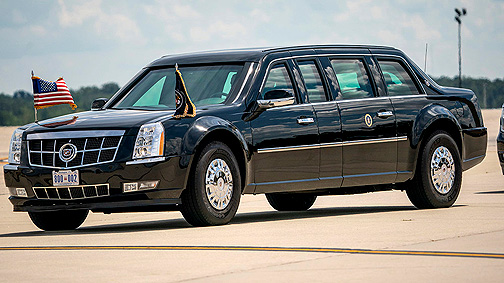
I left the cane in the rear seat and made my way painfully in the direction indicated by one of the "nice gentlemen," who at second glance didn't seem very nice at all! One of them even relieved me of my little radio, which had been of no use to anyone, as far as I could tell. At the head of the convoy was a black luxury limousine with a windshield so small I had to look twice at the grille and headlights to make sure it was the front window and not the rear. The glass in the windshield and windows looked several inches thick, concealing the features of the "distinguished gentleman" inside. The vehicle didn't display any flags, but it did have a little round emblem on the door with thirteen clouds and nine stars above the American eagle. One of the intense gentlemen looked me over with some kind of gadget that looked like a light amplifying device, but probably wasn't, as I passed the door of one of the bigger vehicles. Apparently satisfied, he ushered me toward the Caddy and opened the rear door.
"Good morning, Mr. Helm," the occupant greeted me cheerfully, handing a clipboard with some papers on it to my escort. He indicated a little gray upholstered stool that folded out from the front passenger's seat back to face him. "Have a seat."
I recognized him immediately, of course. It was kind of a shock. I knew he was young enough to be my son, but this was an old man, in spite of his boyish mannerisms. The wrinkles and lines on his otherwise smiling face were either covered by makeup or softened by the camera in pictures I had seen of him. I realized that he looked a lot like his mother.
"Good morning, Mr., er, Sir," I responded.
"I understand you had some excitement on your way here," he continued. "What happened?"
I told him.
"And did you think you were justified in taking the law into your own hands?" he asked.
"No, Sir," I answered. "I don't think I did that. I had just personally witnessed the commission of a felony, aggravated assault and battery. It was accompanied by a theft of items of unknown value and significance from a person unlikely to have been able to recover them on her own. The perpetrator was fleeing the scene of the crime. I stopped him from doing that, nothing more. As soon as he ceased his unlawful flight, I withdrew from the scene to let the local authorities uphold the law by apprehending the suspect, taking him into custody, and returning the stolen property to its rightful owner, if they chose to do all that, or not. They also had the option of arresting him or not and either holding him pending trial or releasing him on bail or on his own recognizance, uninfluenced by me, either way. Since they are unlikely to know who I am, it is probable that I will not be subpoenaed if they decide to prosecute him or otherwise bring him to justice. As far as 'justified' is concerned, I'm not sure what that word means. I believe I did the right thing."
"But surely you used excessive force?"
"No, Sir. I could have shouted at him or waved my arms or something, but I doubt very seriously if that would have stopped him. That is what I felt was the appropriate objective to be accomplished, given the situation. I don't know how much force might have been necessary, but I knew that what I did would do the trick, so I did it. I didn't have time to experiment."
"Now that you've had time to think about it, would you do it again?"
"Yes, Sir."
"That was a pretty quick answer, Mr. Helm."
"Sir, in my work, as you probably know, we learn to think pretty quickly or we don't last long. I've done things on the spur of the moment that, after reflection, I might have done differently, but I don't do them often. I try to learn from my mistakes. I'm getting better, I think. I stopped a person I knew to have committed a crime from benefiting from it. I probably saved an old Asian tourist lady from having to spend the rest of her vacation disgracing herself in her and her friends' eyes by borrowing money from them and possibly having to deal with Immigration about her lost passport and visa. I can't be certain about that, but as I say, I think I did the right thing. I'd do it again if the situation were the same."
"So your purpose was to prevent the victimization of an innocent person who had a reasonable expectation of safety as a person under the protection of the laws of our country, even if temporarily. You used only sufficient force to achieve that purpose against a person you knew to be an unjust aggressor."
"Just so, Sir."
He sat back a little in his seat and flashed his famous boyish grin. "It seems that we think pretty much alike, Mr. Helm."
"I take that as a complement, Mr. Pr... I mean, Sir."
He leaned forward. "I'll get right to the point," he said. "I want you to be the new director of your agency, to replace Mr. Borden. You'll be a 'Special Assistant to the President." You'll nominally be under the direction of the Chief of Staff, for budget and logistics and the like, but you can talk to me whenever you want, which shouldn't be too often. As you know, I'm not a fine tuner; that's why I have folks working for me instead of doing everything myself. I like to give my staff a free hand. If they screw up too much, I replace 'em. You would have to deal with the Cabinet, but Andy takes care of scheduling and protocol. You give me a verbal status report for about an hour every month, more if I ask for it or you think there's something I should know about but don't. Otherwise I leave you alone and you pick up where Mr. Borden left off. What do you say?"
I guess I should have been expecting it, given where I was and with whom I was talking, but I didn't. I was completely caught off guard. "That's a tall order," I told him. "I don't think I could do the job nearly as good as Mac. I'm not even sure I could do it well. I'm a good field agent, I think, but I'm not very good at administration."
"Of course you couldn't do the job as good as Mac," he said emphatically. "Nobody could! He's been in public service longer than my dad. Nobody's asking you to do the job as well as Mr. Borden could. I'm asking you do to it as well as you can."
"Buy why me?" I asked. "Surely you've got better administrators, better managers, people who are better politicians..."
"I don't need those folks for this job," he interrupted. "Who I need is someone who knows the business, can make decisions, gets things done, and has been around long enough to have survived enough mistakes to be able to teach other folks not to make 'em. Mr. Helm, we've faced a lot of enemies in the past. Nazis, Communists, megalomaniacal power seekers. Today we face international terrorism. You probably don't feel up to the task. I know how that feels; I wasn't ready for September 11th, either. It's a lot easier to let someone else make the tough decisions, even if he decides to order you on a suicide mission. But somebody has to make the tough decisions, Mr. Helm. It has to be somebody who knows what the options are, what the stakes are, and what terrible tragedy will befall this nation if he fails. We've got administrators and managers and politicians on the payroll, and we use 'em if we need 'em. For this job, we need a Mac. I haven't got a Mac. The best I have is an Eric."
"I don't know, " I hesitated, "I expected to retire. I'm pretty old, you know. I was in the Army before your dad joined the Navy."
"Old guys can do stuff too," he replied simply. "Mr. Helm, the enemies we have to defend ourselves against today are incredibly more dangerous than the Nazis or the Communists ever were. The Nazis were racial supremacists, but they had a sense of proportion, such as it was. The Communists were paranoid, but they were at least consistent in protecting their own interests. The people we face today are simply evil. They destroy, they corrupt, they torture, they murder innocent children. They even kill themselves and each other! They slink in the gutter and lurk in the shadows because they cannot stand the light of logic or reason or truth or justice. And because they are evil, all their efforts are directed against everything that mankind has tried to achieve in our struggle upward from savagery. They are against humanity, against us, the democracies, against our most basic values, our most fundamental strategic interests. They are absolutely dedicated toward destroying the very values on which democracy, in fact, any viable society, is based -- individual rights, equality under the law, freedom of thought and expression; freedom of religion. They are evil, Mr. Helm. Pure, unadulterated evil! We have to defeat them. We will defeat them! The only way they can possibly win is if we choose to let them."
"How much authority would I have?" I asked. "I never knew just how far Mac was allowed to go. Sometimes he could be pretty cagey, giving us instructions."
"A very astute observation, Mr. Helm," he observed. "The truth is, nobody knows. We are still a nation of laws after all; it's only in fiction that somebody gets a license to kill folks. Congress has passed so many vague, confusing, conflicting and obfuscatory laws recently. The only way I know to find out if we are complying with them is to assume that we are unless the Supreme Court tells me otherwise. Technically, we are at war with terrorism, a new kind of war, with precedents that haven't been established and tactics we haven't developed. There are lessons we haven't learned yet and mistakes we haven't made yet and disasters we'll just have to deal with as they come. I've got the military to deal with 'em in large numbers, and the FBI to catch 'em if they break our laws and the CIA to find out where they are what they're up to. I still need folks like you who can deal with 'em one by one, with the truly dangerous ones, who can follow them into their holes and make sure that if they run they'll only die tired and if they hide they'll only die scared. By law, whoever I think is a terrorist is the enemy. We are legally permitted to kill him, unless he voluntarily surrenders. We are not required to arrest him or arraign him or indict him or provide him with an attorney or free room and board and sex change surgery. He has no right whatever to free education and color television and video games and visits from his girl friends and free condoms and Viagra. We are supposed to give him an opportunity to surrender, but that is often inconvenient. So far most of the terrorists have accommodated us by fighting to the death or blowing themselves up, which is a preferable option as far as I'm concerned. But our rule of law makes us vulnerable, because the one thing that could cripple us and destroy our effectiveness against terrorists is for them to gain sympathy among ignorant people by pretending that they are misunderstood warriors, using our courts and news media to publish their conspiracies and lies! That must never, ever happen! Most folks don't seem to understand the difference between a military battle against terrorists and criminal prosecution of suspected lawbreakers. Shoot, half of 'em don't even know the difference between guerrilla freedom fighters and terrorists! Look at all those folks who want the Guantanamo detainees to be brought to trial for something or released; they simply do not understand the rules. Neither, in some cases, does anybody else. But there are rules, Mr. Helm. And the single overriding rule is the Constitution, which the Supreme Court interprets and you and I are both already sworn to protect and defend. As I say, a very astute question. I suppose the best answer is, you do what the situation demands, but you don't violate what the Court says the Constitution says -- ever."
I took a deep breath. "When do I start?" I asked.
"This is one of those appointments I don't need the Senate for," he smiled. "If you agree, you just started."
"Well, I agree," I said.
"Good! Well, that's settled. You can let the taxi take you back now, but in a few moments a small, totally harmless American airplane carrying two inoffensive American citizens will be flying into restricted US airspace over the District. I'm afraid things will be a little chaotic for a while. It will be a good test to see what happens and who does what. It was necessary to get me out of the office for this little meeting while causing enough confusion that nobody will likely realize that I'm not exactly where I'm supposed to be or exactly whom I'm with. You may not get lunch. You will certainly get caught in a massive traffic jam. Would you care for a turkey salad sandwich? I had our assistant head chef make 'em specially for me today. She's very good." He took a plastic wrapped sandwich out of a paper bag and offered it to me.
That did it! "The President eats his lunch out of a paper bag?" I exploded!
"Oh, I don't know about the President," he grinned, "but now and then it's inconvenient for someone who looks like him to have to find a place to sit down and have an informal meal with all the paparazzi around. As far as the President goes, at this very moment I believe he's going for a nice, leisurely bicycle ride in this beautiful park. Look, there he is now," he exclaimed, pointing out the window. "I believe he has a guest."
The man pedaling the bicycle slowly along, surrounded incongruously by a dozen or so other bikers, all wearing dark glasses, windbreakers, dark slacks, and little earphones in their ears, did look like the President. Of course, he looked a little like Prince Charles and Ted Koppel and Alfred E. Neuman, too. It was kind of scary, seeing how much he resembled the man in front of me at the moment. The guy riding the bike beside him, wearing sunglasses and a tan windbreaker just like mine, was even more scary looking!
He looked like me!
Chapter 4
USA TODAY later called it a "fifteen minute frenzy in DC," but it took more than four hours for the frantic excitement to subside and for things to return to anything resembling normal!
The first indication I had that anything was amiss was when the substantial antique taxicab in which I was being chauffeured was suddenly rocked by the noise of an F-16 Fighting Falcon flying just above the treetops. From inside the taxi it sounded like he and his wingman were on full afterburners as they streaked toward the White House to join what appeared to me to be a lone Blackhawk helicopter circling overhead. For a moment I thought the Falcons were going to shoot the Blackhawk down, but they were apparently on the same side, looking for something else. After a minute or two, during which the frenzied DC traffic became even more snarled than it usually is around noon, it became obvious that the Falcons were flying cover for the Blackhawk. What the Blackhawk was looking for, I couldn't tell. Eventually, it was lost in the tangled maze of buildings and monuments that is the Washington skyline.
People were streaming out of the historic Government buildings like ants, apparently in the belief that if an airplane is going to slam into a building, one is in less danger out in the exposed, gridlocked streets than in the interior of a nice, solid, granite and limestone building that has only a minuscule probability of being the one that gets hit. Some of the pedestrians were obviously heading for the Metro, but it seemed to me to be a bad idea to crowd into a tiny, smelly elevator if the power is likely to go off. Or they might have had more confidence in electric elevator service, I don't know. Anyway, things were pretty well confused. It gave the phrase "all hell lets out for lunch" a special meaning!
My driver let me out next to one of the many buildings that serve as entrances to what has to be one of the most secret and heavily guarded office buildings on earth. We used to have a discreet, well-fortified building on "M" Street. We sometimes jokingly referred to it as "Murderers' Row," but it became too well known to the opposition. We finally turned it over to another agency that identifies and observes bad guys for a living and liked the prospect of attracting them in large numbers. We don't think that the other side knows where the new one is, but we still make sure that anyone who gets in is supposed to be there.
The street entrances are perfectly legitimate, normal commercial establishments owned and operated by patriotic Americans who don't feel they necessarily have to get paid to support their country. This eliminates any way an auditor might find out that they work occasionally for Uncle Sam. Most of the employees probably don't realize they're doing double duty by reporting certain specific activities, which I prefer not to reveal, to the management. This gets locked doors opened and buttons pushed that activate the real security screening system. If an agent needs to disappear quickly in Washington, he can enter one of these places and never be seen or heard from again by the outside world.
Having done and said all the appropriate things, I made my way into the little room with the heavy, solid steel doors and put my hands palms down on the glass-topped table. I stared into the inconspicuous glass button on the wall above it as I had so many times before. On the other side of the wall, a person I didn't know and probably wouldn't recognize compared my fingerprints and retinas with photographs they already had on file. He or she also possibly X-rayed my bones and teeth, checked me for radioactive, explosive, and toxic emissions, and compared pictures of my teeth and jaw structure with ones guaranteed to have been taken of me. A couple of other cameras showed him, or possibly her, that I wasn't holding up a photograph or pressing somebody else's hands on the table. It also showed that I was the only person in the room and wasn't being threatened or intimidated by anybody. Of course, I might have been influenced by someone holding a loved one hostage or threatening future unpleasantness, but I didn't have that many loved ones to begin with. Besides, I had not given the signal that anything like that was going on. I also didn't punch in one of the many codes that told them that when I entered the sequence of buttons that unlocked the electronic latch on the opposite door.
I recognized the man in the next room as someone I didn't know by name, but whom I had seen around the office. I knew he was almost as old as I am, but quite a bit more beat up, considering. We tend to keep older agents, even disabled ones, on the payroll; it never hurts to have veterans around who have wisdom born of experience. It's especially helpful if their condition reminds the younger interns what happens when you screw up, even once. I knew why he was there by the way he was covering me with the pistol he was not quite pointing in my direction, just in case. I didn't know the small, pretty Asian girl he was protecting at all. I assumed that she was probably a prospective field agent and might have been the old guy's protégé. We send our agents to the schools run by other agencies, including the military, for things that they teach, but we eventually pair them up with an experienced agent for on-the-job training of our own. She checked my hands for fake prints and my eyes for contact lenses, but she didn't give me the elevator key I was expecting. Instead, she told me that I had visitors in the pressroom. That came as kind of a surprise.
"One of them is a Mr. Phelps," she explained. "He's a White House aide. The other is a foreign agent named Sarah. They were both cleared by the White House just before this whole evacuation thing started. They told us about your new assignment. Congratulations, by the way! I don't know anything more about them, I'm sorry." She smiled in a way that made me think that she was genuinely sorry, even though not knowing things we don't have to know is considered a virtue in our line of work. I think I interrupted her as she was about to speak again.
"Okay," I assured her, "If I've got visitors from the White House it must be important. Tell Barbara I made it here. I don't know how long this is going to take, but I'll beep her when I leave. If it's after six I'll just come back tomorrow. Otherwise, have whoever is supposed to brief me ready to start when I get back."
"I think Mr. Phelps is your first briefer. He said that you're supposed to see him right away."
Getting out of our headquarters is a good deal easier than getting in. There isn't any valid reason to slow down an agent as he's leaving. He's supposed to be trusted with anything he's carrying out, so he's never stopped for that. Unlike the elevator to the inner offices, which is operated by the key that it was one of the functions of the girl to give me, anyone can ride the elevator out. The one I took goes directly to a corridor that links to a Metrorail station. I just rode down to the private exit, went through a couple of twisty maintenance tunnels with doors that opened only in response to security codes entered on adjoining keypads, walked down the corridor into the main station, and got on the train.
The Washington Metrorail is billed as the world's most modern subway. It may have been that when it was built, but now it's getting old and noisy. Part of the noise was due to the increased anxiety of the passengers who were arriving from the confusion far above. Normally, I don't like being underground, but I have to admit that it's an efficient way to travel around DC. Our so-called "press room" is a government-issue conference room that's far enough away that we can meet people who don't have to know where we actually work, in a location that is equally secure. I had to go through almost the whole rigmarole again, this time in a Government building, never mind where, with two stern-looking bouncers. They wore fancy Capital Police uniforms and kept their firearms in their holsters. They made sure I was an Authorized Person Only and ushered me into a conference room. It had a big oak table with many chairs at one end and a leather couch and a couple of leather easy chairs and a coffee table at the other.
The first person I saw was the girl!
She quite literally took my breath away! She stood about five two or five three, not more than 25 years old, with shiny dark hair in a tousled, informal style currently known, I believe, as a "bed head." Her full, finely arched brows framed a pair of dark, smoky eyes that a man could get lost in. They were separated from a full, wide mouth by a real nose, not one of those nubbins that make cosmetic surgeons rich nowadays. Her olive complexion was absolutely flawless, emphasizing high cheekbones, strong chin, and the fact that she was wearing almost no makeup. She had no jewelry except for a charm bracelet and a small chain necklace with a tiny gold crescent pendant. She was dressed in a white blouse with ruffled collar and cuffs. A dark, pinstriped suit with a fairly short, straight skirt emphasized a powerful, athletic figure. Her sheer, dark nylons complemented her muscular legs. Her plain black patent pumps with moderately high, but very thin, heels showed off her slim ankles. She was clutching a small, plain black purse. The smile she flashed when I walked in warmed the whole room. It made me feel sorry for all the models and actresses and entertainers and beauty contestants, who would work all their lives to be as pretty as she was and never come anywhere close to making it.
"... Mr. Helm. I'm Doug Phelps. This is Agent Sarah from Iran." I suddenly realized the guy was talking, and was expecting some kind of reply.
It was hard to tear my attention away from the girl. Phelps was easy to take in with one glance. He was the standard tanned, well built, crew cut, dark suited, cookie cutter Washington pretty boy; probably an ex-Marine or Navy Seal or Special Forces junior officer. Doubtless he had a degree or two in something and a bunch of medals or trophies in something else. No doubt he knew all the right people and had gone to all the right schools and belonged to all the right clubs and sucked up to all the right politicians and charmed all the right politicians' wives. Doug Phelps would tell me absolutely everything he was here to tell me, because it would never, ever occur to him to say anything except exactly what he was supposed to say and no more. I could depend utterly on Doug Phelps, as long as he didn't have to do anything original. He was as reliable as a videodisk, and about as creative. Of course, what he was here to tell me might not be exactly the truth. I'd have to look out for that! The girl, however, was a mystery. I assumed that Phelps would reveal it eventually. I decided to get him started.
"Nice to meet both of you," I assured them. "I know why you're here, Mr. Phelps, but I don't know anything about you, Agent Sarah. Are you from the FBI or from State?"
"Neither, Mr. Helm," she flashed that heartwarming smile again. "I am a citizen of the Islamic Republic of Iran. I am here today to talk with Mr. Phelps and add what I can contribute to his presentation. Officially, I am in your country to learn how much you wish to tell me about certain matters in which my country is interested. I am also supposed to direct your attention to certain facts and away from others that my government would prefer that your government ignore, or at least take lightly. Unofficially, I am here to cooperate with your government in the resolution of certain difficulties which we would both not like to see get out of control. That is very unofficial, of course; my superiors would be dismayed to learn that I am not precisely following their instructions. I hope you will not feel it necessary to tell them." She smiled again and added a little twinkle that made me hope I wouldn't have to also.
"So you're a double agent?"
"More like an enemy of your enemy, Mr. Helm."
"'...Is my friend.' All right. I can work with that. Just why are you here?"
"I think I can best answer that," Phelps interrupted. "Agent Sarah is a participant in an exchange program between Iran and the US for workers with nuclear devices and materials, such as radiography machines and radiopharmaceuticals. She's a registered X-ray technician and health physicist in her country. She's also one of their nuclear medicine MD candidates. We send people there to help them set up unclassified nuclear medical and industrial programs. They send people here to learn how to use the commercial equipment the Nuclear Suppliers' Association is hoping to sell them once the programs are established. Of course, it's an open secret that each side tries to learn as much about the other's nuclear research programs as they can and report back to their respective intelligence services. A lot of their people, and ours, are essentially spies. We assume that she's going to take a detailed report of her trip back to Tehran or wherever. In her case, though, we're happy to live with it. She's given us a ton of information about their nuclear technology programs that the CIA admits is difficult to get otherwise and says is worth the exchange. In addition, she's been translating all kinds of technical information that we already had but couldn't read very well because we have so few good technical Farsi translators. They're treating her like royalty over at Langley. I was directed to try rigorously to convince you that she's the most valuable source of useful technical intelligence since the development of the U-2 reconnaissance aircraft."
Phelps was smiling at the girl, who was looking distinctly ill at ease. Apparently she didn't care for the PR that was obviously part of his purpose here, or perhaps she didn't like openly being called a spy. "OK, I'm suitably impressed," I said. "How high is she cleared?"
"You decide, Mr. Helm. You're the man, I'm told. She's here. State trusts her. The CIA trusts her. The FBI doesn't trust her, but they're paid not to trust anybody. You tell me privately what you don't want her to learn, and we won't let her learn it from us. My instructions were that she can hear anything I'm going to tell you, which is classified only up to SECRET. Of course, there's a lot I don't know, that she won't hear from me, but she might from someone else."
My opinion of Phelps just went up a notch. I can get along with a guy who admits there are things he doesn't know.
"Well, let's get started, then," I said. "It's your nickel. I probably won't ask all the right questions until our people have brought me up to speed. Assume I'm totally ignorant and go from there." I suddenly realized that "our people" meant "my people" now. It was a disquieting thought!
Phelps smiled to show that he had gotten the joke; another encouraging sign. "You're probably the expert in this instance, Mr. Helm. Certainly you're the person most involved. You remember the Dorothy Fancher case."
"Of course. She tried to kill General Schwarzkopf and several hundred sailors and dignitaries with a homemade bomb. Ended up blowing herself up along with her accomplices, a bunch of terrorists calling themselves 'DAMAG, Inc.'" If the girl didn't know that the two incidents were separate events, and that the first involved a quantity of highly radioactive material and a decommissioned aircraft carrier, I didn't plan to tell her... yet."
"Yes, sir. Of course, you killed most of the accomplices. There was only one person who is known to have died along with Mrs. Fancher. We're still trying to find out who he was. The real problem is the bomb. We don't know where it came from."
"I don't understand," I said. "I thought Mrs. Bell had identified where the people were from. We had complete dossiers on them, except for Mrs. Fancher""
"We know where the people came from, Mr. Helm. We don't know the origin of the bomb or its contents. The radioactive material that they intended to contaminate the Tidewater Marina and the Bon Homme Richard was made in a nuclear reactor, but we don't know whose. There are an awful lot of nuclear reactors around the world, but most of them, including ours, participate in the International Atomic Energy Agency information and data exchange. Since the Chernobyl disaster, all isotopes, products and wastes from each participant's reactors are analyzed and inventoried to allow traceability. Nuclear weapons are subject to a different set of rules governed by the Nuclear Non-Proliferation Treaty. Commercial and industrial isotopes from participating countries can generally be traced to the reactors that made them."
"So it wasn't made in a participating country." I suggested.
"Or a participating country is cooking the books under the noses of the IAEA, but that isn't considered likely. The best guess is that there is an uninspected operational experimental reactor somewhere that's producing material the only practical use of which is to contaminate large areas of real estate. That has the CIA really worried! We suspected that it was in Iraq, which is one of the reasons we invaded, but we haven't found it or any evidence of it. We just don't know where it is!"
"North Korea?"
"Possibly, but the politics are wrong. In view of the threat of retaliation, there doesn't seem to be any logical reason for North Korea to be giving Arab terrorists WMDs likely to be used against the US. They might threaten to do something like that, or they might be selling something like that; they're desperate for hard currency or international credit. They could possibly be persuaded by a wealthy Arab country, or perhaps a large corporation with enough money, but not this two-bit operation. The CIA is trying to find a money link, but so far they haven't found one."
"So who else do we know that has a nuclear program that doesn't comply with IAEA guidelines?" I asked.
"I think I'd like Agent Sarah to answer that question." He gestured to the girl
"I have a prepared speech," she began. "I can delete the historical introduction if you prefer. You may already know it or you can read it later. I have a transcript." She reached for her purse.
"No, You might as well tell me everything now," I interrupted. "I'm a field agent; I don't know much about nuclear weapons and such. I'll let you know if I've heard it before. As I said, assume I'm ignorant."
"Very well." She shifted her weight slightly as she laid her purse beside her and briefly tugged at her skimpy skirt. "In 1953, your President Eisenhower, in what has become known as his 'Atoms for Peace' speech, proposed to the UN General Assembly the creation of an international monitoring organization. The purpose of it was to control and monitor the development of nuclear technology for peaceful purposes, including generation of electrical power. That body was established as the International Atomic Energy Agency, or IAEA, in 1957. Its headquarters are in Vienna, Austria, with a smaller facility in Seibersdorf, Austria, outside of Vienna. It has field offices in Tokyo, Monaco and Toronto. The IAEA and retired Egyptian General Mohammed El Baradei, its current Director General, have been jointly nominated for the Nobel Peace Prize. The Agency promotes the peaceful application of nuclear technology and discourages the development of nuclear weapons and the misuse of nuclear materials. It serves as a forum for international cooperation and data exchange. It also develops checks, safeguards and safety measures for nuclear facilities and programs. It conducts investigations of suspected violations of the Nuclear Non-Proliferation Treaty and reports its findings for appropriate action to the United National Security Council."
"The United States expressed grave concern regarding the Islamic Republic of Iran's research into the use of nuclear energy for electrical power generation as part of our own 'atoms for peace' program. The IAEA, including General El Baradei himself, conducted an extensive inspection of my country's nuclear facilities beginning in February, 2003. After nine months of thorough investigation, in which we have cooperated fully and proactively, General El Baradei publicly concluded that there was 'no evidence that Iran was pursuing nuclear weapons.' Shortly thereafter, on 18 December, 2003, Iran signed an agreement at the IAEA headquarters in Vienna to abide by additional protocols, even though these protocols were not yet complete. Nevertheless, the United States, the Russian Federation and the European Union have pressured the IAEA to interfere with my country's nuclear power program. This interference is so intense that we cannot continue our nuclear research and continue to abide by what are essentially restrictions designed to keep us from doing that. We still subscribe to the general protocols observed by all the other members, and cooperate fully with the IAEA and other member nations. Nevertheless, statements by the United States Administration, members of the US Congress and press reports have created a public perception that we do not comply with, as you put it, 'IAEA guidelines.'"
"So what you're saying is that all of your nuclear facilities have been verified to comply with standard inspection requirements. Because you don't submit to extra restrictions, though, the American public suspects that some of them don't. I assume the implication is that Dorothy Fancher's bomb makings definitely didn't come from Iran, but somebody who doesn't know better might think they did."
"Very will put, Mr. Helm."
"I don't see where that helps us much," I responded, turning to Phelps. "Knowing that the stuff didn't come from Iran doesn't tell us where it did come from."
"That's just the point, Mr. Helm," he said, leaning forward. "We simply don't know where it did come from. We thought it could have come from Iraq, but we've looked pretty thoroughly and found no evidence. We're as sure as can be that it didn't come from Iran. We don't think it came from North Korea, but we can't be positive because we don't know enough about North Korea. The CIA is supposed to know, and it doesn't. That doesn't sit well with the Administration, nor with DHS, for that matter. You can imagine how they feel about the fact that a radiological weapon, even a half-assed one like this, got into the United States undetected. Of course, it was an inside job, but they had to have a source of materials and a go-between. We used to think the go-between might have been Jose' Padilla, a US citizen. The Pakistanis uncovered some rumors linking him to a similar conspiracy and passed the information to us in 2002. They are being very cooperative, probably to reassure us that they have nothing to do with this mess. Padilla was arrested as a material witness when he arrived in Chicago from Pakistan on May 8th, 2002. He's currently in a military brig in South Carolina, without being charged with anything. His lawyer is complaining mightily about that! When the Fancher bomb was found, we assumed that it was the one the Pakistanis had told us about, but Padilla doesn't seem to know anything about it. If he was involved, he was just an ignorant messenger boy at best. The focus now is on the person or persons who brought this weapon into the country, who are presumed to be American citizens and have so far escaped detection and identification. The assumption is that when we find them, we'll find out who they got it from and where."
"I still don't see how this concerns us," I countered. "This looks like a job for the CIA. They're the intelligence people. We're mostly operations."
"But that is why we are here, Mr. Helm," the girl interrupted. "This is exactly your job, assigned directly by your President. It is why my country has sent me to help you! Somebody is trying to make your CIA think that my country is involved in a plot to use radiological weapons against you; to start a nuclear war between your country and mine! A nuclear war, Mr. Helm, in which millions and millions of our people will die! We want you to find that person, Mr. Helm! We want you to find him and kill him; to kill him very, very, very dead!"
Chapter 5
The next few days were filled with meetings, briefings and frequent consultations with and instruction from Mac's (my!) secretary, Barbara. Mac had tended to surround himself with highly attractive women. He had often expressed the belief that society expected women to look good, and if they couldn't do that, they probably couldn't do other things expected of them well, either. It wasn't politically correct, of course, but it did make our offices pleasant places to work, and Mac (I!) was the boss. Barbara was past the age where people referred to her as "beautiful," but she was meticulously well groomed and wore fashionable clothes and jewelry well. She always smelled nice, and was strikingly tall and handsome. Having lost a husband to cancer and a daughter to Serbian anti-helicopter fire, she was essentially Mac's (my!) surrogate wife, totally dedicated, uncannily competent, and fiercely loyal.
I decided that there was no valid reason, at the moment anyway, to change Mac's arrangement of offices. I had been in his formal office, the one with the huge oak desk and displays of memorabilia from over sixty years of government service, many times. The room was dominated by the signature window behind Mac's (my!) desk. Every senior agent in the organization had faced him, sitting in front of that window, making his expression difficult to see, as he had briefed us, given us our mission assignments, and sometimes put up with our crap! The window itself was made of several layers of bulletproof glass. It looked out upon a panorama of government buildings, all with windows that didn't open and roofs that were carefully secured. There was not a single line of fire anywhere to a street level or public location or direction from which an aircraft could legally fly.
Mac had done his real work in a smaller office, much more austere, with no windows at all. It had massive, vault-like doors that hissed when they opened or closed and a private elevator with normally open doors that closed at the touch of a bar shaped switch. They descended at plus or minus zero point four gee to a deep reinforced concrete bunker that connected with the Metro and other places less public. The single telephone on the gray steel GSA issue desk had buttons with the names of very important people on them instead of numbers. Other buttons made useful things happen. One whole wall was covered in flat computer and TV displays that could show several small images or one large one and took three full time technicians just to operate.
The only room that I saw for the very first time was the one we all referred to as "Goodge Street," General Eisenhower's super secret London Bunker. It had been Mac's private intelligence center, with three walls devoted to displays of information about agents. Summaries of missions were connected by brightly colored lengths of ordinary knitting yarn to a huge map of the world. With one glance, I could see who every agent was, what his qualifications (and limitations) were, where he was at the moment, what he was working on, and how far into it he was. It was more knowledge than I had ever needed before. The fact that I had access to all of it now made me decidedly uncomfortable. My name was still on the board, along with elements of my dossier, but someone had run a neon orange string from it to "Washington, DC." From there, the string ran to a plaque on the opposite wall that read, simply, "Mac's old job." I realized for the first time that Mac had never used a title. He was simply, "Mac!"
I felt very much alone!
Mac's style of management had been very simple. He gave us a mission to accomplish and we either did that or died trying. If the latter, he gave the same task to someone else, one by one until it got accomplished. My last mission from Mac had been to find out who had been responsible for the deaths of some members of other agencies. The other agencies were usually the CIA or the FBI, or sometimes the military, we didn't always know. They called us when they ran into a problem they couldn't handle but thought that we could. At present, most of our agents were working on finding and eliminating dangerous terrorists known or suspected to be in the United States or in friendly countries whose governments preferred for the United States to do their dirty work if they could arrange it. Fortunately for me, Mac had handed out the current assignments just before his untimely death. Unfortunately for me, nobody at present was working on the problem presented by Dorothy Fancher's homemade bomb, and there weren't any other agents that I could hastily reassign. I had made a beginner's mistake, thinking I had finished an assignment to find the person responsible simply because I had found a person responsible. I had found the executioner, but not the sentencing judge. It looked like I would have to finish my last assignment as one of the field agents before I could take on the new assignment of riding herd on them.
As it happened, the problem was thrown back into my lap by a telephone call from the White House.
"Mr. Helm, this is Doug Phelps," an earnest voice told me. "An Iranian agent named Sarah and I briefed you a while back on the Fancher case."
I immediately had a sense of impending doom! I punched the button that told Barbara to record and listen in on the conversation. "Yes, Mr. Phelps," I responded cautiously. "I remember you very well. Your case gets assigned to the first agent I have available. You didn't indicate that it was a crash priority."
"Well, it wasn't then," he said doubtfully. "It may be now. Somebody broke into Agent Sarah's hotel room. He was masquerading as a room attendant, but one of the other attendants realized that he wasn't on the staff. She called security, they called the DC metro police, they called State, and State called me. I'm calling you."
"Since when does the White House get involved in a simple burglary?" I asked. I was sorry as soon as I uttered it. I should have remembered all that trouble with Watergate!
"Since the guest in question is a foreign counterintelligence agent working on a very secret matter dear to the President's heart!" he answered curtly. Apparently I'd touched a nerve. "Also, since the burglar in question takes three hostages, shoots two police officers and one detective negotiator, and threatens to blow up the whole building! Since the victim has diplomatic status, the DC cops thought they'd better call the State Department before they started a blood bath or lost any more guys. I agree with them! I don't know if you can do anything, but I figured you ought to be involved."
"Where is the perp now?" I asked.
There was a slight pause and some brief discussion away from the phone. Apparently Phelps was getting the latest update before he responded -- another point in his favor. When he spoke again he sounded a lot less belligerent. "He's holed up in a storage room with three room attendants; two young Filipino women and an old black lady with a heart condition. The room has cleaning materials in it; nothing too toxic or flammable, apparently, but nobody's sure. He says he's got a bomb, but if he does, it's not very big. The police have locked and barricaded the door. They're worried about the old lady, though. She looks like she's unconscious."
"Looks? Can they see into the room?"
"Not directly. The police have a little bore scope type TV camera that they stuck in the intake vent. The room has a forced air outlet that vents to the outside, but the air comes in from the hallway. Either he doesn't care about it or doesn't know it's there. He says he's willing to let the old lady go in exchange for another hostage, but every time the police open the door to offer someone to take her place, he shoots somebody! He's damned good, too! He shot two of the cops in the groin and one through the jaw. Didn't even try for the bulletproof vests! Both of them were wearing them, of course. The officer who took it through the head was trying to rescue her partner. Both of them are dead and the other cop is in pretty bad shape! They're thinking about gassing the room, but they don't know of anything that will knock him out fast enough to keep him from shooting the women. We're pretty sure he'll do that if he thinks he's going down! And we still don't know about the bomb!"
"I wouldn't worry about any bomb," I tried to assure him. "He knows he's cornered. If he had a bomb, he'd have detonated it by now. Besides, it's not likely that he would have had a bomb in the first place if he was snooping around someone's room. Why bring a bomb to a burglary? My guess is that he's stalling for time so he can shoot more cops!"
"Yeah, that's what they think, too, but they're not real keen on the consequences of being wrong. They're open to suggestion at this point!"
"I may have something that can help," I told him. "Where exactly are you?"
He told me.
"OK," I replied. "I'll get over there as soon as I can. Meanwhile, see if they have any ex-military sharpshooters, preferably somebody who has combat experience with the M-107 sniper rifle. If they don't have one, I've got a Barrett M-99 that they can use. I don't think they'll need more than one shot."
"They've got snipers here already, but the bastard's not in line of sight unless the door is pretty far open. That's how the officers got themselves shot! Those storage rooms have blast doors to contain an accident though, so nobody's going to shoot through that door, either."
"Don't be too sure," I told him.
I hung up, but the little light was still lit, indicating that Barbara was listening on the line. "Barbara," I began, "have someone put that M-99 in my car and bring it..."
"Already done, sir," she interrupted. "Your sedan will be sitting at the street exit of garage one with the M-99 and a box of ammunition in the trunk. You can have a regular police escort or an ambulance or both if you want them. I've alerted the DC metro police; there's an accident you'll have to avoid on "L" street, but otherwise it's a straight shot."
Sometimes she's positively scary! "How did you know I'd need the M-99?" I asked. "I just mentioned it to Phelps a few seconds ago!"
"That's my job, Eric," she stated simply. "Will there be anything else?"
"No, thanks." I responded. "Good job!" The light went out.
I took the elevator to street level and went through a sequence of doors that were locked on the outside and marked "EXIT ONLY" for the curious. The unobtrusive closed circuit cameras and interior monitors showed nobody lurking on the other side. My transportation, a tan five year old converted police cruiser with civilian plates, if it matters, was where it was supposed to be. It was sitting in the "FIRE ZONE" spot next to the door that opened into the street level of one of the garages that we use to get in and out. As I got in the back seat, my escort, a perfectly normal commercial ambulance, pulled past and slowed down. Its lights started flashing as we pulled away. It briefly beeped its siren as it made its way out into the street.
Normally we like to blend into traffic, but to get anywhere fast in DC, following an ambulance is the way to do it! As we approached our destination, we had to slow briefly for some kind of demonstration that was coalescing from a motley gang of mostly strange looking people. Many of them were wearing bizarre costumes covered with buttons and emblems. Some of the men were bare to the waist, exposing extensive tattoos and hardware stuck in their faces, ears and nipples. They parted in front of the ambulance likes the Red Sea before Moses. We arrived at the parking garage adjacent to the hotel and turned into the entrance as the ambulance continued on to some unknown destination, its lights still flashing. There was a "GARAGE FULL" sign that a bored looking DC cop pulled aside to let us pass. A somewhat more nervous civilian security guard waved us up to the third level. Barbara's work, again. At the entrance to a luxuriously carpeted hallway, a youngish SWAT team officer with lieutenant's bars waved us to a stop and opened my door. He didn't look the least bit happy.
"Mr. Helm?" he made it sound like a question without waiting for a reply. "I'm Lieutenant Reed. I'm in charge of this scene so far. I understand you're taking over."
I've always believed it never hurts to be nice to police, even if you have to lie a little. "I'm afraid you've been misinformed, Lieutenant," I said, as I got out and unlocked the trunk. "As far as I know, this is strictly a DC metro police matter. I'm not a law enforcement officer anyway. I'm just a civilian federal employee who happens to have a little extra firepower and maybe some additional expertise if you think you'll need it. I've been told to stay out of your hair. I'll do whatever you tell me, including go away right now, if you want. I apologize if you've been told otherwise."
He seemed to relax a little. "Well, we could sure use some help," he admitted." My officers have the perp surrounded. He's not getting out alive unless he releases the hostages and surrenders, but it doesn't look like he's going to do that. We've tried to bottle this thing up and keep it as quite as possible. The guests here pay pretty well for their privacy, but as soon as the news people find out about it, we're going to be butt deep in civilians. I believe you wanted a sniper; I've got a sergeant who was a Marine sniper in Afghanistan. He says he's familiar with the M-107 but not the M-99." He waved to a burly black suited cop who trotted over. "This is Sergeant Hooper."
I had never seen Sergeant Hooper before, but I recognized the cold eyes as soon as I saw them. This was a professional, like me. He was here to do a job, just as I was. He didn't offer to shake hands, and neither did I. After a glance in my direction, he focused his attention on the rifle as my driver handed it to him and gave the heavy magazine full of ammunition to Lieutenant Reed.
"The M-99 is essentially a bolt action equivalent of the M-107," I explained. "Operation is basically the same except for the Swarovski scope and the fact that you have to manually chamber each round. The barrel is a little longer and heavier, but the weapon is shorter and lighter without the magazine receiver and the semiauto mechanism. We took it from a terrorist who we think was involved in the murder of my son." He looked at me briefly, seemed to think better of asking a question, and turned his attention back to the rifle. "I was in an armored car, the driver of which was taken out by it, so I can vouch for its effectiveness." This got me a longer look, something between incredulity and awe, but still only a fraction of a second. "It's zeroed in at one thousand yards," I continued, "We didn't have an opportunity to sight it at close range."
Sergeant Hooper considered for a moment, then turned to Lieutenant Reed. "You got any more of those little TV cameras?" he asked.
"I'll get you one," the lieutenant explained simply.
"Good!" The sergeant hefted the heavy rifle and trotted at port arms down the hallway toward where about a dozen similarly dressed people were kneeling or squatting. They were pointing various military and police weapons at a gray utility room door. He extended the bipod and put the weapon down on the carpet next to a video monitor, and studied the image for a moment. He took a little metal tape measure out of a shirt pocket and measured the distance from the bolt of the weapon to the door. He measured upward from the sill, and with a black marking pen drew a little plus sign on the door. Returning to the rifle, he accepted a small flexible device from the lieutenant and inserted it into the weapon's ejection port. The officer plugged a cord leading from it into the video monitor. The monitor went blank for a moment then came on again to show a large gray circle rimmed in black. The sergeant carefully adjusted the bipod until the image of the cross was centered in the gray circle. He removed the bore scope and reconnected the monitor to show what appeared to be some kind of curtain, and inserted one of the impressively heavy rounds. He slid the bolt home, locked and loaded. "OK," he announced. "I'm ready."
"You got a clean shot?" the lieutenant asked.
"Near as I can tell," the sergeant answered. "If he's where I think he is, I'll hit him somewhere in the torso. It's the best I can do with just this monitor and the drawing of the room you gave me. The ladies aren't in the line of fire, and this bullet isn't likely to ricochet or be deflected much. We can wait, but it probably won't get any better..."
"And the old lady might be dying," the lieutenant finished. "All right sergeant, you're cleared to fire."
"Yes sir, cleared to fire." The sergeant eased himself down behind the weapon and peered at the still image on the monitor, not using the exotic telescope at all. He clicked the safety off and took up slack on the trigger...
The deafening explosion from the huge rifle stunned everyone, including me, for about a second, then the cops were a blur of motion as they unlocked the heavy door and threw it open. There was another moment of absolute quiet, except for the ringing in my ears, then two female voices began screaming. The cop who had been first through the door staggered backward, turned around, and vomited violently on the carpet. Looking past, I could see the room liberally splattered with what I knew was definitely not ketchup or red paint. It has always surprised me how much blood a human body contains. The red-spattered women were being dragged, unresisting but uncooperating, out of the closet-like room, apparently in shock. The fourth man into the room picked up the frail, unconscious elderly woman and quickly carried her to an adjoining doorway where uniformed medical people were already waiting. As they cleared the area, I looked in to see a pair of black pants containing what appeared to be the lower part of somebody's body. The other part, what there was of it, rested with the bloody head against the far wall. Apparently the heavy jacketed lead bullet had punched cleanly through the reinforced metal door and had hit the burglar in the sternum. It had transferred almost all of its considerable remaining energy into literally tearing the body in two. There were other things in the room, too. It was not easy to tell just what they were, but certainly not all of them were cleaning materials, and none of them was a bomb.
"Get hold of yourselves, people!" the lieutenant was shouting. "You've seen blood and guts before! Get frosty!" The sick cop had his helmet off, wiping at his mouth, while two of his buddies held onto him, steadying themselves or him, I couldn't tell which. The big sergeant was still lying on the floor behind the massive gun, looking thoughtfully through the open doorway. I knelt down beside him, not as easy as it sounds with my stiff hip. I felt he could use a word of encouragement.
"It was a good shot, Sergeant," I assured him. You probably saved the girls' lives. Certainly you saved the old lady's."
"Yeah," he agreed slowly. "Thanks."
They were the only two words he ever spoke to me!
Chapter 6
"Gonzalo Ramos," I read. "AKA 'Gonzo' Ramos, AKA 'Gonnie' Ramos, AKA 'Clap' Ramos, AKA Mohammed Ibin Ibrahim Al-Farouk. Apparently your burglar had an identity problem."
Agent Sarah, Lieutenant Reed and I were seated around the coffee table in her room, just down the hall from all the excitement of the past hour. I was impressed by how fast the cops had cleaned things up, as far as appearances go. The storage room was closed up as soon as the body parts had been removed in two big black plastic boxes conspicuously marked "District of Columbia Animal Control." One of them had been carried in containing in fact a real, live fawn. The poor beast had been smuggled inside one of the boxes, trussed up, alive, and unhurt, and promptly carried out in front of several onlookers and put into a DC police van with much fanfare. The marking on the door had been hastily washed off and the hole patched incongruously with a little self-sticky picture of Barney.
A reporter who showed up a few minutes later asking about reports of a terrorist bomb was told politely that the deer had somehow gotten into the parking area and then into the hallway. Someone had chased it into a room from which the hysterical guest had frantically called police. According to the story, a police officer had used a standard flash/bang grenade to stun the animal while another two or three grabbed it and tied it up. A certain Government agent, an Iranian visitor, a big rifle, and a sealed storage room weren't mentioned at all. The reporter hung around a little while longer, obviously smelling that something wasn't quite kosher, but at last he took a few pictures of an overturned chair and a busted lamp in one of the adjoining rooms and went away. I noticed later that the room had even been prepared for his inspection with what looked like a few actual deer droppings! The day staff was told that the storage room was temporarily closed because the deer had messed in it and urinated on the carpet, but that the night crew would finish cleaning it up. My guess was that the "night crew" would be a forensic lab team, but they'd no doubt leave the area spotless, with possibly a hint of a sprinkle of commercially available doe urine for authenticity.
"Farouk!" Agent Sarah exclaimed. "Then perhaps he is related to the Persian royal family!"
"I don't think so," I protested, passing a copy of the DC police report Lieutenant Reed had given me to her. "It says here that Gonzo was born in Del Rio, Texas, to Rosita Ramos, a Mexican national, and Raoul Ramos, a naturalized American Air Force sergeant, killed in the first Gulf War. Rosita could have been naturalized by reason of her marriage, but apparently she never renounced her Mexican citizenship. Gonzo is a US citizen by birth. Apparently he was in and out of reform school until he turned eighteen, at which time he graduated to adult prisons. His last conviction for armed robbery got him a year and a day in the Texas State Prison at Huntsville, apparently as a deal for turning state's evidence on someone the DA wanted worse. According to the report, he got religion in prison and converted to Islam, taking the Muslim-sounding name. Legally, he's still Gonzalo Ramos, but he apparently goes by Al-Farouk nowadays. Besides, I thought Farouk was the last king of Egypt, not Iran."
"Oh, no," she insisted nervously. "I mean, yes, you are right, but King Farouk's sister, Malakeh Fawzia, was the first wife of our Mohammed Reza Shah Pahlavi, before he married Soraya Bakhtiari and then Farah Diba. Princess Shahnaz Pahlavi is her daughter. If she had been male, she would be the current Shah."
"Well, we'll check it out," I assured her, "but I don't think there's any connection. Gonzo apparently has ties on both sides of the southern border only. He's allegedly been implicated in helping a few people enter the United States illegally, but that's pretty common for children of Mexicans around Del Rio. I don't think that we'll find any link to any Iranians except to you, and that only by accident."
"But does it not seem a strange coincidence?"
We seemed to be getting onto a subject that for some reason seemed to bother her. "I don't think so," I said in what I hoped was a soothing tone. "I mean, all his ancestors were definitely from Mexico. Your princess or queen or whatever isn't nearly as well known as King Farouk of Egypt. Gonzo wouldn't have known about either her or the king personally, of course. He's too young. He might have read something about him and liked the name, especially since it belonged to royalty. Gonzo might have looked up to him, even if he was a dissipated, thieving, vulgar, fat slob. Or even because he was. Anyway, there's nothing here to suggest Gonzo was anything but an ordinary two-bit burglar. His mother is an attendant at another hotel, so he probably knows how to get into somebody's room if he wants to. His history indicates he's capable of anything that doesn't require work, loyalty or honor. As I say, we'll investigate more completely, but I'm guessing he picked your room purely by chance and panicked when he was discovered." I glanced at Lieutenant Reed, who nodded in agreement.
She seemed to be only partially convinced. "But what do you suppose he wanted?"
"What every burglar wants," I told her. "Money, credit cards, jewelry, something he could sell to an identity thief! This is a pretty fancy place to stay. He's a highly experienced career criminal; he probably felt the pickings would be pretty good here. He might even have thought that they'd let him go with a warning rather than make a scene if he was just caught trespassing. I'm just guessing, of course, but the DC police will check pretty thoroughly. I don't think anybody's after you particularly."
She stood up, slowly approached the window, and stared out. "Well, there are people in my country who do not think I should be here," she muttered. "Some of them are not very nice."
"Like I said," I tried to reassure her and change the subject. "We'll check it out."
"Are you two deaf?" she exploded, turning suddenly toward us. "You are sitting here calmly talking about the family history of a thief when he has just been killed and there is a riot going on right outside this building! Listen to them! If you do not do something, they will come in here and shoot us all!"
Lieutenant Reed and I stared at her for a moment in astonishment and then at each other. Everybody nearby had stopped what they were doing, and everything inside had gotten very quiet. I could faintly hear the chanting outside, "Bring our kids and loved ones back; we've got no business in Iraq!" Apparently the demonstration I had seen forming up outside earlier was now in full swing.
I got up and went to the window. In the streets below was an impressive crowd of people passing back huge "BUCK FUSH" signs from a beat-up delivery van. Apparently this gathering included a goodly number of clergy and mothers of small children, easily offended, probably by another little knot of screaming people carrying huge signs proclaiming "GOD HATES FAGS." One moron had a huge sign that proclaimed, "9/11 WAS AN INSIDE JOB." The front rank had unrolled a huge banner that read simply, "HOW MANY MORE?" On the near edge of the crowd, another group had erected a rickety gallows where they had hung a dummy with a sign on which I could just make out "GEORGE BUSH, TERRORIST" in hastily painted red letters. Apparently the First Amendment was still alive and well.
I stepped back from the window and sat down next to Sarah. "That's not a riot," I explained gently. "It's a demonstration. The people outside are expressing their opinion about the war in Iraq. They want everyone to know that they don't like it. They have a basic right to do that. They're probably ordinary citizens, like me and the lieutenant. I'm betting there are probably some little old ladies and some priests and rabbis and ministers in the crowd, and no doubt an imam or mullah or two. You can go down and join them if you like after we're finished. If you tell them who you are, you might be invited to make a speech -- or not." I suddenly realized that I didn't know what the demonstrators' attitude might be toward somebody from a nation that had been at war with Iraq for over ten years and then united with them against American foreign policy. We're not supposed to get involved in politics. I personally think it's a waste of time except for politicians.
"But they are threatening your President!" Outside I could just hear the change in theme, "Bush, we know you very well! Take your war and go to hell!"
"They're not threatening him, they're denouncing his policies. They're allowed to do that as long as they remain peaceful and don't hurt anybody. They've probably even got a permit. Think of it as a big party. They get together, vent their frustrations about the war, and go home thinking they've done something constructive. If they're lucky, they'll get to watch themselves on the ten o'clock news and tell all their friends that they were on television. It's the great American pastime after baseball. Or before baseball, even. Anyway, this is our nation's capital. There are demonstrations here all the time."
"Then they're not dangerous?" She seemed doubtful, but much more calm.
"Not a bit," I assured her. "Oh, if you showed up wearing an 'I love George Bush' tee shirt, you might start a shouting match or possibly a fist fight, but the police would take care of that pretty quickly. I think the permits usually expire at sundown, if not before. After that, they'll probably break down into small groups and go home or go somewhere and get drunk. They won't come in here unless they're guests here. I kind of doubt that any are."
"Don't worry, ma'am," Lieutenant Reed spoke up. "We've got a standing policy regarding protection of diplomat crime victims. I've already ordered an armed escort for you. You can have her in your room, if you like."
I seemed to have made my point. She was shaking her head. "Well, I do not..."
"That doesn't suit our purposes," I interrupted, getting back to the matter at hand. "Look, we're all agreed that this was probably a random burglary by somebody who had no idea who the victim was likely to be. In that case you're in no more danger than anyone else here, which isn't much. That's one of the reasons diplomats and VIP's stay here. They've got a first rate private security service as it is, and they're going to be even more careful after this incident! Everybody on the outside knows that most of the clientele here are very important people. If you get a full time police escort, somebody might just start wondering why, out of all these other very important people, the DC cops thought it was even more important to start protecting you. They're supposed to think that the fuss was about some innocuous deer and had nothing to do with any foreigners, Persian or Mexican. Right now, nobody except us likely knows that you were even remotely involved. We'd like to keep it that way."
"But what if she's right?" Lieutenant Reed objected. "I mean, until we scope out this Ramos guy completely, we can't know he wasn't targeting her. He was a pretty mean dude! He might have thought she had something he wanted, or someone else did and paid him to get it. Or somebody might have hired him because he just doesn't like who she is. Not everybody likes Iranians -- no offense, Ma'am."
"Do not be concerned," she answered sweetly. "Not everybody likes Americans, either."
"I was getting to that," I continued, ignoring the sarcasm. "As I said, I don't have any faith in this conspiracy theory, but if Miss Sarah thinks that somebody may be interested in bothering her. I'm inclined to take it seriously if only to improve her peace of mind. She's in this country to do a job. She'll do it better if she isn't worrying about people out to get her. She's already been working with other Government agents; they can continue to look after her during the day. The only problem is when she's here or en route. I can't tell you any more, but the reason I'm here today is that I know her from some common professional interests. We'll be working out of town on some of them. I'm going to be providing protection for her outside of DC; there's no reason I can't do it here, too."
"I don't see that a federal cop would be any less conspicuous than a city cop," he argued, "especially an elderly gentlemen, if you don't mind my saying so. The staff won't say anything, of course, but somebody's bound to notice."
"Wait one moment!" Agent Sarah spoke up. "Should I not have something to say about this?"
"Of course," I replied. Isn't that the real reason you're here, looking through all those government records and whatnot, to find and be united with your long lost American grandfather? Well, here I am! Who's going to mind if we move into adjoining rooms with a nice, stout, lockable connecting door? Not me! I've never stayed in a fancy citified place like this one before; I'm just a country boy!"
She started to chuckle. "So, you will be my baba bozorge and I will be your neve azizam," she laughed. Yes, it is a good lid. But who will take care of your own house? Surely you do not live in a hotel all the time..."
"Cover," I corrected her. "We say, 'it is a good cover.'"
"Cover." She seemed to be filing the word away for future reference. "Ah, yes. And a convenient way of changing the subject also. If I am to participate fully in this deception, I think I should know something more about it than that my missing pedarbozorg materialized out of thin air. Where are you from, Mr. Helm? Where have you been hiding from me all these years?"
I thought about it for a second and decided she was right. When building a complicated lie, it helps if you incorporate as much of the truth as possible. It makes it easier to remember the details. "I'm originally from Santa Fe, New Mexico," I told her. "I grew up there and had a family there once. I'm nominally a writer and photographer by profession, although I usually work with someone else who's writing the story for which I'm taking the photos. I'm not well known, at least not around here. Nowadays, I live in here in DC, but I'm not going to tell you where because neither of you needs to know, and neither does anybody else. We'll pretend that you tracked me down out west and I arrived from there recently. Somebody takes care of my real home all the time, never mind who. Moving into a rental place is something we do all the time, so being here for a cover story isn't a problem for me or my agency. They have it down to a routine and somebody else takes care of the details so I don't have to worry about it. Besides, you just met me; you won't be asking about my home for a day or two."
"Oh, and by the way," I added as the thought occurred to me. "The word is 'grandfather,' or perhaps 'grandpa,' not that one you just used. Saying anything in a foreign language in the US, even in Spanish, tends to make Americans take notice. They're going to notice you anyway, but we'd like them to remember you just as a beautiful young woman getting acquainted with her old grandfather."
Her unique smile brightened the room again. "All right. I will remember. My American grandfather does not speak Farsi. You will have to tell me sometimes how I managed to be born to your son or daughter in Iran instead of New Mexico, but that can wait. I know I will feel much more secure with somebody who carries a gigantic elephant gun around in his car."
"Oh damn!" I exclaimed. "You just reminded me. I was supposed to see Martha and Michael's new baby and then go pick up my car!"
Chapter 7
To drive from Washington, DC to Oak Ridge, Tennessee, you take Interstate 66 for about sixty miles west, past the picturesque town of Front Royal, to Interstate 81. Then you go southwest for about four hundred thirty miles until you hit Interstate 40 just east of metropolitan Knoxville. From there it's about twenty more miles to the bustling Manhattan Project town of Oak Ridge. There's a parallel route along the historic Skyline Drive and Blue Ridge Parkway that has a spectacular view of some of the most beautiful scenery on earth, if you like trees and hills, but the Interstate is pretty spectacular by itself. One can drive a good deal faster on the big divided highway than is safe on the looping scenic mountain roads. You can also take US Highway Eleven. It follows a trail used by the original settlers, but the natural scenery is interrupted by all the folksy little historic towns they established along the way, which are almost part of the landscape. You have to slow down considerably while driving through each of them.
Generally, we drive anywhere we are going in North America. It usually doesn't take too much longer, all things considered, than going by air. Secretly taking a gun, badge and the other paraphernalia we usually carry onto an aircraft without drawing attention to ourselves is a hassle nowadays at any commercial airport. I'm not sure how we got to the point where loyal Americans have to take off their shoes and throw away their toothpaste when they board an airliner. I know for a fact that it has little to do with keeping us safe from real terrorists, who have demonstrated time and again that they can easily circumvent any security measures thus far established by the Transportation Security Administration. The Israelis have established their enviable security record by concentrating on investigating passengers who look or act like they might really be terrorists. American authorities seem to feel it necessary to dilute available resources by suspecting and annoying everybody. For my part, I'd gladly accept a downed airliner or two every year in exchange for using all that wasted money to make our roads and homes safer, from the really serious threats, like slippery bathtubs and inebriated drivers, but nobody asked me.
In this case I had an additional incentive, to test out Mac's Jaguar Mark II 3.8 liter saloon that now belonged to me. I have to admit that cruising along the majestic countryside listening to the satisfying purr of the engine, chatting casually with an attentive, charming, beautiful young woman wasn't my idea of the worst way in the world to make a living. Sometimes government service has its perks.
I had picked it up from Mac's favorite mechanic, a guy named Nigel, who succeeded magnificently in establishing himself as the quintessential British automobile expert, complete with mustache, goatee and tweed vest. I don't know how much of his persona was genuine and how much of it was for show, but it didn't matter. He made me confident that if I ever wanted to buy anything British, I'd buy it from him or at least get his advice about it. He certainly knew about this car, and seemed to enjoy talking about it.
"You're a fortunate man, Mr. Helm," he'd declared. "This is perhaps the finest family motor car ever built, certainly for its time. The manufacturer produced only a few more than thirty thousand of them. Many customers treated them badly. Some of them were used for bank robbery escapes and the police had to purchase the same models as pursuit vehicles to eliminate the felons' advantage. Neither side gave them proper respect, which is why there are so few on the road today. If the original owners had properly cared for them, their grandchildren would be driving them still. Mr. Borden was a man of culture and refinement. We were proud to help him maintain this vehicle with the attention these fine machines deserve. I was sorry to hear of his passing."
"Culture" and "refinement" were not terms I would have usually associated with Mac, but I guess they applied when it came to machinery. Certainly his choice of cars and firearms suggested an appreciation of fine mechanical things. "It certainly is a beautiful car," I admitted. "I especially like the wood and leather interior, but I've never driven this particular model. I've read the owners' manual, of course, but I'd appreciate any suggestions you'd care to give."
"Oh, jolly good!" He seemed genuinely pleased. "Then there isn't much more that I need to tell you. You'll probably find that it's easy to overspeed the engine if you're not careful before you get used to it. Just remember that maximum power occurs at 5500 RPM. You should watch the tachometer until you get used to shifting. The shift is very crisp, very positive. You'll develop an intuition for the right shift points rather quickly, I think. You can reach 100 kilometers per hour in 8.5 seconds. It will cruise all day at 200 kilometers per hour if you happen to be on the M1 Motorway or the autobahn. I should think it will outrun any other car on American highways." His little smirk suggested that he fully expected me to test the theory at my earliest opportunity.
What about the dingus on the console?" I asked him. "I don't remember seeing that in the manual."
"Oh, that's something Mr. Borden had your government install," he explained. "I'm quite certain it was already there when we reupholstered the front seats for Mrs. Brent. The left one was rather scruffy, I'm afraid. Some sort of communication equipment, I believe. Isn't it lovely how the finish matches the instrument cluster? It looks like original equipment. I should think that was Mr. Borden's intention. I believe that the little screen is a GPS display, but I'm afraid we don't have any information about the rest of it, other than there's a device of a sort that has to be installed to make it work."
The "communications equipment" turned out to be a sophisticated military radio that involved computers and satellites and possibly black magic. It had a couple of futuristic looking antennas pasted onto the back window and a little bump on top that I was told was a satellite antenna, but you couldn't prove it by me. The device that had to be installed was a little card that the communications tech who briefed me emphasized was highly classified and that I should report immediately if I lost it. Apparently the card told the radio what kind of radio it was and with what other devices it could communicate. It also provided the key to some kind of encryption device that he assured me would let me talk to any other similarly equipped device without having to worry about eavesdroppers, keys, signal operating instructions, or secret codes. When I tried to get him to explain to me how it worked, he looked smug and promised to give me a full briefing when I had plenty of time. He assured me that all I had to do to talk to Barbara was put the little card in the slot, pull the microphone out of its little compartment, push the lever on the side of the mike, and start talking. I tested it a few times in DC traffic. It seemed to work OK, with her voice loud and clear from the audio system speakers. Barbara apparently was familiar with it, and even had a special light on her telephone to let her know I was calling. Having used various types of military commo gear for well over half a century, I was amazed at how easily and efficiently the whole thing operated. I had more difficulty getting used to my first office intercom, a big, clunky thing with vacuum tubes that had to be kept on all the time if you wanted to use it without waiting for it to warm up.
We had taken the Interstate about half way to Oak Ridge, where we had a date tomorrow with a Dr. Schoenheim who was going to tell us all about radioactivity and dirty bombs and such. Apparently he had been the guy who took Mrs. Fancher's bomb apart after the military explosive ordnance people had made absolutely certain it wouldn't detonate accidentally. Given the time we had to spare, I had been making little side trips here and there where it looked like it might be fun to drive the sporty car up a twisty mountain road and was. I let Sarah drive a little, just to get the feeling of the car. She did all right on the Interstate but didn't like the narrower roads a bit. I guess women just don't understand sports cars. The little 3.8 liter six banger was fairly quiet on the straightaway, but emitted a soul satisfying throaty snarl on the steeper grades, demonstrating why the developers had decided to name the car after the big cat.
We had stopped on one of the overlook parking areas to admire the view and take care of some other business that I thought needed taking care of pretty soon. Agent Sarah was standing by the low rock and concrete wall admiring the view while I was standing a little ways behind her, admiring both views. She had arrived for the trip dressed in a clingy blue knit polo shirt and crisply ironed white cotton walking shorts. She was wearing knee length white socks with shoes that my schoolmates and I used to call "penny loafers," without, in this case, any pennies in them. I decided that she was probably wearing makeup, but wasn't sure. She looked a little like a schoolgirl, but not like a girl, if you know what I mean. She looked cute and adult and professional all at the same time. I decided I had missed a lot in life by not getting to know more Persian women.
I decided I had put the "other business" off long enough while waiting for some Asian tourists to finish taking pictures, get in their SUV, and leave us alone. I walked around and opened the trunk, excuse me, the "boot," and removed the package I had brought for her. "When you're done admiring the view," I called, "I've got some things for you."
"Oh, Mr. Helm," she gushed, spreading her hands and turning around to approach the car, "It is gorgeous? I have never seen trees this colorful! We have mountains, of course, but nothing like this!"
"Well, these are just hills compared to where I come from," I told her. "The Sangre de Christo Mountains have peaks over 14,000 feet high. They're probably more like you're used to. These are prettier, if you like trees. We'll be driving in them all the way to Oak Ridge. I wanted to take care of some things before we get there."
"And by the way," I continued, "if I'm your grandfather, you should probably stop calling me 'Mr. Helm.' While I'm working, I'm usually called 'Eric.' Let's use that."
"I was wondering when you were going to talk to me about that," she smiled. "It is one of the many things that the records our Russian friends provided told me about you. I think it was very unkind of you not to mention it to me earlier. After all, you must know my name, even though you have not used it so far."
"Of course." I assured her. "Our State Department checked you out pretty thoroughly before they sent you to us. 'Maryam Rafsanjani, recent graduate of Tehran University with a degree in health physics. 'Rafsanjani?'"
"From the city of Rafsanjan, Mr., ah, Eric," she hesitated. "There are many Rafsanjanis in Iran. I think it would be better if you just called me 'Sarah,' and I will call you 'Eric.' Is it all right?"
"That works for me," I agreed. "I wanted to give you a few secret agent things first. Since you're traveling with me and we plan eventually to be encountering some dangerous people, I wanted to make sure you're prepared. You probably won't need them, but it's better to have them and not need them than they other way around."
"Oh, that sounds very mysterious." She grinned. "Are you going to tell me some American secrets?"
"Not at the moment," I said. "Right now we concentrate on the hardware. The first item is a handbag that we issue to all our lady agents. You'll notice the ornate clasp on the flap. It's attached on the inside with a flat steel blade that looks a little like a buckle with a wide knurled steel tongue."
She opened the flap of the handbag I handed her and inspected the inside. "This is not very good quality," she protested. "It seems to be coming apart."
"That's because it's a removable knife," I assured her. "Pull it out. Notice that the tongue is actually a cover over the blade. Be careful of that; it's amazingly sharp! Rotate it down over the buckle part and you've got a three-inch long cutting tool with a steel handle. It's not very suitable as a combat weapon, but you never know when you'll need a good knife. That one is almost unbreakable."
She unfolded the weapon and refolded it a couple of times and then slid it back into the clips that held the clasp on the handbag. "That is very clever," she said brightly. "I would not have guessed that it is anything but a clasp. It does not look very substantial."
"It's not much of a knife," I agreed, "but it's super strong and very sharp. It doesn't draw attention on airport baggage X-rays because it just looks like part of the clasp. Don't remove it unless you need to cut something, because you can slice yourself with it rather badly and not even notice it. The clasp itself is a little safer. It's attached to the flap with adhesive. Don't take it off now, but if you need a short-range weapon, the clasp is heavy and sharp enough to do the job. It's attached to about three feet of kevlar line with a padded loop on the other end coiled inside it. To use it, you remove the knife on the inside, peel the clasp off the outside, hold onto the loop, and start swinging. You can swing it around your head like a lariat and take out anyone who gets within a few feet of you. It makes a nifty garrote, too, but we hope you won't need that."
She looked at me with a rather shocked expression. "I hope so, too!"
"I'm told that this bag has all the pockets for things you ladies ordinarily carry," I continued, "so you won't need another purse. Our female agents usually need to carry a firearm. This bag has a pocket for that in the side so you can carry it with the strap over your left shoulder for security and easily reach the weapon with your right hand without opening the bag. Regardless of how you carry it, you never, note never, keep it farther away than arm's length, even when you're sleeping. There's a left-handed model, but I noticed that you're right handed, so I got you the standard issue. There's a little springy flap that keeps the weapon from falling out, no matter what you do with the bag. You should practice until you can reach in and draw it without looking."
"I do not have a firearm," she protested.
"Well, you do now." I contradicted, "At least, you're authorized to carry a government weapon. This is a Smith and Wesson Model 686 .357 Magnum double action revolver. It holds six rounds in the cylinder. You open it like this." I flipped it open to show her the ammunition. "I've got one almost like it, just in case we have to share ammunition. Normally this model has a hammer that you can cock with your thumb, like mine, but I had it modified for you. A hammerless model is less likely to get caught on anything if you have to grab it out of your handbag in a hurry. With a double action, you don't need to mess with a hammer. You just point the weapon at the target and haul back on the trigger. Yours doesn't have a rear sight, just a little dot. If you hold it so the yellow dot in the rear looks like it's touching the orange dot in the front and both of them are on your target, you're going to hit what you're aiming at when you pull the trigger at close range. Don't jerk it, just a nice, steady pull. It's best if you don't know exactly when it's going to fire."
"It certainly is a big gun!"
"Actually, there are some real monsters that make this one look like a pea shooter. I normally carry a smaller weapon, but for your purposes, you don't want anything much lighter. This one weighs forty-four ounces. That's fairly heavy for a handgun, but the heavier it is, the less recoil there is. The ammunition is the 158-grain cartridge, a pretty tame round for the .357 Magnum, but it still kicks harder than you probably expect. Besides, with a heavier weapon, you tend to aim it better. With that six-inch barrel, it's pretty accurate at longer distances. If we have to do any long distance shooting, you'd better let me do it. I've had more experience than you. There's also the psychological factor."
"What do you mean?"
"Well, this isn't the Army or a shooting gallery. We're assuming that whatever you are planning to shoot at is likely to be a human being attempting to do something you don't want him to. With a smaller weapon, he might not pay much attention to you, but when you pull out a big, shiny, stainless steel .357 Magnum, one of the most powerful hand guns in the world, he may just decide to back off. In our case, that's the most desirable outcome."
She had taken a firm grip on the pistol with both hands and was holding it at arm's length, her index finger on the trigger, squinting along the top of the barrel toward the distant hills. At least she wasn't afraid of it.
"You don't squint," I assured her. "Keep both eyes open and concentrate on target, orange dot, yellow dot. There isn't any good reason to close your eyes when you're trying to use them to aim. Incidentally, the little dots glow in the dark, so you can aim at night. The police and the military are taught to keep their trigger fingers straight, along the side of the frame, until they intend to fire, but you're probably better off doing it that way. They sometimes aim at things they aren't quite ready to shoot. You're not going to do that."
She relaxed a little, still pointing the weapon at the distant horizon, and looked around at me, obviously puzzled. "Why would I not do that?"
"OK," I answered, "First safety lecture. A firearm is a tool, like a hammer or a megaphone or a flag. If you're going to do any pounding, you use a hammer. If you need to project your voice, you use a megaphone. If you need to wave something around, get a flag. That pistol is a tool for shooting, not that other stuff. It's a very dangerous tool, because it contains a lot of explosive energy. It doesn't know anything about who's supposed to be the shooter and who's supposed to be the shootee. If you misuse it, you can end up painfully dead very fast. Like I said, this isn't the military, where the bad guy has a fancy uniform to identify himself and we let him surrender honorably if he chooses not to get killed instead. If the situation is so critical that you've decided that you have to resort to even the threat of firearms, it's already way past the talking stage. If you're positive, positive, mind you, that he's not armed, you can just let him see the piece without aiming it at him to let him know you mean business. As I told you, we want him to back off. It's inconvenient for him to do that if he's got big holes in him. But you have to commit yourself right now to the rule that you never, never, never point a firearm at anything you're not intending to shoot, even by accident. If you point it at a human being, you are duty bound to shoot him and kill him, then and there, and to keep shooting him until you run out of ammunition and not before, even if you think he's already dead!"
"You say 'if he is not armed.' What if he is armed?"
"Then you fire the weapon to let him know that you're not the one backing down. If it looks like that hasn't worked, you try to kill him while he's still surprised, before he decides whether or not to kill you. The one who gets off the first shot usually survives."
"But what if you think he is armed and he is not? You would be shooting an unarmed man!"
"Better to be mistaken than dead," I assured her. "Look, we really, sincerely hope that we don't encounter a situation that calls for firearms. I mean that! When the shooting starts, you never know how it's going to turn out. This isn't a game, where the umpires give you points for being fair and following the rules and good sportsmanship. There are some exceptionally bad people that we're likely to be dealing with. The world is probably better off without them than it is without us, at least to our way of thinking. The rule is, you don't take the weapon out unless things have gotten so bad that you think that somebody might need killing, or unless I tell you to. In that case I will think that somebody might need killing. I've had a lot of experience at making those decisions. Once the situation has gotten that bad, it's a better than fifty percent chance that somebody is going to get shot, and possibly killed. We don't want it to be you...or me."
"All right," she responded, "I can agree with that."
"And another thing," I continued." Pointing a deadly weapon at somebody is considered a very unfriendly act. If somebody does it to you, except if he or she is in a law enforcement officer uniform or shows you a badge, you instantly shoot him and start wondering about whether it was a good idea or not only after you're out of ammunition and he's good and dead! If you do it to somebody else, he's going to think that there's at least a reasonable chance that you might actually shoot him. He's going to have a powerful incentive to disarm you if he can, and to hell with the danger. At that point, he's going to have to choose between possibly getting shot if he does something drastic right away, or probably getting shot if he doesn't. That's why you never wave the weapon around or talk about it or threaten with it or try to use it for anything other than what it's designed for, which is shooting. People like me and the people we may be dealing with know that if you do that you aren't committed yet to using it for what it's designed for. They are even more likely to decide to disarm you before you screw up your courage to do what you should have already done in the first place. Then they have a loaded, untraceable weapon and know that you don't. They're almost guaranteed to shoot you with it and then run like hell while you're leaking blood and guts and brains all over!"
"You do not have to be so graphic!"
"Yes I do, " I countered. "I'm trying to save your idealistic, nonviolent life! I want you to take an oath right this very minute that if I am not there to take charge and you have to make the awful decision to deliberately aim that weapon at somebody, you are absolutely, positively going to pull that damned trigger and shoot him or them, and keep doing that until the gun is empty! And if your target is still flopping around or making dying noises, you are going to run like hell away from him or her, get to someplace safe, and reload! That way there won't be the slightest possibility that you'll be horrified so much by all that noise and violence and mayhem that you'll drop a loaded weapon that he can pick up as his last mortal act and use it to blow your head off!"
She looked a little pale. "All right, Eric! "You have made your point!"
"Say it," I directed. "'I swear!'"
"Oh, all right!" She looked very solemn all of a sudden. "I swear!"
Chapter 8
We had stopped along the Interstate to eat lunch at a big, gray, old-fashioned restaurant with a row of rocking chairs and a defunct Franklin stove on the front porch and a gift shop inside filled with candy and trinkets. The dining area featured a huge fake fireplace with various bits of old time memorabilia, or possibly junk, hung here and there, but the generous portions of food were satisfying and inexpensive and the service was first rate. When I came back from the men's room just before dessert, Sarah was reading a newspaper that someone had left on the table next to ours.
"What is an 'uffoe?'" she asked.
"I have no idea," I answered. "Where did you hear it?"
"Right here." She pointed to an article she was reading. "I was trying to find something about New Mexico. It says that an uffoe was seen near a place called 'Antelope Wells.'"
"Oh, you pronounce the letters," I explained. "'U-F-O.' It stands for 'unidentified flying object.' A flying saucer."
"I still do not understand. A saucer is a small dish to hold a cup, no? How does it fly?"
"It's not actually a saucer, it just looks like one. You're sure you've never heard of flying saucers?"
"I do not think so."
"Perhaps it's an American invention," I began. "Anyway, during World War Two, a lot of our military people claimed to have seen strange aircraft that looked like huge saucers and did weird things. After the war, anyplace that had large military installations where unexplainable things were happening tended to generate reports of flying saucer sightings. Somebody remembered an incident in 1896 in which a local science fiction fan, an Army officer, suggested that the remains of what was probably a balloon was an alien spacecraft. Someone else suggested that the UFOs might be intelligent visitors from outer space here to investigate our military activities, and the story grew in the telling. Nowadays, a UFO is assumed to be an unexplained phenomenon that might be an extraterrestrial spacecraft."
"New Mexico has a big military installation called White Sands, near where the first atomic bomb was tested," I continued. "The larger part of the Fort Bliss Army artillery center in New Mexico is off limits to the public. A lot of the secret goings-on there tend to be interpreted as UFOs. Back in 1947, there was a famous incident outside of Roswell, where the first liquid fueled rockets were tested years before, that involved a couple of classified projects. The Army tried to cover it up by claiming that the scattered debris from the experiments was a weather balloon, but it obviously wasn't. It was almost certainly from a crashed high altitude nuclear weapons test detector, very highly classified. Word got around that a UFO, or flying saucer, had crashed and the military was keeping it a secret. Today, Roswell is known as the UFO capital of the world. It figures in many science fiction stories about visits from aliens from outer space. Many of them have saucer shaped spacecraft."
"Surely you cannot be serious!" she exclaimed. "Aliens from outer space? Those are stories for children. Who would believe them?"
"Apparently a lot of people," I assured her. "Americans as a group are pretty easy to fool. UFO reports go back a long way. The Bible reports that the prophet Ezekiel saw one. In the Roswell case, a later project dropped some crash test dummies that were being used to test ejection seats for super-secret high altitude jet aircraft. Somebody saw the dummies lying around, looking strangely inhuman, and reported it to the local newspaper. When the reporters went to the Army to investigate, they were warned that bad things would happen to them if they told anybody else about the 'bodies' the people had seen. The Army was trying to cause as much confusion about their test programs as they could so no one would suspect what the real stories were. They succeeded beyond their wildest dreams. Almost nobody believed the explanation about the weather balloon. The claim that the space aliens had visited New Mexico convinced just about everybody that that was the secret the government was covering up. The real secret remained safe for over 50 years."
"I do not believe it," she insisted. "Americans cannot be that gullible. I would bet on it!"
"You'd lose your money," I replied. "Look, the most basic of American freedoms is the freedom to believe what we want, even if it's ridiculous. That's why there are so many strange religions here. A lot of Americans think that democracy means that if the majority believes something, it must be true. They don't understand the actual difference between belief and facts. We tend to think that the popularity of an idea is important, even without a shred of evidence. If the government can't convince us that a particular belief we hold dear is false, then we tend to think it must be engaged in a conspiracy to conceal the fact that it is true. In the case of UFO's, the US Air Force spent millions of taxpayer dollars investigating over twelve thousand UFO sightings, only about seven hundred of which were unexplained. Finally they concluded that there was no reason to believe that the unexplained ones, whatever they were, constituted a credible national threat. The United States canceled the project, called 'Blue Book,' in 1969, but some people still remain unconvinced."
"But how could educated people believe in aliens from outer space? I mean, Americans invented space travel! Surely you know better!"
"You'd think so!" I chuckled. "As I said, most Americans aren't all that well educated. It comes from a public school system designed to educate the dumbest kids. Look; there was a famous incident the day before Halloween in 1938. A guy named Orson Welles, a well known radio producer, broadcast a radio version of the story, 'War of the Worlds.' His broadcast had alien invaders attacking New Jersey. It scared the crap out of people there! They got so terrified thinking that they were being invaded that there was a riot where several people were reportedly hurt. The show was taken off the air midway through the performance. In the Roswell incident, somebody put together a famous film supposedly showing surgeons doing an autopsy on little green alien corpses. It's pretty realistic. It might have fooled me, but the most glaring discrepancy in the whole film is that the aliens have no genitalia."
"Why would that be a discrepancy?"
"Well, think about it. Here are a couple of dead intelligent alien space ship crew members with no clothes on, who look and presumably function more like human beings than monkeys or gorillas or any other known animal. Yet they lack even the slightest vestige of the most important bodily faculties of every species we know about more advanced than the hydra. It just so happens that most Americans would find such organs repugnant. Christians think sex is dirty!"
She was smiling her unique smile. "You mean that somebody went to all that trouble trying to convince people that space aliens had crashed in the US? That they made a motion picture showing manufactured aliens being dissected, but left out sexual parts because someone's religion might be offended by seeing them? That is crazy!"
"Says a women from a country where 'Playboy' is illegal," I kidded her. "No, don't get me started on that. Actually, you're right. It is crazy. Finish your apple pie and let's get going. We've got our own government installation to visit."
We got back on the Interstate almost immediately and were cruising along with the rest of the traffic when I became aware that we were being followed. Our tail was a black pickup of indiscriminate vintage driven by a fierce looking rather overweight elderly gentleman wearing a sweat stained straw hat. "Don't turn around," I cautioned, "but I think we're being followed. I'm going to take the next exit onto Highway Eleven and see if he tags along."
"I would like to see," she insisted. "May I use a mirror? I have one in my handbag."
"Good idea," I congratulated her. "You can keep watch while I drive. Let me know if you see anything suspicious, but don't look back at him. He may not know that we know he's there."
"Is being followed on a public highway not suspicious in the United States?" she asked.
"I mean more suspicious. Here we go."
Sure enough, the old truck took the ramp as fast as we did, bouncing heavily and fishtailing slightly as we merged with the narrower highway. "There is a flashing blue light," she announced.
"Yeah, I see it," I agreed. "OK, that either means that he's police, or that he's not and wants us to think he is. I can't think of any reason the police would be chasing us, or why they would use an old man in a civilian truck rather than a uniformed officer in a police cruiser. Let's pretend we don't see him and find out what he does."
What he did was turn on a siren. It squawked a couple of times and then started that continuous raucous warble that's supposed to cut through all other noises. It certainly worked here. "Should we stop?" Sarah asked.
"I don't think so," I replied cautiously. "This just doesn't look right. If he wanted us to stop, he could have started flashing that light while we were out on the Interstate with a nice, wide shoulder to stop on and lots of potential witnesses whizzing by. Besides, police officers are supposed to identify themselves. I haven't seen a uniform or a badge anywhere. Have you? This guy could be a local off duty policeman or deputy sheriff who thinks we exceeded the speed limit or something. He could also be somebody with a blue light and siren he got from Radio Shack or someplace. He might want us to stop in an inconvenient and possibly dangerous place for reasons yet to be determined. I think it might be wise to get some help before we commit ourselves to either assumption. Call 911 and tell them what's going on."
She pulled her cell phone out of her handbag and flipped it open. "I am sorry," she said. "It says 'NO SERVICE.'"
"Oh, crap," I exclaimed. These mountains probably block the signal. Well, we've got a satellite radio!"
"I dug the mike out of the little drawer. "Yes, Eric," Barbara's voice boomed from the speakers.
"Barbara, we're just past Staunton, Virginia, headed southwest on Highway Eleven. Somebody is tailing us in an old black truck with a siren and blue light that I'm not convinced is entirely legitimate. Can you get in touch with the local authorities and find out who he is and why he's chasing us?"
"I have you approaching the town of Greeneville," she told me, "just south of Exit 213. The local law enforcement authority is the Augusta County Sheriff. Do you want him?"
"Yeah."
"Just a moment," she responded. There was a moment of silence, then the sound of a telephone number being dialed. The phone rang five times. "Augusta County Sheriff's Office," the female voice answered breathlessly. "Deputy Carpenter speaking."
"Deputy Carpenter," I began, "My name is Matthew Helm. I'm driving south on Highway Eleven, currently being followed by an old black pickup truck with a blue police light and siren, driven by..."
I didn't know it was possible to interrupt somebody on a radio, but she did. "Shorty? How many times do I have to tell you to stop with these practical jokes? You remember the trouble you got into the last time! Now you put that phone down this instant or I'm going to tell the sheriff the minute he gets back!" There was a click and the connection went dead.
"Do you want me to call her back?" Barbara's voice asked.
"Please. You talk to her this time. Maybe she'll listen to another woman."
There was another sequence of musical tones. "Augusta County Sheriff's Office, Deputy Carpenter speaking." This time she answered on the first ring.
"Hello," Barbara began. "My name is Barbara Hansel. I'm calling from Washington DC for Mr. Matthew Helm..."
"Look, Dearie," the other woman interrupted, "I don't know who you are or why you're hanging around with that no good Shorty Felton, but let me tell you..."
"Shut Up!" Barbara's tone surprised even me. "Deputy, this is an emergency. I want some information and I want it NOW!"
"I don't have to put up with this shit!" the other woman sighed. There was another click.
"Do you want me to call her again?" Barbara asked.
"No," I responded. "What we have here is failure to communicate. We did our civic duty, and it got us nowhere. If I don't tell you otherwise after an hour, have someone go to the Augusta County jail and see if we're in it."
Her laugh came through loud and clear. "Right, Eric. I'll be waiting for your call."
I tucked the mike back in its little drawer. The old guy was still hot on our tail, blue light flashing and siren blaring loud enough to wake the dead. I didn't think he was trying to ram us, but he was much closer than I thought safe. "Well, I guess it's up to us," I conceded. "I'm going to turn up ahead toward the Blue Ridge Parkway. We might be able to get a little ahead of him. I didn't think it would happen this soon, but it looks like this is one of those situations that call for firearms. Here's what I want you to do..."
The driver charged around the blind corner right into our trap. Sarah was standing in full view next to the big oak tree where the Jag was parked. As he hastily jammed on his brakes to avoid slamming into the tree, she fired one shot into the drainage ditch at the side of the road, making an unholy racket. She quickly jumped behind the tree, keeping it safely between her and the fishtailing truck. The old vehicle slid to a stop just as I stepped out of the bushes on the other side of the road and ran toward the truck in the driver's blind spot. I reached up and yanked the door open just as the old guy, his attention diverted to where Sarah had just been, unlatched it. He tumbled out of the truck onto his back on the otherwise deserted road and opened his mouth to say something. I pointed my revolver in his face and stepped heavily on his right hand that I assumed was fumbling for his own weapon.
"Touch that piece and you're a dead man!" I growled as Sarah stepped out from behind the tree. She walked quickly around the front of the truck where he could see her carefully holding her own weapon at arms length with both hands and pointing it at the ground next to, but not at, him. "You're covered from two directions. Oh, yeah. Federal agent. You're under arrest!"
I waited a moment while the old guy sensibly decided not to do anything rash, then retrieved his pistol, a snub-nosed .38 Special that had been new a very long time ago. I laid it gently in the bed of the truck. Not being a law enforcement officer, I was technically making a citizen's arrest, which is just as legal but usually not nearly as effective. I decided whoever this guy was, he didn't need to know that. I didn't want him claiming later that I'd taken his weapon, either, and I dislike leaving firearms lying around loose just on general principles. I checked his boots and clothing for another weapon, but only found stuck in his belt a pair of handcuffs that I thought might come in handy. "OK, you can get up," I said. "Keep your hands above your head and don't make any sudden moves. My hand isn't as steady as it once was. I'd hate to shoot you by mistake."
"You'll never get away with it," the old fellow growled as he got to his feet. "I've got backup comin'."
"First things first," I responded. "Just who the hell are you?"
"I'm the goddamn sheriff, you bastard!" he snapped. "You and your little Mexican honey are in big trouble..."
Sarah opened her mouth to say something, but apparently thought better of it as I lunged forward, grabbed the guy's right hand, and twisted it around. I jammed it between his shoulder blades in a painful control hold. I fastened the handcuffs, just a little tighter than I thought might be comfortable around the guy's clammy wrist.
"I just asked you who you are, not for smartass comments about my associates or my mother's virtue," I growled into his right ear. "'Sheriff' is as good a name as any other for the moment. If you are the sheriff, you'd better pray fervently that I don't meet any of your deputies unless they're a damned sight more competent than the one I've already talked to. They might just get you and themselves shot! Now you are going to put your other hand behind your back and hold real still while I handcuff you, or you're going to get a .357 round in your kidney and then I'm going to handcuff you, your choice. We're both too old to wrestle!" I made sure the handcuffs were secure, with the chain under his belt, before I stepped back and continued a little louder. "You're under arrest for interfering with a federal agent in the performance of his duty. You have the right to remain silent..."
"Federal agent my ass!" he interrupted. "You're nothin' but a goddamn child molestin' pervert! I am going to personally kick your butt!"
"...And assault upon a federal agent," I continued. "Anything you say can and will be used against you in a court of law. You have a right to an attorney. If you cannot afford an attorney, one will be provided for you. You have a right to refuse questioning until your attorney is present."
"And please note," I added, turning to Sarah, "that he threatened to kick my butt after I told him he had a right to remain silent."
"Now 'Sheriff,'" I turned my attention again to the handcuffed man, stepping back from him. "You and I are going to play show and tell. I am going to show you my identification, and then you are going to tell me how I can verify who you are, so I don't have to take you to the FBI and leave you with them. They tend to be unsympathetic to people who assault federal personnel and pretend they're law enforcement officials, even a fat, foul mouthed, stumblebum like you."
"Damn it, mister, you can't talk to me that way, I am the law in Augusta County!"
"Prove it!"
"My badge and wallet are in the glove compartment." He seemed to be running out of threats, at least for the time being.
At a nod from me, Sarah walked around to the passenger side of the truck, opened the door and glove compartment, and extracted a well-worn standard black leather identification wallet. She walked back around the front of the truck and handed it to me with her left hand, still clutching the big revolver in her right. "Thanks," I said. "I think you can put your weapon away now. And get my ID out of the Jag glove box, if you don't mind."
She fumbled in the Jag for a few moments and came back carrying her handbag and my ID wallet. Mine was in better shape. We carry a fancy badge and ID card to impress people if we have to, but we rarely use them. Most of the people we deal with either know who we are or probably would prefer not to.
"Read it!" I ordered.
The old guy lifted his nose in the air, squinting out of the bottom of his tinted bifocals. "Matthew Helm. Special Agent. White House Special Operations..."
"Look at the picture! Is that me?"
"Yessir!" He seemed to have gotten the message.
"OK, now we're going to do you." I flipped the old wallet open, noting the picture of a man a lot younger and thinner than the one in front of me. "'G. Paul Jessup, Sheriff of Augusta County.' What does the 'G' stand for, Sheriff?"
"'Garland,'" he answered sullenly. "It means 'a wreath of flowers.'"
"So I suppose they call you 'Paul?'"
"Actually, I go by GP."
"All right, GP," I grinned. "Looks like we got off on the wrong foot. My friends call me "Matt.'" It's true enough. I don't have any friends except Michael and Martha. That's what they call me.
"So are you gonna take these cuffs of me now?" he asked hopefully.
"Do you let suspects loose just because you know who they are?" I asked. "You're still under arrest. We can do this two ways. You can either insist on your rights, in which case I haul you off to the FBI office in Knoxville and dump you there while I spend a week or two or three taking care of the business you interrupted. Then we decide whether or not to prosecute. If we do, we hold you there until the trial, whenever that will be. Or, you can waive your rights and stop being a horse's ass. If I get the right answers to my questions, I let you go and we both forget that we ever met each other. Make up your mind; we're on a tight schedule."
"The nearest FBI office is in Richmond."
"Not for me, it isn't. I'm not going to Richmond. Do you waive your right to an attorney."
"Yeah," he conceded dejectedly. "What do you want to know?"
"Why were you following us?"
The old guy eased down wearily on the running board of the truck, steadying himself on it with his bound hands. "I got a report of a warrant for the two of you, leastways two people who fit your description. It came up this morning. You're, uh, they're wanted in Del Rio, Texas, on suspicion of drug and illegal alien smugglin'. You're, uh, the guy is wanted for statutory rape, on account of the girl's legally a juvenile, even though I'll admit she don't look it. I was eatin' at the restaurant back there when I heard you two talkin' about government installations and makin' fun of Americans and scarin' people and talkin' dirty, so I took time to get a good look at you. I thought I remembered the two of you from somewheres, but I didn't match it up with the warrant until just after you left. That's how you got away. I was hopin' you'd stop somewhere that I could take you in. I knew I couldn't outrun that fancy car of yours on the open highway. When you turned off, I thought the narrow road might slow you up a bit, or maybe I could push you into a ditch or somethin'. How was I to know you're a fed?" He looked at me accusingly.
"I'd like to see that warrant," I responded.
"Shoot, I ain't got it with me," the old guy snapped. "It's on the net. I'd have to talk to Mabel back at the office."
"Mabel? That would be Deputy Carpenter?"
"Yeah." His eyes narrowed. "How do you know Mabel?"
"I talked to her on the telephone while you were chasing us. I wanted to know who you were. She thought it better not to tell me."
He eyed me suspiciously. "Then you got a magic phone, mister. Mobile phones don't work in these parts."
"You're right, Sheriff," I told him. "I've got a magic phone. Let's go talk to Mabel."
The three of us plodded back to the Jag, where I went through the hassle of phoning Barbara again and getting patched in to the sheriff's office. This time I let him talk.
"Mabel, this is GP. Can you look up that warrant for the old fella and the Mexican girl that we saw this morning?"
"Sure thing, Sheriff," she answered briskly. "Say, Shorty Felton called a little while ago and he..."
"To hell with Shorty Felton!" the sheriff snapped. "Just get me the goddamn warrant!"
"Well!" she huffed. "You don't have to get snippy! Give me a minute to pull it up. All right, I've got it."
"Read it!"
"Wanted by the Val Verde County Sheriff's office. Possession of controlled substance with intent to distribute. Aiding and abetting international drug trafficking. Aiding and abetting illegal entry into the United States. Statutory rape. Interstate flight to avoid prosecution. Roger Sanderson, six four to six six, one hundred eighty pounds, elderly, hair black/gray, hazel eyes. In company of Juanita Obispo, five two, one ten, dark hair, brown eyes. Contact..."
"That's enough," I interrupted. "Barbara, do we have a copy of that warrant? I can call you back."
"Just a moment," her voice replied. "Yes, here it is. It's in the sex offender database. Val Verde County, Texas. The pictures are police composites. They could be the two of you, but they could also be two of fifty thousand other people as well."
"That's OK," I informed her. "I just wanted confirmation from our end. Sounds to me like the sheriff had probable cause to stop us, but it would have helped if we had known who he was." Deputy Carpenter didn't say anything, but I assumed that there would be fireworks when the sheriff got back to his office. Well, she might learn something about dealing with the people she was being paid to protect and serve.
"Will there be anything else, Eric?" Barbara asked.
"No, thanks, Barbara. Good job; as usual." There was a little click in the speaker.
I put the mike back into its drawer. "Well, Sheriff, I can see why you thought it was us, but it isn't. Looks like it was an honest mistake. Before I take those cuffs off, do you plan to charge either one of us with anything?"
"Do I look like a fool?"
"I'll take that as a 'no,' and I've got a witness. Now if you'll tell me where the key is..."
Chapter 9
We arrived later than I had planned in Oak Ridge, but made up a little time during dinner by stopping at a McDonald's that Sarah insisted upon instead of a cozy, intimate restaurant that I thought looked much more inviting. Fortunately, the big, blocky family motel at which Barbara had made reservations was right up the street. All of the rooms with connecting doorways were already occupied. The desk clerk seemed to that find amusing. I managed to get us rooms across the hall from each other on the third floor. I could monitor Sarah's doorway from the little peephole in mine and we didn't have to worry too much about people climbing in the windows. After verifying that her telephone worked and making it understood that she was not to open her door or unlock her windows for any reason without first calling me to make sure it was OK, we settled in for the night. Perhaps I was being overcautious, but we seemed to have had more than our share of trouble over the past few days. It seemed prudent to temporarily increase our private terrorist threat level to condition YELLOW, at least for the night, and especially since it didn't cost us anything.
In the morning, after a brief continental breakfast with Sarah in the unnaturally quiet lobby, I escorted her back to her room to watch Headline News and get changed. I went outside to the car to talk with Barbara on our secure satellite link and send and receive any messages that needed sending and receiving. After taking care of routine business and getting a few updates from field agents I was currently interested in, I got some disturbing news.
"Eric," she began, "I took the liberty of researching that warrant from Val Verde County. I was surprised to learn that the sheriff there doesn't know anything about it."
"Well, what of it?" I asked. "Surely the Del Rio sheriff doesn't personally review every warrant record that comes out of his office. Dope, underage sex and wetback running down there is probably like picking pockets in DC. I wouldn't worry about it."
Sometimes she sounds just a little like a schoolteacher. "I apologize for not making myself clear. What I meant was that the sheriff's office doesn't know anything about it. I spoke with several clerks and deputies and then finally with the sheriff himself. Unless somebody is lying, nobody from that office either received the warrant from any court or added it to the database. They claimed that the warrant would have been issued by the district court, but there's no record there or in the county court. The county attorney doesn't know anything about it, either. All the records indicate that the file was added in Del Rio, but nobody admits doing it. If somebody is lying, he or she is probably going to regret it. The sheriff didn't sound pleased to have to tell someone in Washington that he doesn't know anything about something that came out of his own office."
"How much checking did he actually do?" I was starting to get what the youngsters call "bad vibes!"
"Quite a lot, apparently. I called his office and got the records clerk, a deputy Scott, who claimed he was surprised to find the information already in the data base. Apparently he should have been the one who put it there, but wasn't. I spoke with his supervisor, a Sergeant Whitfield, and then some other people, and finally Sheriff Acosta himself. He promised to call me back as soon as he found where it came from, but didn't. I finally called him. I'm afraid I had to prompt him a little."
I smiled at myself in the rearview mirror. "Yeah, I can guess how you did that."
"Anyway," she continued, "he finally returned my call and swore that nobody from his office put the file on the net. He doesn't know anyone who could. He was quite apologetic!"
The bad vibes were getting worse. When local law enforcement people apologize for not knowing something they're supposed to, it's not a good sign!
"'Verry Interrestink,' as Arte Johnson used to say." I finally responded. "First a burglar with Del Rio connections breaks into Sarah's room, shoots three cops, and otherwise causes pandemonium in a DC hotel. Then a warrant for two people from Del Rio who look like us and might possibly have gotten us arrested gets issued from someplace which is supposed to be, but apparently isn't, Del Rio. It sounds to me that something involving Sarah, and possibly me, is rotten in the state of Texas, specifically in the city of Del Rio."
"That was my impression also," she agreed. "Do you want me to reassign another agent to it?"
"Do we have any available?"
"Not really. No one has completed an assignment recently, as you know. We have only one unassigned newbie, Agent Irene. I don't know if you have ever met her. She was the last one recruited by Mac."
Mac had recruited all of us personally, something I had yet to undertake. It seemed like something out of ancient history. "Well, if Mac approved her, she must be competent," I admitted. "Since we're apparently already involved, Agent Sarah and I are probably the best people to sniff things out, especially since we don't have a clue so far about anything involving Dorothy Fancher's bomb. Find us a place to stay in Little Rock tonight and tomorrow in Del Rio. Send Irene's dossier and other paperwork there. Have her report by phone when she arrives. Brief her on this mission and anything else you think she should know. We don't even have a target yet, so it's too soon even to be thinking about anything further. Tell her to bring a GPS tracker so she can track Sarah by her cell phone. Her job for now will be to baby sit Sarah in case the two of us get separated, but she should keep out of sight for the time being unless someone goes after Sarah, or I ask for backup. Until the situation develops a lot further, I'm assuming that we would like to be noticed by somebody, but we don't know by whom yet. We don't want to look like a reconnaissance in force."
"All right," she concluded. "Take care, Eric."
"You too."
I locked the Jag and walked back to the motel entrance, where I entered just behind a big blond middle aged fellow. He was wearing remarkably clean faded blue jeans and a red plaid flannel shirt, also clean. He had big, heavy leather work shoes that didn't look like they'd seen much work. The whole outfit reminded me of a freshly laundered lumberjack. He stepped in front of the talk show or whatever that the tired looking desk clerk was half-heartedly watching on the lobby TV and asked her a question. As I brushed past him toward the stairs, she pointed in my direction. "There he is now!" she exclaimed.
"Mr. Helm?" he extended his hand. "I'm Larry Schoenheim. We have an appointment later this morning, but I thought we could get acquainted here."
I stopped briefly at the foot of the stairs to shake hands. "Actually, " I said, "my associate is probably the one you should talk to. She's the technical expert. I'm just a chauffeur at the moment."
"That's one of the things I'm here to talk to you about," he said. "Can we do it in your room?"
We climbed the stairs to the third floor and walked down the silent, heavily carpeted hall. I stopped briefly to knock on Sarah's door and tell her to take her time, and opened mine for my visitor. He took what looked like an iPod out of a shirt pocket, stuck an earphone in his ear, and turned on the TV as I closed the door. After closing the curtains and turning on the lights, he walked around the room listening intently. Finally he put the little instrument back in his pocket and turned the TV off.
"Just checking," he explained. "We haven't found any bugs in these rooms since the fifties, but you never know. These buildings were built with security in mind. You've probably noticed how quiet they are; that's because there's so much soundproofing, but we still don't like to take chances. Also, as a matter of form, I'll have to see your identification as well."
"So I assume what you say is going to be classified," I told him as I handed him my wallet and he examined it briefly, making notes in a little memo book. "Agent Sarah is cleared for SECRET all the way to the White House. Any higher than that, I probably shouldn't hear. I wouldn't understand any more classified technical stuff. I probably don't have a need to know anyway."
"I understand she's not an American citizen," he replied, handing me my wallet and putting the memo book back in his shirt pocket.
"That's right; she's Iranian, but she's working for us."
"Look, Mr. Helm," he told me earnestly. I'll be perfectly honest. I don't work for the government; my employer does. We're contractor employees, not civil servants. On the other hand, Uncle Sam buys our groceries, pays our mortgages, and sends our kids to college. Our stockholders get a cut of all that. We're all nuclear scientists here; we like to think we're smart enough not to bite the hand that feeds us. I'm told to brief a government big shot, I brief a government big shot and everybody's happy, including you, Uncle, and my boss."
"Sounds reasonable," I agreed.
"Yeah, but there are still security regulations established directly by Uncle himself about foreigners. He takes a dim view of us telling them things that he later decides in his infinite but capricious wisdom that we shouldn't have told them. He doesn't consider the fact that either you or my boss said it was all right a valid excuse. Bob Oppenheimer invented the atomic bomb that saved well over a million American lives, not to mention about six million Japs. Then he lost his security clearance for saying the wrong things to the wrong people. I think we owe it to him to profit from his mistakes. If I disobey an order from my management, the absolutely worst thing that could happen is that I might get fired. I could probably walk across the street and get a job doing the same thing I do now for one of our competitors in a few minutes, with maybe even a raise or a bonus. I couldn't hope to do that if Uncle pulled my security clearance, or, even worse, if I was in prison."
"So what you're saying is, you don't want to talk to Sarah."
"No, I'm saying why I won't talk to Sarah. I'm told that you're cleared higher than God. If you think you have a need to know something I do, I'll be happy to tell you or take you someplace where you can see for yourself. If I don't know it, I'll put you in touch with someone who does. If you decide to tell somebody else about it later, that's your business. I'm absolutely, positively not going to say anything about nuclear technology to anyone who isn't a bona fide American, with picture ID and matching social security number. I am certainly not going to do it to an Iranian, regardless of her security clearance, regardless of who tells me to. She isn't getting inside K-25 or Y-12 or anywhere else with a fence around it if I have anything to say about it either. My mom didn't raise any morons."
I couldn't help grinning. "All right. You've made your point. I'm not comfortable with telling her sensitive things either, but I don't know what nuclear information is classified and what's not. I mean, we sell them radioactive material, for God's sake. I wanted her here because, as I said, she's the technical expert. She can probably ask the right questions and explain the answers to me later if need be. I figured that anything you say to her wouldn't be too classified, so I would be safe in any later discussion with her about it. If she's not here, you'll have to talk slowly and use little words."
He grinned back as he sat down heavily on the overstuffed leather sofa. "Don't worry; I do a lot of that. What do you want to know?"
"I'm told you're the expert on whatever that device was recovered from the Tidewater Marina," I explained. "I'd like to know as much as you can tell me about where it might have come from and what kind of support might have been needed to put it together. Our intelligence people think that if they know that, we can find out who had it made, so we can stop whoever it was from doing it again."
"Oh, it was almost certainly put together somewhere in the United States" he said, leaning back on the sofa and putting his feet on the massive oak coffee table. "All of the components, except the radioactive material, and possibly the explosive, are commercially available. I would have purchased them piecemeal from different sources to avoid anyone being able to find out that I was assembling a do-it-yourself radiological munition kit, but they're all available from industrial supply sources, or home supply stores. The device was basically a stainless steel drum with a concrete liner around about two hundred pounds of torpex explosive. It was designed to rupture a high-pressure tank containing a mixture of exotic gasses and a lead foil wrapped glass vial containing a few pounds of hyperfine mineral powder. I believe the popular term is 'weaponized.' That would have been dispersed upward with the blast wave. It apparently was intended to be command detonated using three ordinary cellular phones with external antennas and batteries, triply redundant. It also had some clever anti-tamper features that would have detonated it otherwise.
"As far as the support required is concerned, you'd need a nuclear reactor, of course, and facilities to grind the rocks to make the dust. A machine to do that wouldn't be difficult to make, or buy, for that matter. A classmate of mine in graduate school needed a few hundred pounds of lunar soil, which is pretty much the same material, for his dissertation experiments. He couldn't get the real thing, of course, so the chemistry lab whipped up some synthetic moon dust for him without any trouble, using a few milligrams of the real stuff for comparison. The grinder was small enough that they could put the whole thing in a solar radiation vacuum chamber to simulate the lunar environment and not contaminate the product with air. The torpex is pretty difficult to get, but not impossible. I would suspect it came from an old torpedo."
Outside, a convoy of motorcycles was cruising by. The sound didn't penetrate the thick windows at all.
Well, that doesn't help much," I offered. "Was there anything about the construction that might narrow down possible sources?"
"Now that is an interesting question, he said, putting his big work boots back on the heavy carpet and leaning forward. "The geometry of the concrete reflector was brilliant; I doubt that anyone here could have designed it significantly better. The anti-tamper features were a work of art. The container was pressurized and would have detonated if the pressure was released, or if you cut off the antennas, or shorted them out, or dropped the device or even lifted it too fast, or when the external telephone batteries ran down all the way. It was bolted to a piling under water with two big steel bolts that would have detonated the device if we'd removed them without magnetizing them first with a big electromagnet. Permanently magnetized ones were probably originally part of the safing circuit."
"Jesus! How did you get them out?"
"We magnetized them first with a big electromagnet! Oh, we guessed about the pressure switch; the top was about a hundred PSI more rigid than it should have been. We drilled a teensy little hole and attached a gauge to verify it after the EOD guys from Camp Lejuene sawed off the piling and put the whole thing in a big high pressure chamber on a Navy work barge. They were very careful not to cut any wires, and they used an almost vibrationless pneumatic saw! We figured it couldn't be too sensitive to vibration or wave action, otherwise passing traffic would have set it off. We assumed the owners didn't want that. We briefly considered evacuating Norfolk, but figured the certainty of mass panic was a greater risk than that we might screw up and detonate it ourselves. When we were far enough out of sight of land, we got in the chamber, pressurized it to what was inside the drum, cut the top off, and took the device apart the rest of the way from the inside. That's how we found all the tricky stuff. Once we removed all the blasting caps, the thing was safe as a garden gnome except for the dust. It was a good thing we thought it might be a radiological device. Otherwise we might have gotten a nasty surprise. Whoever built the thing was a certifiable genius as well as a paranoid nut case!"
I was getting a queasy feeling in my stomach. Here was a guy sitting in front of me calmly explaining how he had worked in a pressure equivalent to two hundred feet of water. His task had been taking apart an innovative, booby-trapped explosive device that might well have been an atomic bomb about to blow up in his face and incinerate about a quarter million people. I wondered who "we" included. I don't think there are too many people with that kind of nerve. Seemed like a dangerous way to make a living, but I'm probably not one to judge!
The motorcycles outside had been replaced by a parade of brightly colored automobiles, some of them with signs and balloons attached to them. It was like watching TV with the sound off. Apparently there was some sort of convention going on. It seemed kind of incongruous to have such a conspicuous public demonstration so close to where very secret things were happening, but apparently their security people didn't see it that way.
"That fits," I agreed. "We think it was constructed by a wacko named Jerome Blum, known in the illicit explosives trade as 'Boomer.' He was known to have delusions of grandeur. He died a very sick man - radiation sickness."
"Yeah, you wouldn't want to be around that hot material very much. What I can't figure out is why he put it in glass, though. That's dumb! Why not leave it in what it was transported in and rupture the shipping container with a cutting charge?"
"Maybe he didn't use all of it he had," I suggested. "That's why we're worried about another one."
"Oh, Christ! That could be it! It wouldn't be very smart to try to smuggle radioactive products into the US more than once, if you're going to do it at all. But it's an Aggie pistol any way you look at it."
"A what?"
"I'm sorry; private joke. Around here a Texas A&M pistol is a very well made firearm except that the barrel points backward, toward the user. You obviously fire it only once. If this thing had gone off, everybody and his dog would have run out and purchased Geiger counters or survey meters and started monitoring everything everywhere. You might be able to hide the container somewhere, but you'd never be able to transport it anywhere or use it to make anything without getting caught."
"A very good point," I agreed, "but why manufacture the stuff in the first place? The only thing it's apparently good for is contaminating real estate. I'm told that it's a fairly easy job to get rid of that kind of contamination by just washing it down the sewer with fire hoses. It's even easier if the thing detonates in water; just dredge the harbor and don't eat the fish for awhile. The terrorists who placed the thing wanted to injure or kill General Schwarzkopf, and probably some other dignitaries. I can't believe that anyone who owns a nuclear reactor would be interested in using it for something that petty, especially in view of the political repercussions. If you've got a nuclear reactor to make a weapon with, why not go for broke and make a bomb?"
He looked thoughtful for a moment "Well, it's not as easy as you might think. Anyone can build a nuclear reactor if he has the resources. The uranium doesn't have to be all that well refined. All you have to do is pile enough of it in one place with the proper moderator, and it starts getting hot and spitting out neutrons and gamma rays. That's how Enrico Fermi built the first one. One got assembled by accident about two million years ago in Africa from uranium salts in the river mud. There's some speculation that the radiation from it mutated the local hominids into human beings, which is how we all got here. But weapons grade uranium is almost impossible to get. Of course, one could use a breeder reactor and make plutonium instead, but then you have to separate the plutonium out. That's pretty much as difficult. Believe me, every country in the world except Gambia and Liechtenstein has been trying to build nuclear weapons for the last half century. Only eight of us have managed to do it so far. That includes Israel, who claim they haven't, and I don't personally know about Gambia and Liechtenstein. But I have a crazy theory, if you're interested."
"Theorize away."
"It seems to me that the guy who put this thing together was being overly dramatic. There are too many unnecessary embellishments. Why use stainless steel? An ordinary industrial shipping drum would have resisted corrosion until long after the telephone batteries had gone dead. Why use torpex? That's specialized stuff. ANFO or commercial dynamite would have worked just as well. I think this guy used torpex because it's underwater demolition and that's what the grownups use! Why the elaborate anti-tampering methods and the triple redundancy? You said he had delusions of grandeur. I get the impression that he was indulging a fantasy that he was putting together a real nuclear device, even though he knew, rationally, that he wasn't. He may even have been practicing to make a bigger one. Possibly nobody else put him up to it. He may have thought he got a chance to get his hands on some radioactive material that would look like a nuclear device, something that would make him famous and be talked about for years and years. He went to work with a smile on his lips and a song in his heart. He probably didn't give a second thought about the fact that he was cooking himself in the process. He was going to be an international celebrity! He wasn't working for the terrorists; they were working for him, only they didn't know it. They just supplied the material. He might even have thought up the idea to make and use the hot stuff in the first place."
"I'll buy that," I assured him. "So who got him the materials, and why?"
"That's the crazy part. The nuclear club has only seven members, eight if you count Israel, but everybody except them wants to join. Membership gets you notoriety, respect, and gazillions of dollars worth of US foreign aid if that's what keeps you happy. You don't have to attend the meetings; you just have to show your credentials. The idea is to convince the other members that you've detonated a nuclear device. But you don't actually have to do that, either; you can join if you just pretend convincingly enough. I think that's what someone is trying to do! Some politically isolated country built a nuclear reactor to make a bomb, but can't manage it, or is too far behind schedule, or is running really short of resources! So in desperation they made up a batch of what looks exactly like the debris one would expect to find scattered into the atmosphere in the vicinity of an underground nuclear test, except that this test is going to be done with conventional explosive. It would be a gigantic version of Mr. Boomer's bomb! His might have been a pilot version. They're going to announce it, talk about it, make speeches about it, get everybody worried about it, then set it off right on schedule, and let the big boys monitor prevailing winds for fallout to back up their claim that they're nukie-poohs, too. I can think of only one way to spot the fake, assuming you don't have access to the test site!"
"What's that?"
"You may recall that the Hiroshima and Nagasaki devices had a yield on the order of about fifteen kilotons, depending on whose report you believe. That's the size of a quick and dirty bomb, if you've just invented it and need to deploy it right away and haven't completely developed the technology yet...but fifteen kilotons of TNT is a whale of a lot of TNT, a sphere about eighty two feet in diameter. It's over sixty thousand five hundred pound bombs; millions of artillery shells or satchel charges or mines or hand grenades. That's all the ordnance dropped in Vietnam in Linebacker Two. It would be almost as expensive to assemble that much TNT as it would to manufacture a real nuclear device in the first place if you already had spent the money for the infrastructure. The big boys could buy it, of course, but we've already got nuclear weapons. If you're too impoverished to afford a real device, you might use all the obsolete explosive you could possibly get your hands on. Recycle outdated inventory and the guts of old aerial bombs and rusty mortar shells and leftover artillery warheads and dismantled torpedoes and recovered mines. Then blow it up all at once in a big hole out in the middle of nowhere with some of this stuff in the access shaft to make the fallout plume look reasonably convincing to media reporters. You might just convince the world that you had detonated a small, sophisticated nuclear device. Terrorizing everyone first with a subkiloton radiological device deployed right here in the good old USA would be icing on the cake. You might expect that the western world, deathly afraid of nuclear war, would choose to believe that you not only had nuclear weapons technology, but that it was good enough to build tactical, easily deployable warheads. You might gamble that their reaction would be to wear out their lips kissing your ass to entice you to dismantle your non-existent weapons and shut down your dysfunctional nuclear reactor and not produce any more imaginary fissile material or ineffective delivery vehicles. Shoot, you might just be right!"
Just then, Sarah knocked on my door!
Chapter 10
"Eric," she called, "It is getting late. Should we not be going?"
I briefly considered trying not to let her know that the big guy was here, but figured she'd eventually learn the truth and would probably be annoyed by the deception. I opened the heavy door and let her in. She was dressed in the formal dark suit and frilly white blouse she had been wearing when I first met her. Apparently it was her working uniform. I was about to say something to introduce her, but the doctor beat me to the punch.
"I'll be going," he concluded, rising from the couch. "I'm sorry I can't be of more help. It's been nice meeting you, Mr. Helm; Miss." He brushed past and closed the door quickly behind him."
"That was Doctor Schoenheim!" It sounded like an accusation.
"Yup!"
"He is the person we came all the way here to meet."
"Yup!"
"You did not want me to talk to him!"
"Nope. I don't care either way, but he didn't want to talk to you. He seems to think that you're not trustworthy enough to keep from blabbing his precious nuclear technology secrets all over. Can't say as I blame him much when you can't be trusted even with something as simple as staying in your room when you're supposed to."
"I am not an immature child to be kept shamefully in her nursery while the adults discuss important matters in the parlor!"
"That's a fact!" I agreed. "You are, quote: 'the most valuable source of useful technical intelligence since the development of the U-2 reconnaissance aircraft,' unquote, according to your friend Doug Phelps. According to you, you're here specifically to help me find out who's trying to start a nuclear war between our two countries and get rid of him, or her, or them. Right now, I'm supposed to be protecting you from any bad guys involved. That's not an easy task since they've yet to be even identified and you seem determined not to be protected! Let me remind you that I've already rescued you from a renegade redneck sheriff who thinks you're a Mexican bandido, or bandida. I also helped take out a Mexican burglar who got into your room for purposes yet to be established, and we're not even anywhere near Mexico. I've been trying to keep you safe ever since we got here. You'd be surprised how little it helps me to have you skulking around the corridors and listening at doors, especially since I specifically warned you not to do that!"
"I was not listening at..."
"Doesn't matter!" I interrupted. "I don't care what you were doing, as long as you weren't doing it in your room, which is where you damned well should have been doing it! If something, anything, happens to you to get you sick or hurt or dead, there'll be all kinds of hell to pay! It will probably include a big, well-orchestrated torch light parade in Tehran or somewhere. Tens of thousands of unwashed brown eyed marchers will be desecrating American flags and screaming 'Death to America,' or words to that effect. No doubt they will be led by the very people we're trying to hunt down! You'll be the greatest Muslim martyr since Sumayyah, at least for a while! They'll all want my head on a plate, along with people from my own government who will be equally pissed for different reasons! I'd probably have to resign in disgrace! That's OK by me; I was going to retire anyway, but then our little agency would be run by somebody else, somebody possibly not as well qualified. It would certainly be somebody who doesn't know as much as you or I do about our mission. The bad guys we're after might just accomplish their mission, which is, as you will recall, to start a big, nasty, nuclear war between our two countries! And let me assure you, lady, that will be the shortest war in the history of mankind!"
"Your president has been playing a very dangerous game of late because he and his cronies don't have a clue about Americans and how we think about things. We fervently hope that he isn't forced to find out the hard way. We tend to feel nice and safe and invincible behind our oceans and our borders with our peace-loving fellow Caucasian Christian neighbors! We don't have much experience with playing tit for tat with bothersome sectarian invaders. We tend to let bygones be bygones and sleeping dogs lie. But if some sneaky bastard attacks us, we figure he doesn't play by the rules and go balls to the wall to make damned sure he doesn't ever get a chance to do it again -- ever, and we do anything, anything at all, it takes to guarantee that!
"Look at Afghanistan! The Russians were there for ten years. They didn't accomplish anything other than to create the Taliban. We let Afghanistan alone after the Russians left, because the Taliban wasn't our problem and the Reds were gone. But after the World Trade Center bombing we roared in there like berserk avenging angels and had a new government set up in three months. It's still there, and we're going to keep it that way. It turns out the Taliban had precious little to do with bombing the World Trade Center after all! I guarantee you, after the loads of crap President Ahmahdinejad has been spouting off about your country's right to develop nuclear technology and his hatred of the US, we won't hesitate a moment! We'll retaliate with everything we've got against Iran if we're attacked with even one radioactive weapon, regardless of where it came from or how big or small it is, and we won't give a damn about world opinion or who's 'right' or 'wrong!' And this won't be a little bitty pissant war like Iraq or Afghanistan or Kuwait with guns and bombs and tanks and ground soldiers and mobilizing the National Guard! It'll be fought by hundreds of MIRVed thermonuclear missiles and fleets of invisible bombers flying at seventy thousand feet dropping GPS guided atomic bombs on anything that even looks like it might be a military target, regardless of how many Iranian babies happen to be inside! The only thing left of your beautiful country after a couple of days will be a great big radioactive hole where once stood the greatest culture in the civilized world!"
"But..."
"No 'buts!' You know about the Stars and Stripes, our national flag; your people burn it often enough! Well, we used to have another one, a coiled rattlesnake with the words, 'Don't tread on me.' We're still the rattlesnakes we were then, maybe even more so. We prefer to be left alone, but if you step on us, we will bite you, regardless of who you are! If you think being attacked makes Americans afraid, you'd better think again! Ask Saddam or bin Laden or the Vietnamese or Japanese or Germans, or the relatives of Poncho Villa. Ask the Spanish, for that matter! They had absolutely nothing to do with the sinking of the Maine, but we kicked their ass back to Europe anyway because we just thought they did! And if we get into a war with your country, do you think you'll still be praised anywhere for being a martyr, a heroic casualty who tried mightily to prevent it and simply failed? I don't think so! You'll be tried by any side who gets their bloody hands on you as the filthy terrorist who was responsible for starting it all! You'll be put up against a wall and shot; quickly if you're lucky, or after being 'induced' to tell your captors everything you know about everything if you're not. You're damned right, you're not a child; you're one of the adults! You might be the adult in all this! We expect you to do the adult things and play the adult games and abide by the adult rules. One of them is to stay in your damned adult room unless and until the guy responsible for your damned adult safety tells you it's OK to come out! If you can't do something as simple and adult as that, you can damned well take all your valuable knowledge and expertise and help and training and anything else you're supposedly here to share with us and haul your pink Persian adult ass back to Iran on the next plane! You can probably catch one from Knoxville! I'll drive you to the airport!"
She stared at me wide eyed for just a moment, then apparently made a decision. "May I please go back to my room across the hall, Mr. Helm?" she finally asked icily. "If we are not going to a formal meeting, I would like to change into something more comfortable. This is the only nice suit I have with me."
"Yes, you may go back to your room as soon as I check the corridor," I responded, as I opened the door and did that. "OK, the coast is clear. We'll be driving to Little Rock today, so dress accordingly. You don't have to call me when you're ready. I'll leave my door open so I can spot you if you still can't bring yourself to do that and try to sneak out again!"
"That will not be necessary," she replied tonelessly as she very deliberately unlocked her door, stepped through it, and closed it carefully behind her.
She was right, of course, even though I did leave my own door wide open just in case, or possibly to make a point, I'm not sure which. In just a few minutes my telephone rang. She informed me that she was packed and ready to be escorted to the lobby, if I wished. She volunteered to wait there patiently until I checked out and did whatever else I had to do before accompanying me, at my convenience, out to the car.
The nine-hour trip from Knoxville to Little Rock was no fun. In contrast to the trip from DC, Sarah was about as talkative as a block of wood. I listened to NPR on the radio for a while and checked the news and weather reports on the hour. I found the combination of buttons that made the fancy radio think it was a CB, but nobody on the other end was saying anything I wanted to listen to. I finally found an AM station that had some "easy listening" music that I thought might be soothing, but we lost it just outside of the city of Jackson, Tennessee, where we stopped for lunch. In deference to Sarah's previous preferences, I stopped at another McDonald's, but her lunch consisted of a small plastic container of garden salad and a Styrofoam cup of hot tea, straight, no sugar or lemon. I figured this was some kind of perverse punishment, or possibly an encrypted message of some sort, but it was wasted on me. Having lived temporarily in places where the natives would consider a hearty meal of fresh, crisp vegetables and a generous cup of unpolluted tea a rare treat, I didn't consider it much of a hardship, and I have never really understood "bitchy."
She was giving me the full treatment. She still carried the heavy handbag I had given her. She put it immediately in back of her seat once she got in the car, apparently to avoid the contagion that it had acquired from being handled by nasty, insensitive, American me. Her latest ensemble consisted of a loose gray sweatshirt, blue jeans, and light blue jogging shoes. Normally, I don't care for women in pants, or loose clothing of any sort, but these fit her well enough to show that there was definitely a woman inside, not a girl or little boy. The pockets were decorated with some fancy embroidery. They were clean and new, which I found a refreshing change from the current female fashion trends, jean-wise. Her blue leather and canvas shoes were also spotless, another point for her. All in all, she seemed to be trying awfully arduously not to be attractive, and just wasn't succeeding. Well, "ugly" is a gift too, I guess. A lot of us have it, but some don't.
I made a wrong turn in Memphis and suddenly found myself downtown. I had to drive around in traffic for a few minutes, aided by the map display on the GPS. After having negotiated the tangled mess successfully, I got back on the interstate just before it gathered itself together into a divided limited access highway again and leaped the Mississippi River into Arkansas. I thought Sarah would say something about the big glass pyramid just before the bridge, but she just gazed out the window. Finally, I decided I had put up with just about enough of her attitude.
"Look, I told her, "Don't blame me if the famous Jewish atomic scientist didn't want to talk to you. He's got his career to think about. He could get in a lot of trouble if our government found out that you learned things that it doesn't think you should know, even if you didn't hear any of them from him. We tend to be touchy about our money, our secrets and our guns."
"Trouble!" she exploded. "Oh, yes, he could be in much trouble! He might tell me a simple truth about nuclear physics that we ignorant Persians or Muslims are not allowed to learn. We must never be permitted to discover them, even on our own, in our own universities and laboratories, from our own scientists and researchers! The entire universe exists only for Americans! Its secrets are only accessible to the incredibly noble, heroic United States of America to discover and understand and apply. Then you can build terrible bombs to incinerate whole cities full of civilians, old people, women and children who did nothing to you except live their lives according to their own culture, their own traditions, their own religion. All you holy, righteous Americans have a divine right to possess thousands of nuclear weapons and missiles and bombs, and invisible airplanes, enough to destroy the entire world! You can deliver them anywhere on earth, any time you please, because you are the sole custodians of your so-called 'arsenal of democracy!' If anyone besides you even appears to be interested in making their own drugs and cancer curing machines so that their own people can afford them, or in developing weapons for their own protection, we are, as you say, 'filthy terrorists,' part of the 'axis of evil' that you hate so much!"
"Well, you guys haven't exactly been making it difficult to do that," I countered. "The Middle Eastern countries have been threatening to kill our culture for decades; we're just trying protect it."
"Hah!" she almost snorted. "You are a fool if you believe that! Your 'culture,' as you call it, is already dead. You refuse to repent or negotiate! You care only for yourselves! You are like those dead zebras in your motion pictures. You have died, but you are still walking around, because you were too insensitive in life to know that you are now finally dead! Those stupid Arab infidels think that they have to do something to rid the world of your culture, such as it is, but it is already done. We Persians know that all we have to do is wait for you to all fall down and stop moving and eventually decay into the earth until you are all gone! The whole world will be a better place without you!
"Look at you! You have children that you do not want and never intend to care for. Their mothers often kill them before they are even born! Their fathers don't know or care! They slouch around in their filth and squalor, making a virtue out of ignorance and vulgarity and dishonor and immorality! You give each other fatal diseases in the name of love and commit to nothing except your own decadence! You tolerate perversion and homosexuality, because your women do not even know how to be what they are supposed to be, your wives and mothers and lovers and teachers of your children! They attempt to flaunt their perverted sexuality before you men who are so incapable of any human reaction that you have to take drugs to have a construction! They wear Panamas and shower shoes in public! They paint themselves like streetwalkers and pay outrageous prices for those disgusting tattoos and hardware sticking out of themselves! They buy 'fashion' clothing, rags and tatters that homeless beggars in Bangladesh would throw away! They spend nothing to help those same beggars who are starving! No wonder you men find sex with little children or other men or farm animals so much more enjoyable! If an American man happens to be so perverted that he is accidentally attracted to one of your women, he is condemned and punished for 'sexual harassment!' They have a thousand million kilos of ugly fat that they do not do anything to lose because ugly fat is the best part of them! Pigs copulate, Mr. Helm, and they do not need drugs to do it. You Americans would have a long way to go before your culture is as noble as that of pigs, but you will never make it!"
"If you feel that way," I asked, "why are you working for our government?"
"Do not clothe yourself with atmospheres, Mr. Helm," she answered heatedly. "I am not working for your government! I am working for my government, my people! It is our fate that for a time the interests of your government and mine have temporarily converged. But make no mistake: I am a loyal Iranian and a faithful Muslim. You would do well to remember that!"
"Point taken. However, you also admit that we all have to get along. 'Repent or negotiate," you said. Well, repentance is fine, negotiation is wonderful, but cooperation is necessary, too. You're here because we both believe that somebody wants people to think that your country is trying to start a nuclear war with my country. We both think that would not be a good thing! OK so far! You're the resident expert on Iran, and what it is or is not actually trying to do. Our mission is to keep the bad guys from making their point by detonating another dangerous, unhealthy radioactive bomb; you're the radiation safety and health lady. That's fine by me. If we run into any Iranians, or anything radioactive, you tell me what you want me to do and I'll do it. I'm the 'keeping you alive' guy, because you can't do much for either of our countries if you're dead. It would help our joint mission immeasurably, in my nasty, insensitive, immoral, arrogant, self centered, ignoble, unrepentant, pig-headed American opinion if you would cooperate a little bit instead of acting like a spoiled child just because you didn't get your own way."
"Is that what you think I am doing?"
"Sure seems like it!"
She turned in her seat to glower directly at me. "Well, perhaps you do not understand why I am angry. Yes, I am here to help you find the traitors to my country, but I am not here only for that! I am supposed to learn something to take home to justify what my government spent to send me here to the legislators who know nothing about the help I am trying to give you. If I return empty headed, I will have more trouble than your Doctor Schoenheim, you may be sure. Losing my career will the least of them!"
"Empty handed."
"What?"
"'Empty handed,'" I explained. "It means 'having received or gained nothing.' 'Empty headed' means 'silly or foolish.'"
"Oh, yes, well; 'empty handed,' then. I cannot return empty handed."
"Which is another reason why you should try to cooperate a little more," I tried to convince her. "We've made no secret of the fact that there are things we aren't going to tell you because we don't want you to know them. Doctor Schoenheim refused to tell you anything, because there isn't anything that he wants you to know. I don't blame him. Doesn't that suggest to you that we Americans don't expect you to find out things that you're not told, that we don't expect to find out things that we aren't told? Specifically, don't you think it would have been a good idea to tell me things that you wanted me to know, such as the fact that you need to send back information to your country to maintain your credibility? How was I supposed to figure that out, osmosis? Sure, we love you like a sister as long as you're giving us good, useful intelligence, but that doesn't mean that we've forgotten for a moment who you are, who you're working for, and where you come from, as you pointed out just now. We aren't going to tell you anything unless we believe that it's in our best interests, not yours, and certainly not your country's, to do that. Well, you just gave us a reason. We benefit by you telling us stuff. You benefit from us telling you stuff that enables us to learn even more stuff from you! Everybody wins!"
"You mean that you would reveal secrets to me willingly," she gasped. "That you would betray your own government?"
"Not a chance!" I assured her. "You're not following me. You might get a nuclear weapons secret or two out of me, but only by accident, if I didn't suspect it was secret, if it was just a little bitty secret that even any dumb Svenska American like me might know about. But you're sure not going to get any out of Larry Schoenheim. He's not going to tell me anything that I shouldn't reveal to you without making absolutely sure I'm thoroughly warned that I shouldn't talk about it. But there are secrets and there are secrets. I'm sure that there are a few things that your government would like to learn, but hasn't, that we don't care if they find out. Hell, there might be things that we want them to find out. We gave a whole potload of TOP SECRET information about how we prevented accidental launch of ballistic missiles to the Russians during the Cold War so they could do it, too. Well, this is your chance. You figure out what it is you'd like to know; make a list if you like. You give it to me, I give it to our intelligence people, they figure out what to tell you. Then somebody does that. Like I say, everybody wins."
"But how will I know if it is true or not? Your government might lie to me, to mislead my people!"
"Don't be silly! Of course we might lie to you. We almost certainly will lie to you. That's how counterintelligence works. If we tell you something that isn't true, it will be because we want your people to believe it, so we will make it as believable as it can possibly be without being absolutely true. What do you care? Nobody will blame you later if you appear to have been misled. Shoot, it might even be absolutely true. Who knows? It'll certainly be more than you could have obtained by yourself, true or otherwise. In any case, it's the best chance you have to stay here for a while and be a national hero when you return home, or leave now in disgrace. There isn't the slightest chance that we're going to accidentally let you take back any technical information that we don't want you to have. There never was!"
"It seems I have no choices!"
"Of course you have choices. One of them just isn't very good."
"In that case, Mr. Helm," she replied sarcastically, "I accept your patriotic and generous offer in the spirit of mutual cooperation on behalf of my grateful nation."
"Like I said, don't blame me," I responded, somewhat less peevishly. "I didn't have a part in planning this. I'm just trying to make the best of what could otherwise be a losing situation."
In contrast to the undulating landscape of Tennessee, the terrain from West Memphis to Little Rock was flat as a billiard table. Little isolated hills here and there reminded us that a mighty mountain range once stood here before it was swallowed by the Gulf of Mexico, over whose ancient bed we were now traveling. The thickening afternoon fog gave way to low clouds that interfered not the least with the monotonous view of the unbroken ribbon of highway before us, one hundred ninety feet above sea level by the GPS. In just under two hours we reached Little Rock and checked into a big, modern skyscraper that disappeared up into to the gathering overcast along with a lot of other tall buildings. This time I was able to get two connecting rooms, both of which had the bed tucked in a kind of alcove that gave the impression that it was separate from the rest of the room. It was apparently intended for office work or television watching with more friends than I have.
Sarah refused my invitation to dinner in the sumptuous "glass and brass" first floor restaurant. She mentioned something about ordering a meal from room service. I pointed out, perhaps a little testily, that having her open her door for someone she assumed was room service when I wasn't there to check was precisely what I wanted her to avoid. We finally compromised by agreeing that I would eat alone downstairs while she took a leisurely bubble bath. I volunteered to order her dinner to be delivered when, or shortly after, I returned. She decided on filet mignon with creamed carrots and boiled new potatoes, followed by a fancy vanilla ice cream concoction and some kind of rare imported coffee. At least her appetite had returned, which I considered a hopeful sign, or perhaps she was testing to see if I balked at the astronomical bill. Probably unknown to her, it was covered by the State Department expense account, not mine. I didn't give it a second thought.
While I was ordering for her, I decided to try to smooth things over by including a dozen pink roses, which I paid for with my own credit card. I finished my rather hasty dinner; a huge club sandwich, a generous portion of crinkly carrot spears and a bottle of Miller High Life, if it matters. I called her to let her know that I was on my way back, and that the room service wouldn't be far behind. Moments after I entered my room, I heard a knock at hers. A few seconds later, my phone rang.
"Eric," she informed me, "there is a uniformed man at my door. May I open it?"
I stepped out in the hall to make sure the room service attendant was the same guy I had checked out with the concierge in the lobby, and that the cart with him contained only food and flowers. Fortunately the phone cord stretched that far. "He's OK." I assured her. "You can let him in."
I hung up the phone, settled down in the fake leather easy chair and turned the massive TV on, surfing with the fancy remote until I found the local news. I started browsing through the specially prepared TV Guide excerpt that the management had thoughtfully provided to see if there was anything else worth watching on the boob tube. Moments later, there was a loud knock on the connecting door.
When I opened it, I found Sarah snugly enveloped in a huge fluffy white terry cloth bathrobe. She was holding the box of flowers like a live rattlesnake, glaring at me as if I had just insulted the Prophet. She threw the box at me, scattering roses all over. "I am not one of your bad, dirty Christian girls, Mr. Helm!" she shouted angrily. "Good night!" She slammed and locked the door.
I picked up the box and roses and tossed them in the wastebasket. Television watching had suddenly lost its appeal. I changed into my pajamas, turned off the lights, and went to bed. Like I say, I have never really understood "bitchy!"
Chapter 11
The trip from Little Rock to Del Rio started out much the same as that of the previous day, at least the part after leaving the hotel. This time, after we were well away from the outlying shopping centers where I had to concentrate overly much on traffic, I decided the time had come to clear the air once and for all.
"What happened last night?" I began.
"I do not want to talk about it!"
"I didn't ask you if you wanted to talk about it, I asked you what happened. In this business, we exchange essential information with fellow operatives regardless of our wants or don't wants. Spill it!"
She squirmed around to glare at me. "All right, since you insist! I told you: I am a true Muslim, Mr. Helm, or at least I try to be. I do not blaspheme or profane my body with tattoos or alcohol or pig meat or sex with anyone not my husband, which I do not have yet. You should not have presumed otherwise."
"I'm sorry," I told her somewhat warily. "I must have missed something. How have I presumed otherwise?"
"You certainly do not look at me or act as my old grandfather!" she insisted. "You keep telling me that I am beautiful and insisting on taking a room next to mine. You try to seduce me with dim lights and liquor and gifts of flowers. We are professional partners, nothing more. If you want to sleep with somebody, you will have to find an American woman -- or man!"
I started to say something flippant, but caught myself just in time with the realization that she was absolutely serious. It surprised me so much that it took me a few seconds to sort out my reply. Finally I responded carefully, "Look, I'm sorry for giving you the wrong impression. The fact is, I was the one who was seduced, but it was my fault. I was misled by your English skills and education and knowledge of American customs. I should have recognized that there was still a possibility for misunderstanding, and done more to prevent it. You're right, we're professional partners. I haven't held up my end of the partnership as much as I should have. I'd like to make it right, if I can."
"It is not necessary."
"I disagree," I countered as gently as I could. "You and I are trying to work together. We have a common goal, even though we have major differences regarding other things. Don't you think that goal will best be served if you and I both understand each other better? Maybe we can avoid unnecessary disagreements, like the one we're having, and the one we had yesterday."
"Yes," she replied, somewhat heatedly. "I certainly agree with that!"
"All right. Let me begin by explaining some things that I think you should know but maybe don't. Then you can do the same for me. First of all, I have to admit that I don't know that much about Persians or Islam. Shoot, I don't know that much about Christianity, for that matter. So if I have done anything, or do anything in the future, to insult your faith or your culture, I apologize. For the record, yours is a rich and ancient heritage, and a noble and praiseworthy religion, worthy of respect, as well. How could it be otherwise, to have survived for almost fourteen centuries and be practiced by one fifth of the world's population? I obviously don't agree with all the things you believe, but that doesn't mean that I don't respect them, or respect those who practice them. Social responsibility and personal accountability and self-discipline are the hallmarks of civilization, as far as I'm concerned. Any religion that preaches those things is OK in my book!"
"Second, regarding your remark about sleeping with a man, I'm not sure that you fully realize how much Americans believe in freedom. We believe in letting our people believe and do and say what they like, even if the rest of us disagree. Remember the demonstrators? Most Americans subscribe to religions that condemn homosexual behavior, just like yours does; from the same source, actually. We tolerate them because that's our way, but that doesn't mean that we agree with them. I can't imagine what it would be like to be sexually attracted to anyone or anything other than beautiful women. I pity those unfortunate people who are. As far as I'm concerned, women are the most wonderful people in the world. I used to be married to one once, and she was!"
"Third, you look in the mirror every day; so you know for a fact that you are a beautiful, charming, attractive, intelligent, sexy young woman. It's part of who you are. You can't ignore it any more than you can ignore the fact that you're a Persian Muslim. Neither can I. I also happen to feel that you're sensitive and cheerful, and that you have great legs and a nice figure! Of course I'm attracted to you! I'm old, not dead! In addition, I think you're pretty gutsy to take on the responsibilities of this assignment. I'm not sure I would do it with your limited experience and training in counterespionage, and I'm not known as a coward. I admit that I enjoy your company and your conversation; I'd be lying and, I think, insulting, if I claimed otherwise. The fact is, I'm technically an 'unattached mature gentleman;' and you are what used to be called in this country an 'eligible maiden.' People write stories about the chemistry involved in that kind of relationship, and make good money doing it!"
"Fourth, I have never consciously suggested that you should eat pork or drink liquor, although I freely admit that I enjoy both. I'll be happy to forgo the beer and bacon and barbecue if that offends you, in the interest of improving professional relations, if nothing else. I also enjoy formal dining where ladies and gentlemen dress for dinner in civilized, or what you might have considered "romantic," surroundings. Eating is a social activity for me; I like to be in the company of well groomed, attractive, friendly people when I do it. You're one of the most well groomed, attractive and friendly people available at the moment. Well, maybe not so friendly just now, but, I admit, that's my fault. I'm trying to change that. As far as the adjoining rooms are concerned, I feel better about being able to protect you from any dangers if I'm right next door instead of across the hall or down the corridor or in another building or another city..."
I was interrupted by a sudden traffic jam in front of us, which I had to brake severely to avoid, while keeping an eye on the cars behind me. They were having the same trouble avoiding running into us. The problem seemed to be drivers ahead slowing down to gawk at a police chase on the other side of the divided highway. A white panel truck went roaring past, followed by a string of police, sheriff and highway patrol cars, their blue and red lights flashing and sirens wailing. In a moment they were gone, but the traffic congestion remained. Some of the drivers were actually looking backwards, apparently oblivious to the possibility of ramming the cars in front of them at highway speeds.
"The truth is," I continued after the traffic started moving again, "I don't have a problem with you being faithful to your future husband. I consider him a lucky man, whoever he is, and wish the both of you all the best. As far as I'm concerned, sex has nothing to do with anything else except possibly loving each other and having each other's children. My personal feeling is that it would complicate our professional relationship in ways that you don't need right now. I probably don't either, considering. You may know that I have a daughter, and a former daughter in law, both of whom are older than you, who used to be a part of my life but aren't any more. You probably appeal to me in ways that involve something about them as well that only some shrink could fully explain. To tell the truth, having sex with you would be a lot like going to bed with one of them. I might do it if I had to, but not for personal reasons."
"But what other reasons could there be?" She gave me her puzzled look. At least she didn't seem to be as angry as she had been earlier.
"I don't know how your generation does things, or how it is in Iran, I replied. Where I come from, a gentleman who has had an unpleasant disagreement with a lady attempts to make up by sending her flowers or candy. I wanted to patch up our quarrel; there happened to be a flower shop in the lobby. If there had been a candy shop instead, I would probably have sent candy, but I personally like flowers better because don't have to eat them; you can enjoy them longer and you don't have to worry about calories. The rules have undoubtedly changed since the last time I tried to make up with a women, if there still are any, but that's the way I was brought up. Of course, you could have reacted differently. You could have simply replied with something like, 'Thank you for the lovely flowers, Eric. That was a very thoughtful gesture.' That's what I was hoping for. I'm sorry things turned out the way they did."
"It may surprise you to know that some women try to use sex as a weapon to get things they want. It's even been used for that purpose on me on occasion! Imagine, a nasty, old, insensitive, repulsive elderly American gent like me. I have personal reasons to believe that Dorothy Fancher was very good at it, but it's been my experience that most women think they are, even if they're not nearly as attractive as you. They aren't above putting their sex appeal to the test if there's something they don't think they can get otherwise. It occurred to me that you were not exactly thrilled with the terms that I imposed for providing access to information you wanted. I considered the possibility that you might be looking for a way to entice me into giving away secrets that I wasn't planning to. If you had come to the door all grateful and pink and naked and quivery, I would have known that I couldn't trust you, and acted accordingly. You and I would now be having a very different conversation."
She was back to angry again. "Do you mean you were testing me?"
"Nope. On the contrary. I was trying to tell you I was sorry that we had a disagreement without saying that. If I had actually told you I was sorry, you might not have believed me, or you might have misunderstood. You might have assumed that I didn't mean all that stuff I said about doing what you're told, which, incidentally, still stands. I hadn't the slightest intention of trying to get into your bed, or of you getting into mine, regardless of what you thought. It occurred to me that you might be thinking along those lines, as it turns out you were. It seemed to me that there were three possibilities. One, you could have taken the gesture as meant and I would have been thanked in some innocent, professional, appropriate, Muslim approved way. Two, you could have reacted as you did, possibly by slapping my face, or, three, I could have gotten laid, all in the line of duty of course. Two out of three aren't bad odds, and I still haven't been slapped -- yet! In fact..."
I started reacting to the emergency before I fully realized what it was. Somehow, the entourage that had passed us a few minutes ago had now gotten on our side of the highway and was bearing down on us like the US cavalry. The traffic, unfortunately, was still snarled in front of us, due to the congestion caused by the rubberneckers from a few minutes before. The flow of vehicles was also being obstructed by a huge, slow moving mobile home towed by an ancient foreshortened tractor with tiny rear wheels. The driver was desperately trying to crowd as far as possible onto the right shoulder. He was apparently reacting to the frantic instructions of the driver of the trailing escort vehicle, the pickup truck with rotating yellow lights and an OVERSIZE LOAD sign behind him, just in front of us. His problem was that there was nowhere to go, as we were all rapidly approaching a bridge over one of the numerous narrow creeks crossing the right of way. There was simply no way he could possibly bring the big trailer to a stop before he got to the restriction of the bridge without totally losing control.
There wasn't any good place for the rest of us to go, either. On instinct, I floored the accelerator to avoid a black pickup in back of me whose driver seemed to be more afraid of being hit from behind than hitting someone in front. We roared off the pavement onto the soggy median that sloped gently down to the creek, just missing the near end of the guardrail leading to the bridge. Sarah let out a little squeak and grabbed her shoulder strap with both hands. The truck shot forward into the spot we had just vacated. The driver of the white panel truck, apparently just realizing that the wide load blocked the right shoulder, suddenly veered sharply left to follow us!
He almost made it!
We plunged into the median in a spray of soil and water accompanied by a loud bang and some ancillary creaking and groaning as the underside of the Jag plowed into the mud and weeds of the little drainage channel. The panel truck wasn't so lucky. It impacted the guardrail somewhere around the right front wheel. It flipped like a huge pinwheel right up into the air, taking a length of tough metal railing along with it, and scattering the low supporting posts like matchsticks. For a second or so it spun like a top, throwing off truck parts, side doors, rear doors, and huge blocky bales of something. At least one human shape went arcing out of and under the spinning truck to impact sickeningly on the low concrete railing on the other side of the median, followed by the truck itself. The vehicle hit squarely on top of the helpless victim, rebounding deafeningly off the concrete structure into the creek below. It left a bloody mess where once there had been a recognizable human being. It came to rest on the back, then fell slowly over onto its left side, the roof torn and crushed.
The police cars were skidding this way and that as they tried not to slide off the highway or hit anyone or anything. One disappeared off the right shoulder into what I supposed was a drainage ditch on the other side, but he didn't appear to hit anything. The others managed to stay on the pavement. Large men and women in brown uniforms and blue were popping out of the vehicles and scrambling over what remained of the mangled protective structure to converge on the overturned truck. One of them had his weapon drawn, but the others seemed more concerned with rescuing whoever might still have been alive inside the truck. The guy who had been thrown out didn't need rescuing, or shooting, for that matter. He had clearly ceased to be a factor.
Suddenly a uniformed gent rapped on Sarah's window and shouted at us, asking if we were OK. Sarah nodded mutely and I gave him a thumbs up. I got what I thought was an indignant look from Sarah as the fellow abruptly left and followed his buddies, slogging through the sticky mud. One guy jumped up onto the right side of the truck and disappeared through where the passenger door had been. He reappeared a few moments later, lifting himself more slowly and, I thought, painfully, out onto the crumpled side panel. Some of the other officers were already on the highway on the other side of the median, directing traffic around the mangled human body. It was hanging partially off the side of the span, leaking slowly into the sluggish water.
Sarah and I unfastened our seat belts and got out of the Jag, she to climb shakily up the bank to where the police cars were, and I to survey the disaster. The bumper, grille and fender didn't seem to have been damaged much, but the left front wheel was leaning at an odd angle that told me that some part of the suspension was undoubtedly broken. The muffler and a piece of tail pipe were lying behind the car, raising little wisps of steam. I walked around to the passenger side, reached inside to lock the glove box securely, and climbed up the embankment to join Sarah. She was sitting on one of the tightly wrapped bales that had been thrown from the truck and were now scattered all over. "Are you sure you're OK?" I asked.
"Y-yes," she hesitated. "I thought I was going to be sick to my stomach for a moment, but it is better now. Oh, Eric! What an awful way to die!"
"Well, at least it was quick," I admitted. "The poor guy didn't suffer much. The way he hit the bridge, he was probably pretty badly banged up before the truck fell on him. I'm not sure I'd want to survive that severe of an injury. Running from the police like that is never a good idea! At least he didn't take any innocent motorists with him; if he had plowed into those cars, it would have been a real disaster!"
"But why were police were chasing him? Because he was speeding?"
"Not likely," I observed. "It was probably because of that stuff you're sitting on. That's probably a big bale of marijuana. I don't know what the street price is nowadays, but that much weed in one package is certainly worth a lot. It looks like the truck was full of them. He probably figured the money he was likely to make was worth the risk, no matter what it was."
She looked at me uncomprehendingly for just a moment and then jumped straight up in the air. "Oh!" she exclaimed, hurriedly dusting off her jeans. "Drugs!"
"Yup," I agreed. "I wouldn't be surprised if this stuff is pure Acapulco gold or Tampico Red or whatever is selling best these days. This highway goes from the Mexican border toward St. Louis, Chicago and Detroit, all big cities that probably have lucrative wholesale and retail markets. If I were importing drugs from Mexico, I'd probably take them through here. There's probably some guy farther up the line who's waiting to repackage the stuff into smaller bags to sell to the pot smokers or the people who sell to the pot smokers. Well, they'll just have to wait for the next shipment."
"Do you think there will be a next shipment, after this?"
"Of course! This is just one truckload among thousands. You can't keep people from buying the stuff, so you can't keep other people from selling it or transporting it, or growing or cultivating it, for that matter. If I had my way, they'd legalize it and allow our farmers to grow it properly, right here in this country. That would keep the money here and allow enforceable rules to guarantee purity and sales only to adults. It would break the connection between the pot smokers and organized crime and eliminate this kind of tragedy, not to mention the billions we spend each year unsuccessfully trying to get rid of it. We'd generate a lot of additional tax revenue as well, but I'm not in charge..."
We were interrupted by a rather stout gentleman in a brown uniform who was puffing up the slope from the direction we had come. He was following some other officers who were already moving the police cars onto the shoulder and getting the stalled traffic moving again. "Do you want me to call you a tow truck, mister?" he asked. "The wrecker service that works for us is an agent for Triple-A."
'Yeah, thanks," I called back. "I guess I'll need to rent a car, too."
"You're in luck there," he said. "There's a shopping center with a couple of dealerships a few miles down the road. They both have pretty good service departments, and you can rent cars at either one.
"You can also buy some shoes at the nearby shoe store," he said, looking at the thick, reddish mud on mine.
"Should you not call an ambulance?" Sarah asked cautiously.
"Too late," the guy answered cautiously. "We can't move anyone until the coroner's deputy gets here. You saw the guy that got thrown out. There was another guy inside, but he's dead, too. Looks like he broke his neck, even though he was wearing a seat belt. Both Texas drivers. Looks like a couple of daddies won't be coming home tonight. What a terrible shame!" He trudged wearily back up the highway toward one of the police cars and sat down heavily in the driver's seat as he picked up the microphone and started talking on the radio.
Sarah stared after him. "Yes," she agreed wistfully. "What a terrible shame!"
Chapter 12
Unlike most wrecker services, excuse me, "vehicle recovery specialists" of my experience, this guy was Johnny on the spot. He pulled up even before the police cars started leaving and zipped around to back into the median. He immediately extended the platform on the back of his noisy truck down to the rear of the Jag. I realized he was going to retrieve it first and not the crumpled truck that was still lying in the creek between the two bridges. He seemed to think that it was the police who wanted the car retrieved and taken somewhere, but we soon got that straightened out with the officer who had called him. Seemingly in no time we were loaded up and rolling southwest down the highway in his huge, rattling diesel. I let Sarah sit in the middle as a gesture of appreciation for the quick response to the skinny, greasy, fuzzy faced driver. He seemed to appreciate the treat, which she didn't seem to mind, if she even noticed. She was clearly fascinated by the vantage point from the big cab, high above everybody in front of us, giving us a commanding view of the surrounding flat landscape.
She got a cup of coffee and a complementary jelly donut and sat down to watch the news in the waiting room of the first car dealer we came to while I pretended to supervise the unloading of the Jag. The service manager who took a quick look at it noted the broken suspension and missing exhaust components, but didn't think that there was much other damage, if any. He explained that he couldn't tell until they washed all the mud off and did a complete inspection. He cautioned me that in any case it would probably be at least a few days before they could receive replacement parts which, he suggested, might have to come all the way from England, but probably wouldn't. He assured me that they could do all the repairs, since they had a complete body shop in house. I told him to fix what needed fixing, replace what needed replacing, and call my DC number and leave a message when it was ready. He agreed to charge everything to my credit card, which he used to make out the blank ticket he made sure I signed with the same name on my driver's license and Triple-A card.
They had a bunch of vans and pickup trucks for rent, but the only sedan available was a fire engine red Toyota hybrid that turned out to have a good deal more room inside than it looked like on the outside. The trunk area was kind of small, essentially a space behind the rear seat that I was told was mostly taken up by the battery pack, accessed by a kind of hatchback door. Fortunately, our few pieces of luggage all fit nicely. We still had space for three extra passengers in the back, if we wanted to carry any. I didn't have any trouble driving it, once I got used to the confusion of unconventional levers, buttons and knobs. The controls for the transmission, cruise control and wipers, all crowded together, seemed to have been designed by somebody seriously in need of therapy. In addition, having the car start moving without the engine even running was unnerving at first. The clerk cautioned me that I shouldn't plan nearly the sixty highway miles per gallon that the EPA forced them to advertise, but that I could expect to get an honest forty five in Interstate traffic with the cruise control. That didn't sound too bad after the gas-guzzling Jag.
Sarah joined me after the sales manager had qualified me to operate by myself in traffic. It didn't take very long after I accepted the fact that one doesn't actually drive a hybrid car. You just give commands to the sophisticated computer. It instantly figures out what combination of engine (or motor), transmission, fuel and air delivery is required to make the car do what you want. As a person who enjoys sporty automobiles, I felt my fundamental rights in the matter were being usurped, but it went faster when I stepped on the gas and slower when I pushed on the brake. It also turned in the direction I steered without any problem. There was even a little computer display that showed animated diagrams and graphs of what was going on under the hood, which I found informative but distracting.
After conducting a brief experiment that showed that the digital speedometer read three percent high at exactly one hundred miles per hour by the little stick-on GPS, I realized I should have read up on how to program it. It seemed to work pretty well for people who didn't know where they already were, but didn't seem designed for planning to go somewhere else, especially for long trips. I decided it was time to turn the piloting duties over to Sarah while I read the GPS manual and worked on the navigation.
"Just remember," I warned her after I made sure that she had in fact learned how to drive a car and had a license to prove it, "traffic laws in the US are requirements, not guidelines. The yellow signs are for caution and warning. You should take them seriously, even if you don't have to. The white signs are regulatory. If you disobey them, the police may stop you and give you a ticket. You stay on the right side of the highway, all the time for divided highways, and except to pass for two lane roads, and then only when there aren't any oncoming cars or yellow stripes on the road in your lane. You signal when you're planning to do something like change lanes or turn off at an interchange."
"What about the speeds?" she protested. Most of the speed limit signs say seventy. Everybody seems to be driving well over one hundred!"
"Speed limits in the US are in miles per hour, not kilometers," I reminded her. "Yes, everyone speeds a little bit. It's technically illegal to exceed the posted speed limit by any amount, but the police will usually let you get by if you're not going ten miles per faster than what the sign says. They'll generally stop you on the eleventh mile. If you just go with the flow of traffic, you'll do OK. I generally pass trucks to stay in front of them and let tailgaters pass me, and I usually don't have a problem. When you get off the Interstate, though, you have to stay under the limit, especially in the little towns. Some of them like to get their income from people with out of state plates, which we'll have as soon as we reach Texas."
After a few miles on the access road to get the hang of things, we pulled onto the Interstate and started making good time again after a stop at the visitors' center at Texarkana to get maps and a little brochure of Del Rio. Sarah was delighted to see cattle, but apparently expected to encounter cowboys driving enormous herds of longhorns, or perhaps wild Indians chasing thundering masses of bison, instead of individual cows grazing placidly in the sunshine.
We breezed around Dallas and in what seemed a remarkably short time encountered the craziness that is Austin-San Antonio Interstate traffic. It made Sarah distinctly uncomfortable. We finally stopped for dinner at a fancy restaurant just off the highway. I had to surrender the car to a scruffy fellow with a snappy red coat, dirty black pants, sandals, and no socks or front teeth. His job seemed to be to keep me from parking it myself in the handy space not thirty feet away. Inside, we were enthusiastically greeted and seated by a skinny bottle blonde wearing way too much makeup and a black pants suit with a necktie, for pete's sake! My impression was of a fashionable whore, but that may have just been my prejudice against women in men's clothing, or with too much extraneous paint. She stood out dramatically as the only tall blonde in the place. The other patrons seemed to consist mostly of round dark haired people speaking Spanish to each other and small, almost wispy other dark haired people speaking various kinds of musical languages.
We had an astronomically expensive dinner of only reasonably good roast beef and artistically arranged vegetables in undefinable sauces, topped off by excellent dark coffee. Afterward, I bought Sarah a pair of "Hollywood style" sunglasses and a pink cowgirl hat in an adjoining shop while she was in the rest room. Once outside, I put the package in the back and took over the driving duties again. The sun had gone down while we were inside, and the Interstate became a blaze of bumper to bumper lights. We crawled along at a maximum of twenty five miles per hour on a highway designed for three or four times that speed. Aided by the little GPS, I found much better going on the relatively deserted local thoroughfares paralleling the main road. Without the heavy traffic I had to slow down only for the occasional pedestrian or red traffic signal. Finally the swarm of vehicles thinned out and speeded up a bit. We cruised through San Antonio with the instrument consistently predicting that we would make Del Rio well before midnight.
In the daytime, San Antonio has always seemed for me to be on the dividing line between the civilized East and the Wild West. It proved to be the same in the dark as well. The big and bright stars came out in all their splendor as soon as we left the Interstate that encircled San Antonio and struck out westward into the darkness, toward the Mexican border. The inky blackness was punctuated only here and there by a lone street light or the headlights of an oncoming truck. The highway was much better overall than I had expected, although it had a disconcerting habit of suddenly morphing from a limited access Interstate-type highway into the narrow main street of a sleepy, dusty, rural Texas village and back again. I watched the speedometer rather closely in the towns on the assumption that the locals may not have overlooked the opportunity to improve their municipal income by issuing tickets to casual visiting speeders. It also occurred to me that they might not be above making sure miscreants stayed around to pay them until court in the morning by putting them in jail at night, but we encountered not a single car, police or otherwise, in any of the towns through which we passed.
Del Rio suddenly sprang up before us as a brightly lit, unexpectedly crowded and busy minor metropolis. I had no trouble finding the rambling two-story motel at which Barbara had made reservations. It was located in the part of the city that had been laid out by people with more urban planning expertise than the ranchers who established the original town to the south as a confluence of irrigation ditches. The clerk was a pretty, short, dark, plump girl who spoke rapid English to me and spitfire Spanish to someone on the telephone. She had to interrupt the caller to retrieve from the safe an extraordinarily heavy envelope that had been left for me by another guest who had apparently neglected to leave his or her room number or name. Once again I managed to get second floor connecting rooms close enough to the office and restaurant hopefully to discourage unwanted visitors. The clerk initially wanted to put us in rooms facing outward from a kind of balcony, but I thought it would better if the one huge window faced another one like it across a central walkway rather than unknown occupants of the surrounding wide open spaces.
Sarah wanted some time alone in her room, I assumed for prayer and meditation. I made sure once again that she knew to call me about anything or anyone outside her door or window. I reminded her to turn her cell phone off and put it on the little charger she had brought with her so it would be ready for duty the next day, and wished her a good night.
As I expected, the huge envelope contained a cornucopia of literary gifts from Agent Irene, including her dossier, academic and qualification records, and pictures, some of which were obviously taken long ago by friends or relatives. I realized that I had casually met her in DC. Like most of our recruits, she was on loan from the military, and was herself the second child of a decorated Vietnam War hero.
All the official records were copied onto "flimsy" paper, which burns quickly with hardly any smoke or ash, and dissolves almost instantly and completely in water. There was also a thick pad and little pocket notebook of the same material, if I needed any. I was pleased to learn that, although my new agent was predictably just average, or a little less, with weapons; edged, military, explosive and unconventional, she was not too bad in jujitsu and karate, which are considered unarmed combat, and an acknowledged expert in judo, which normally is seen as a competitive sport. Still, being able to toss an armed assailant suddenly on his head can have a disconcerting effect on the assailant. It also provides a few precious seconds to find something with which to shoot, stab, burn, electrocute, strangle or bludgeon him into submission, if need be.
She had obviously spent the day doing her homework, either to please the boss (me) or because she was a very thorough girl, not that it mattered one way or the other. There was a diagram of the motel and maps of Del Rio and Ciudad Acuña, just across the Rio Grande in Mexico. There was also a thick booklet containing advertisements for everything legitimate the two cities had to offer. There were brochures about all the tourist places in both, and instructions for crossing the border and getting safely back again. She had even included the most recent issues of the San Antonio Express-News and of the Laughlin Herald, the newspaper from Laughlin Air Force Base, the flight crew training center about six miles to the east. I considered it a point in her favor that she had not included a copy of the little two faced telephone directory that was already available in the drawer of the night stand next to the big queen sized bed. There was also a Gideon Bible and a dog-eared paperback Sagrada Biblia. I was initially dismayed to find that the telephone book was written in Spanish, which I sometimes find a little difficult, until I happened to turn it over and found that the other side was in English, which I usually don't.
I was also impressed by the fact that she had sensibly arranged not to identify herself with me or the package, but only as an anonymous fellow guest. I could therefore safely pretend to ignore her without arousing the suspicions of anyone interested. She had included a little flimsy note with her room and cell phone number, along with the plate number of her rental car and extra key to the car and her room, if I needed them. I figured that she wasn't doing badly for someone on her first field assignment; Mac had certainly known how to pick his recruits, which, I reflected, had long ago included me.
I called her cell phone, not wanting to leave a record on the motel switchboard. I got her on the second ring, even though she had obviously been asleep, another good sign. We try to get our newbies to sleep as much as possible on assignment. The theory is that the young folks might have to stay awake and alert for inconvenient amounts of time later while we more senior agents crap out. I congratulated her for her research, explained what I wanted her to do the next day, and let her know what Sarah's phone number was. I gave her a time after which we would arrive in the little downstairs restaurant for breakfast so she could be ready to identify Sarah by what she was wearing and check that the GPS tracker was working. She knew Sarah by her photographs, of course, but you can't assume that someone you're baby-sitting will always be facing you. The whole town was probably filled with dark haired women, some of them possibly the same size and shape and occasionally almost, but not quite, as pretty.
Having satisfied myself that she understood her mission, I threw the flimsies in the toilet and flushed all evidence of Agent Irene and links between her and us down the drain. Toilets work just fine almost everywhere. The movie method of burning them, while just as effective, tends to set off fire or smoke detectors, which is usually undesirable. In an emergency, you can always pee on them to destroy them as well, but I personally have never had to do that."
One of the things I always try to do in a new city is to find out anything of pressing local interest, as Irene had obviously appreciated by providing the newspapers. I ignored the national news, which I already knew from the TV in Arkansas, and the sports, editorials and classifieds, which I didn't care about. One interesting article was about a heated discussion between some Mexican locals, concerned about reports of unauthorized aircraft flying around in their airspace, and the nearby Air Force people who claimed they weren't theirs. I was interrupted by a quiet, almost surreptitious, knock on the connecting door. I opened it to find Sarah wrapped in another white terry cloth robe, this time obviously in a much better mood.
"I just wanted to thank you for the lovely glasses and hat and for letting me drive here today," she said carefully. "It was a very thoughtful gesture. I enjoyed it very much. Thank you also for the beautiful flowers last night. I am sorry I did not appreciate them. Good night, Grandfather Eric." She stood on tiptoe and pulled my face down to kiss me gently on the cheek before stepping softly back into her own room and lightly closing the door.
And I thought I had her all figured out!
Chapter 13
I came suddenly awake to find my darkened room haunted by a pale ghost, carrying some sort of satchel and ringing a little bell. I grabbed my pistol from under the adjoining pillow as I leaped off the other side of the bed, putting safety between me and the apparition. I was in the process of aiming at it before I realized that the ghost was merely Sarah in her white robe and the noise was a kind of tinkly telephone bell, softly announcing my requested wakeup call from the night stand.
Sarah was looking at me dumbfounded, and just a little scared, as I got painfully to my feet, having banged my bad hip on the edge of the bed. I rounded the bed to lift and replace the handset. "I... I am sorry to startle you," she stammered. "The telephone was ringing for such a long time. I was afraid that something bad had happened to you."
"My fault," I apologized. "I didn't realize the phone had a volume setting. I must have been wiped out last night. Thanks for waking me up. By the way, good job bringing the handbag. If I had been in some kind of trouble, you couldn't have helped much without it."
She looked a little guilty. "I forgot the other times," she replied hesitantly. "I thought of it just now. Do you always sleep with your gun under your pillow?"
"'Weapon,'" I corrected her. "Guns are bigger. And yes, I always keep it handy when I'm doing bodyguard duty, as I am with you. As I told you, it's not good for anything but shooting. You can't shoot it if it's across the room or locked away somewhere. Sometimes we have to keep it secret, or get rid of it entirely, but now isn't one of those times. Remember that. You keep it with you all the time even in the bathroom."
"Even in the shower?" she asked incredulously.
"Unless you've locked the door," I assured her, "and then you put it next to the shower or tub where you can get at it quick. A naked person is pretty vulnerable without a weapon, but not so much if he or she is holding a firearm."
"I will remember," she assured me. "Anyway, we are both awake and it is a glorious day!"
"Didn't I tell you about the window?" I asked. "No, I guess I didn't. I was probably too tired last night. All right, the rule is you always keep the shades drawn if someone can stand outside and see into your room, as they can here. You'll notice this room is still..." I stopped as I realized that the connecting room was dark, too."
"You did tell me. I looked out just a little."
"Bad idea," I warned her. "I forgive you this time, because I probably didn't make it as clear as I should have. You draw the curtains and then leave them alone. No messing or adjusting, and no peeking. A good sniper can wait for hours and still take out a peeker. That's the favorite enemy tactic in Iraq and Afghanistan."
"Oh, all right," she replied petulantly as she stepped back to her room. "Do not be such a soaked towel! No, I am sorry; I realize you are trying to protect me. I will do as you say, but it is still difficult to think about."
"'Wet blanket,'" I called after her.
"What?"
"'Wet blanket.' 'Don't be such a wet blanket.'"
"Right!" she called from the bathroom. "'Wet blanket! You Americans and your idiots!"
"Idioms!"
"However!"
"Whatever!"
I peeked in just long enough to check that her curtains were properly closed, then went into the bathroom to shave, brush my teeth, take a shower, and get dressed. When I came out, the door was still open. Sarah was facing away from it on her side, watching TV.
"You can come in," I called as I cautiously opened the heavy curtains. "I'm decent."
She turned off the TV, took her phone off the charger, and checked to make sure it was on. She slipped it into her handbag before entering my room. I remembered just in time that it's not considered polite to openly stare at Muslim women.
She was wearing her shorts and knee socks combination again, but this time instead of the blue and white polo shirt, she had on a snug green and white striped tank top. It was nothing out of the ordinary for Texas, but it seemed a little daring on someone from a country where women have to wear long sleeves and keep even their hair covered in public. Normally I consider tank tops tacky. They either expose the wearer's topside underwear, or make it appear unflatteringly that she forgot to put it on. In this case, there were exactly two spaghetti straps, one on each shoulder. There wasn't a hint of a bra or strap, although she was apparently adequately supported, possibly by magic or sorcery as far as I could tell. I decided There Are Some Things Mankind Is Not Meant To Know, which is all right by me; I like feminine mystique.
"What do you think?" she smiled, twirling around for my inspection.
"I think you'd better leave that outfit here when you go home," I suggested carefully. "The Revolutionary Guards would have a heart attack if they saw you in that!"
"The Revolutionary Guards can sit on searing hooks in iron broiling pots and wear clothes of fire tailored just for them!" she replied venomously. "I mean do you like how I am dressed? It is warm here, no?"
"I know what you meant; you look great!" I assured her. I think all the other men around here will think so, too. Fortunately, we want you to be noticed today. That outfit will sure do it. You'll probably want the glasses and hat, too, for the sun, and probably some sunscreen for your, uh, skin."
"Yes, Grandfather," she teased. "Really, I have already taken care of that. We have sunshine in Iran, too, you know. We women are very much aware of the dangers involved in exposing our, 'uh, skin,' as you say."
"Just trying to be helpful, Granddaughter," I kidded back. "Actually, the hat is for Agent Irene and anyone else who might be watching you. It makes you easier to keep track of in a crowd. She'll be able to track your cell phone, but we don't want her to have trouble keeping you in sight, either. I doubt that anyone around here will be wearing a pink brimmed hat; the real working girls will be wearing natural straw or scarves or baseball caps. Most of the others will be bareheaded. If anyone else takes an interest in you, we want him to be able to recognize you, even with the sunglasses, and then keep track of you as well."
"Why?"
"Well, here's the deal. As you know, I didn't put much stock in the idea that unfortunate Gonzo had picked your room specifically to burgle at first. I have to admit that I was wrong. After the mix-up with the fake Val Verde arrest warrants, I'm pretty well convinced that somebody near here wants you and me out of the way. That means they must know why you're here, and a lot about me as well. We are almost certain that Mrs. Fancher's radioactive bomb materials were smuggled into the United States. You saw how much marijuana the two guys in the truck in Arkansas got that far, so it can't be too difficult. It seems to me that one could more easily bring a canister or whatever they carried the stuff in across the border from Mexico. I can't imagine that they would prefer to run the risk of being intercepted along our shores by the Coast Guard or bringing it into a port past Customs or, heaven forbid, Canada. All of them have all kinds of radiation sensing gear and are currently paranoid as the devil about anything that might possibly set it off."
"Since we don't know for sure who doesn't want us here or why, the best thing to do is frustrate the crap out of them and see what happens. It's called 'trolling.' They want you detained in DC; you're not in DC. They want us arrested; we don't get arrested. They want us somewhere else; we're here. I can't think of any reason people don't want us to be where we are right now except for the possibility that something is going on here that they don't want you, specifically, and me, specifically, to find out about. It's probably not drug smuggling, because we don't care about that. It probably isn't illegal border crossing, money laundering, prostitution, or untaxed beer, wine or liquor, either, because we couldn't care less. What we do care about is radioactive material getting into the US, and the people involved. If we find someone who is interested in us, he or she may possibly lead us to that. Or maybe not. It's a crap shoot, but it's the best lead we've got."
"So I am to be lure!"
"Bait," I corrected. "You bet! But not to worry. The odds are pretty good that nobody will dare draw attention to himself or herself by trying to harm you or kidnap you or anything like that. You'll be in plain sight of all kinds of people, including Irene, whose sole responsibility is to keep an eye on you and take out anybody who needs taking out. Of course, she'll also be watching out for anyone obviously watching you. If she sees people doing that, we'll start watching them back sufficiently closely to find out who they are and what they're up to. If we find anyone who looks like he's breaking the law in other ways, we'll let the police or sheriff or Border Patrol or federales pick him up. They can turn him over to us and we'll find out everything about him and what he's doing, you may be sure. If we find someone who actually is smuggling radioactive material into this country, the President has already declared him or her a terrorist, and you know my mission."
"But I do not know what to do," she protested. "I have not even met this 'Agent Irene.'"
"No, and you're not going to meet her, either; at least not anytime soon. We have to preserve her cover as long as possible. If you know who she is, you might blow it. Not on purpose of course, but convincingly pretending not to know somebody you're looking at takes practice you haven't had, and there isn't time to train you. You probably won't even see her, since she'll be trying hard to stay invisible and not to let anyone know she's following you. She doesn't have to keep you in sight all the time. What you have to do is very simple; just be a tourist. Walk around. See the sights. Take lots and lots of pictures. If you see a crowd, find something behind it to take a picture of, wander through, and take another one close up. Then take a picture of something where you were. If anyone is following you, he or she will probably show up on several photos. We have a computer in DC that will be able to identify anyone who's on more than one or in the FBI and CIA data bases since police started filing mug shots."
"You can make Irene's job easier by moving slowly," I explained. "Take time parking the car. Cruise around in parking lots before you stop. Fiddle with things before you get out of the car and after you get in. Check your makeup. Pretend to make a cell phone call. If you go inside anyplace, hang around outside for a little bit before you go in. Come out the same way and hang around a little bit more before you start moving again. Study your map. Make it look like you're deciding where to go. Leave your phone on, but don't try to call anyone. She's got your number. If she calls you, do what she tells you right away. Ask any questions you have while you're doing it, but only if you have to. That doesn't including asking why, because you don't necessarily have to know, and she may not have time to tell you."
"I do not have a camera."
"Yes you do. I got you this digital camera and a package of memory cards. I think each card holds a bunch of images, I don't know just how many. There are a dozen cards, so that should last you a long time. You don't have to focus or anything, just push this button here, point at your subject, center the image in the little window and press here. The image goes dark when you take the picture or after seven seconds otherwise to conserve the battery, so you shouldn't have any problem there. There's also a conventional viewfinder you can look through if you don't want to use the little display. Use it if you get a 'BATTERY LOW' warning. Change cards if you see "MEMORY FULL."
"It seems that you have thought of everything."
"You can thank Irene for that," I admitted. "I brought the camera but she left the extra memory cards last night in the big envelope. She also got you these brochures. Notice that each one of them has the start point highlighted. If you drive to any of these places, she'll assume you're going to stick more or less to the planned route. You can make it easier for her by doing that. Don't try to find her, because you don't have any reason to do that. She'll be trying not to be seen anyway."
"Will we see her at breakfast?"
"Probably not," I lied as I escorted her out the door and closed it behind her. "The first thing we teach our agents is how to be a Ninja. The essence of Ninja is to be invisible."
In spite of my warning, Sarah kept glancing furtively around while trying to pretend not to. I decided not to comment on it, both to avoid talking about it within earshot of any eavesdroppers, and also because all she kept meeting were the eyes of most of the young men in the room. Some of them were openly watching her in the chauvinistic attitude of Mexican males known as macho. Some of the older men were ignoring her. They were seated with fat, sloppy women who had long ago given up any hope of looking attractive or, in some cases, even female, in public. They had obviously bullied their equally slovenly male companions into living with it. There were a few younger, reasonably presentable women giving the ogling men they were with icy stares, but it was obvious that if they were secret agents on a mission they had the unnecessary complications of untrained male colleagues. There were some other dark haired patrons speaking languages I didn't understand. They were paying only a little attention to either of us or, more properly, to Sarah, apparently out of the admirable recognition that civilized people do not gawk.
Actually, Irene was in plain sight, at least to me. She was sitting by herself next to the swimming pool outside the restaurant, easily visible through the glass partition to me but not to Sarah. Her view otherwise was obstructed by some kind of huge potted plant. She had taken care not to have on a hat or sunglasses, so I recognized her at once from her pictures. She was wearing a set of ear buds, maybe connected to a tape player or Walkman or iPod. She was swaying slightly, possibly to actual music, while sipping intermittently on a Styrofoam cup of what I presumed was coffee. She was also paying not the slightest attention to either of us. I smiled at her while Sarah was looking away, and got a little answering nod that told me that her little tracking device was working and she was ready for the day's duty.
We had a breakfast of orange juice, thick toast, milk, coffee and scrambled eggs. A petite, wrinkled red haired old lady temporarily replaced our non-English speaking Mexican waiter to explain to Sarah about the bacon. She sincerely assured us that it was formulated from one hundred percent turkey and didn't have even a hint of pork in it. After finding it fit to eat, Sarah finally announced that she was ready to see the sights of romantic, exotic Del Rio.
I paid for our breakfasts with our guest coupons and left what I thought would be considered a generous tip. "Just remember," I instructed her, "slow down at the stop lights, even if they're yellow, give pedestrians the right of way and obey the traffic signs. Don't park where it says 'NO PARKING.' You can park and take pictures of Mexico across the bridge, but don't go there because alien visitors here aren't allowed to do that. They probably wouldn't check your visa anyway, but you never know. If the police stop you for any reason, show them your driver's license and passport, and answer their questions. They may ask to see your rental agreement, or your proof of insurance, both of which are in the little envelope in the glove box. Have fun!" I gave her the little remote control that substituted for a key for the computerized car after unlocking the driver's door with it and opening it for her.
"Where will you be?" she asked.
"Right here for a little while. I have to make a few calls, then I'll rent a car from that place across the street and drive out to talk to the sheriff and Border Patrol people. If you get back before I do, you can stay in your room or wander around the motel. Irene won't expect you to leave again before I get here. If you happen to see a restaurant where you'd like to eat tonight, make a note. We can eat here any time."
I watched her as she carefully backed out of the parking space and checked both ways before swinging into the sparse southbound traffic. Moments later, Irene pulled out of the boat hookup and parking area farther back in her little compact car and headed south as well, along with two other cars, ignoring me completely. I made a mental note to commend her again on her work the next time I talked to her, and went back inside to call Barbara and get brought up to date on my neglected managerial duties. I also made appointments to talk to the sheriff, who seemed to know who I was, and the local Border Patrol Chief, who didn't. I called Barbara back to smooth the way before I got there. I headed across the street to find a rental vehicle, another one with an automatic transmission that would allow me to rest my throbbing leg.
Chapter 14
In contrast to the Border Patrol, the Val Verde sheriff's office was no help. The office itself was at one end of a complex that looked like a huge prison instead of a little county jail, with imposing buildings built of real or artificial stone. It had narrow, medieval-looking slit windows. It was surrounded by a high chain link fence with double aprons of barbed wire on the top that looked difficult to climb. The staff was exceptionally polite and attentive, apparently as the result of their earlier telephonic encounters with Barbara. I thought Sheriff Acosta looked kind of young to be a real Texas county sheriff, although I didn't have any basis for comparison one way or the other. He seemed sincerely apologetic about the fake arrest warrants, but couldn't give me any clue as to where they had come from or how they got out into cyberspace. I told him I was investigating the connection, if any between the burglary in DC and the possibility that the burglar had been involved in smuggling in or near Del Rio, which, in a sense, I was. The sheriff assured me that he would promptly send me any information that he might acquire involving the names I provided him. He didn't think he'd find anything unless one of them committed an offense in Val Verde County. That, he reminded me, was entirely within the borders of the US of A and the State of Texas. He made me promise to call him personally first thing if he could be of any help. His obvious sincerity made me decide not to respond with my instinctive reply that it wasn't bloody likely.
Chief Border Patrol Agent Peter Mendoza, on the other hand, seemed eager to talk. "Yes, your secretary called from DC this morning just after you did," he informed me after I had identified myself. "I didn't think you'd be here this early. I thought you were going to talk to Danny Acosta before you dropped by here. How can I help you?"
In spite of his average stature, Chief Mendoza was impressive as hell. He was obviously of Mexican heritage, but he spoke English without a trace of an accent and projected an air of authority that permeated the room. His crisp uniform was tailored and worn just so. His brass name tag and rank insignia gleamed like the Treasure of the Incas. You could shave in the mirror image in his highly polished belt and boots. When he got up from his massive wooden swivel chair to pour us cups of coffee from a shiny chrome samovar-inspired urn, he moved with the ramrod straight economy and precision of a man with military training that had definitely taken. He reminded me of some general officers I had met and a superbly qualified Mexican operative with whom I had shared a mission in the western part of that country a while back. He was elegantly professional and not a bit ashamed to let it show. I liked him on sight.
"I'm not sure at the moment," I told him. "Possibly not at all. I'm just touching bases with local officials at this point; consider it a courtesy call if you like. I left a list of names with the sheriff that I'd like to leave with you, just in case something about them pops up, but I'm here personally to tell you about my mission so that we don't get in each other's way. Our jurisdictions might overlap a little; I'd like to make sure that won't be a problem for either of us."
"I can't tell you how gratified I am to know that our former governor has sent someone all the way down here to Del Rio to make sure that we won't have any problems," he smiled. "Please convey my sincere thanks to the gentleman if you should meet him again. Tell him that what problems we might otherwise be likely to have could be considerably alleviated by more manpower, money, guns and support.
"Less political interference would be welcome, too," he added wistfully.
"I take it things could be better."
"Things could be a lot better," he sighed. "We've got the same problem as our troops in Iraq; we don't have a specific mission, but we're expected to accomplish it anyway. If we happen actually to do something of which everyone approves, our illustrious leaders in Washington can take all the credit by declaring that it was their idea all along. Unfortunately, credit runs upward, but blame runs the other way."
"I thought your mission was fairly simple," I countered carefully. "You're the DHS Border Patrol; you patrol the border and maintain our security by keeping illegal people and items from slipping across."
"Just so, Mr. Helm," he agreed. "And exactly how would you do that? Off the record, of course."
"I'm not sure I'd want to do it," I replied. "Frankly, I don't see what all the fuss is about. From what I understand, most of the Mexicans who infiltrate are just looking for work, the chance to make something of themselves, and a better life for their families, especially their children. That sounds all right to me. Hell, that's why my parents immigrated! Sure, some of them come here to make trouble, but we've got a lot of known domestic troublemakers already, and nobody's rounding them up, unfortunately. The drug smugglers and the pimps couldn't succeed without American cooperation. Just between you and me, I'd much prefer a hard-working, otherwise law-abiding, entrepreneurial, get-ahead illegal alien any day in exchange for a welfare-sucking, irresponsible, unpatriotic, arrogant, ignorant, drug-addicted potential felon! We don't need people who think the rest of us owe them a living just because they had the good fortune to be born in our country, possibly as the result of their parents' drunken fornication and casual attitude about birth control! I'd grant fast track citizenship to the hard workers, and deport all the chronic complainers to whatever country wants people like that!"
"But that's not the law, Mr. Helm. The law is that we're supposed to keep the illegals out of our country, or send them back if they happen to get in. I ask you again, how would you do that?"
"Easy, off the record," I responded. "Declare the Rio Grande a free fire zone. Fly up and down the river in fast attack helicopters with machine guns and infrared imaging equipment. Shoot everyone in the water. Issue photo fingerprint ID cards to every citizen. Make people prove they're citizens or resident aliens before providing any government services: education, hospital care, police or fire protection, EMT rescue, anything. Anyone who harbors, contracts with or employs illegals goes to jail, whether he knew they were or not. Employers would find an effective way to check, pretty quick. Confiscate any real or personal property titled to or possessed by any illegal alien and auction it off by the county or state. Make any kind of contract with an illegal, including marriage, null and void. Slavery is still legal in the United States as punishment for a crime! Pick up any illegals who slip through and sell them to Somalia or Ethiopia. If they are looking for work; there's a lot to be done there! But like I said, I don't know why we would ever want to do that!"
"And change the Fourteenth Amendment to the Constitution to add the words 'of mothers who are lawful residents thereof' after the word 'born,'" he added. "Then illegal Mexican mothers couldn't produce legal United States citizen children. But none of those things are going to happen, Mr. Helm. The truth is, there is no disincentive for Mexican citizens to attempt to cross the border, none. We're not allowed to shoot them unless they shoot first, and often not then. The worst we can do to them is detain them and send them back across the border so they can try again next time. If they're hungry, we're required to feed them. If they're thirsty, we're required to give them something to drink. If they're naked, we give them clothes to wear. We keep them in an air-conditioned holding facility, away from prisoners serving sentence for a crime. We have to provide medical care for the many who are sick or injured. If they should happen to die in custody, the resulting paperwork is absolutely frightening! And if any one of them thinks he has been treated unfairly, there are all kinds of lawyers who will be happy to represent them against the United States. They get the federal government to settle often enough to at least stay in business. That's good for them since they can rarely make a living representing anyone with any sense of honor or decency. We have so many illegals trying repeatedly to cross the border nowadays that we know some of them by name. We even have nicknames for them, and they for us. We know their families, their parents, their wives and children! The Titanic is sinking, Mr. Helm, and we're bailing with teacups! I wish we could just shoot the drug runners and the coyotes, the ones who traffic in human beings, but that's just never going to happen!"
"Forgive me," I replied carefully, trying not to sound condescending, "but that seems an odd attitude for a Mexican-American..."
"I am not a Mexican-American," he interrupted. "I am a United States American. So are my parents. I was born right here in Del Rio. I have a Texas birth certificate that doesn't say a thing about Mexico. My parents have naturalization certificates that certify that they're one hundred percent citizens of the United States, nowhere else. They both renounced their Mexican citizenship when they got them; if they visited the places they were born now they'd be treated like any other US tourists. Well, not exactly; some of their childhood friends are probably still there."
Outside the office people in brown uniforms and matching baseball caps were coming and going, doing this and that. It looked like it had started to be a busy day. I was surprised that the Chief Patrol Agent In Charge had just a doorway into his office, not an actual door. Apparently he liked to see and hear what was going on. His insignia of office seemed to be the ornate, throne-like wooden chair. I thought that he might occasionally have a need for more privacy, but perhaps he had that covered. Of course, I could have been wrong. Not everybody feels he has to keep secrets from his subordinates. It must be nice.
"My father joined the US Army so he could move to the top of the INS waiting list," he continued. "He broke his back in a jeep accident in Vietnam. Now he makes beautiful custom carved wooden furniture like this in the daytime. At night, he teaches English as a second language from his wheelchair at Southwest Texas Junior College. He pays his taxes promptly and cheerfully. To my knowledge, he has never claimed that the government in whose service he was crippled owes him a thing! He's never had so much as a parking ticket, Mr. Helm. That's the kind of American my father is! Some day I hope to be half the American he is! It's a tough standard to meet; I'm still working on it."
"I take it you don't have much sympathy for the illegals."
"Sympathy? Of course I have sympathy for them. They're miserable, Mr. Helm. They're desperate! Their economy is in a shambles, their infrastructure is a mess, their government is rife with graft and corruption and bribery and kickbacks from prostitution and illegal drugs! Mexico is a beautiful, friendly country with tremendous potential. You can live all right there if you're rich, but not so much if you're poor, like my father and mother were. There's not much chance for upward mobility, either. It's only going to get worse if the only alternative to being destitute is to become a criminal, here or there! Getting a job as an illegal laborer or janitor or housekeeper in the US may be a giant step up for someone whose only other choices are drugs or prostitution. It's a definite step down for every law-abiding citizen in Mexico. Immigration laws provide a means to control that, to monitor the flow and provide necessary feedback to the country that loses them so it can address its own problems and fix them. That hopefully prevents them from importing the issues that resulted in their sorry situation to this country. They've lost hope! That's what they come here for, Mr. Helm; the American Dream -- hope! I pity them all!"
While he was talking, an agent came in with a huge German shepherd bitch on a leash. The dog was ranging this way and that, apparently uneasy about something. Finally she raised her nose in the air and trotted into the Chief's office, directly toward me. She nudged and pawed at my chair and promptly sat down, looking at me expectantly, licking her muzzle. I suddenly realized that the offices had gotten very quiet. Everyone was looking at me.
"You should have told me if you were carrying any prohibited substances," the chief said accusingly.
"Honest, officer…" I began before I fully considered the fact that he probably wouldn't find any humor in the situation. I switched to a more serious tone. "I have no idea why the dog alerted. See for yourself." I emptied and turned out my pockets, putting carefully on his desk my pen, calculator, note pad, checkbook, wallet, keys, loose change and a couple of Del Rio maps I had acquired. The dog ignored all the stuff, keeping her gaze squarely on me. As I stood up, she came to her feet, goosed me a little, and sat back down. I like dogs normally, but I don't care for them being that familiar, at least if I can help it.
I stood there for a just moment feeling foolish, glad that I'd left my pistol at the motel in anticipation of going to Mexico. I wasn't sure how I'd look carrying a concealed weapon, even if it was authorized. Suddenly a thought occurred to me. "Wait a minute!" I exclaimed. "I think I know what happened. I'm here with a partner. Yesterday we were involved in an accident with a truck containing what I assume were big bales of marijuana, about three cubic feet or so each. She sat on one after she got a little shaky. Later on, she drove our rental car for a while, and then I did. She could have gotten something on the seat that I picked up when I sat on it. If so, it's probably on the driver's seat of the car I rented this morning."
The chief looked doubtful, but not especially suspicious. I assumed that was a good sign. "Or," he suggested, "somebody could have hidden something in your seat upholstery not too long ago. I'm not accusing you of anything, Mr. Helm; you're obviously allowed officially to possess or transport anything you like as long as you don't take it across the border. However, if someone has recently used your rental car for unlawful purposes, I need to know about it. I'd like to have a look at your vehicle, if you don't mind."
"Be my guest," I assured him. "If there are any drugs in it, I'm going to make the rental company regret it! They ought to make sure things like that don't happen to unsuspecting visitors."
Before I finished talking, two brown suited agents, one carrying a big toolbox and another with enormous ears, were heading out the door. The two of us tagged close behind, followed in turn by the handler and the dog. I opened the driver's door of the little compact I had rented and then made way for the dog. Sure enough, she walked right up to the seat, pawed at it a moment, and sat down. The handler gave her a treat, told her she was a good girl, and pulled her back to let the two other guys get to work. In almost no time they had removed the seat, disassembled it, and laid the parts out on the asphalt next to the car. I was surprised at how many pieces there were. The dog ignored everything but the cloth seat covering, giving it a couple of good sniffs before sitting down to get her treat again. This time the handler unhooked her leash and tossed a little black rubber ball out into the grass. The dog enthusiastically bounded after it as the guy who had been carrying the toolbox took a bottle of something out of it and lightly sprayed it on the rough cloth. "Do you mind, Mr. Helm?" he asked.
I dutifully turned around and got squirted on the backside. "That should take care of the oil," the guy informed me, handing me another little bottle that looked like nasal spray. "Make sure you wipe off your clothes and the upholstery of your other vehicle when you get a chance. Then give it and anything you don't wash a spritz of this. Mention it to the car rental place, too. They'll probably want to steam clean it."
"I hope they won't get too upset that you took their seat apart," I offered.
"Don't tell them," he grinned. "Don't worry, this isn't the first time we've done this." His partner was already folding the foam back on the metal frame, clamping it with a complicated hand tool with some little metal fasteners from a clear plastic compartment in his toolbox.
"Well, that was interesting," I said as the chief and I walked back into his office. "Does this happen often?"
"Not with Washington VIPs who make formal appointments to visit," he informed me as he sat down and leaned back in his big chair. He was idly watching as I put my belongings back in my pockets. "You still haven't explained why."
"I'd prefer to keep it between us," I confided, glancing at the open doorway. "SECRET, to be precise. I don't know who else is cleared, or has a need to know."
"Bill," he called out the doorway. "Why don't you and the boys go out and help Tommy and Bugs. Take your time; have a cigarette or two if you like. Play with Hillary. I'll call you."
"Sure thing, Chief," the guy at the desk responded. He was fishing a cigarette out of a pack from his desk as the group trooped out.
"Do you know about a plot to kill General Schwarzkopf involving a woman named Dorothy Fancher?" I asked when we were safety alone.
"Vaguely," he responded. "Something about a bomb aboard the Bon Homme Richard, wasn't it? I think there was a classified report about it."
"We didn't let out all the details," I told him. "The bomb was basically a radiological device designed to contaminate the people at the decommissioning ceremonies with lethal amounts of radiation. It was attached under water to a piling at the Tidewater Marina. We're reasonably sure that it was assembled in the US by a guy named 'Boomer' Blum, since deceased. It was designed to be detonated by a radio signal that was sent after we found the bomb and deactivated it. The radioactive material was almost certainly smuggled into the US. My partner is an Iranian agent and radioactivity expert who swears that it didn't come from Iran, but they're concerned that we might draw the conclusion that it did. If another one actually goes off, they don't want to become Afghanistan after nine-eleven, or worse."
"That probably explains why we got all that new radiation detection gear," he replied. "Not that it's likely to do a lot of good. You could probably smuggle a hydrogen bomb into the US, possibly even the bomber, without being caught. All you'd have to do is box it up in, say, an automobile parts plant somewhere in China, and address it to Detroit. Fix it to detonate when someone opens the container. If someone opens it up to inspect it, bang -- all the forensic evidence, and the inspector, gets vaporized. Otherwise, bang -- no Detroit!" The fact is, radioactive things are relatively easy to detect and unnecessarily risky. I can't imagine anyone with any sense smuggling a nuclear device when it would be just as easy to accomplish the same objective by contaminating imported food or other products. A big noisy bomb tends to attract attention and quick response. You could kill just as many people with poisoned baby formula or contaminated tee shirts before anybody even suspected that something was wrong. Hell, it could be happening as we speak; how would we know?
"Surely it can't be that simple!"
"It's all a matter of statistics," he explained. Look, we process about seventy thousand intermodal containers every day, out of about two million that come into the US. That's a lot of containers, and we don't actually inspect many of them. They're sealed at their point of origin and opened only at their destination. They're tracked when they go on and off the trains or ships at either end, but the only way to make sure we know what's inside them is to open them up and look. We can't do that. We can't even delay some of them, those that contain 'just in time' shipments, cargo that positively, absolutely has to get to its destination on a certain day, sometimes within a certain hour. We can automatically X-ray them and check for radiation and certain chemicals, but we can't do it for all of them; there are just too many of them and not enough of us. Oh, we know what to look for. We check those from some places more than others, or for some types of goods, but it's still a crapshoot. The truth is, the biggest deterrent to illegal intermodal products is the backlash against the shipper if we do find something dangerous; no country wants to be barred from intermodal shipping. The economic consequences would be devastating."
"It sounds like you're depending on the smugglers' own countries to police them."
"Basically," he agreed. "Of course, their incentive to do that comes from the fact that we hold their feet to the fire. So far it's working -- just."
"So you think it's more likely that the something small and highly illegal would be brought in by an individual?"
"I would assume so. Illegal drugs are smuggled that way, not by commercial transport. We confiscate about a ton of narcotics at ports of entry and a little less than twice that between ports every day, but we don't get nearly all of it, as you know. The expensive drugs are flown in, usually by twin engine planes, but that involves a lot of people being paid a lot of money to participate or look the other way or keep their mouths shut. A terrorist couldn't afford to involve that many potential informants. Some of them might expose him in exchange for immunity from other charges, or are comfortable selling drugs to willing customers but not with the possibly of starting a war. War is awfully bad for the smuggling business! My guess is that whoever was masterminding the project would look around for someone with a demonstrated history of crossing the border without being caught. They might then pay him, or perhaps intimidate him, to take the stuff through to someone waiting on the other side."
"Would you be likely to catch someone smuggling radioactive material?" I suggested. "You mentioned radiation detection gear."
"Likely? No! We X-ray the intermodal containers because it's easy and automated and gives us an indication of what's in them. Gamma emitters would show up as a bright spot. We don't do that with people because it takes time and we're usually rushed, and a border crosser is highly unlikely to be carrying significant quantities of anything we're interested in on his person. Fissile material like uranium or plutonium is not very active anyway. You could safely carry a plutonium pit in your knapsack, but we'd find that, of course. In fact, uranium is used for radiation shielding, for radiographic cameras and such. It's also used to provide concentrated weights where you have limited space in all kinds of unlikely things. But the kicker is that Mexico is contaminated from one end to the other with tracers used for oil prospecting. The residue is all over the place. There was a guy killed in a car accident in Monclova not too long ago who they think was an illegal Chinese or Korean oil field worker. He had a package of cigarettes that was pretty well contaminated with something hot. They think he took a smoke break before washing his hands. When nobody claimed him, they buried the cigarette pack with the body. No, I don't think it's likely that we'd find an individual radioactive material smuggler. I'm sorry."
"It seems too easy!"
"It does that. Look, Mr. Helm," he explained, standing up and unfolding a large map on his desk. He turned it around so north was pointing toward him. "This is Lake Amistad, impounded by the Amistad Dam on the Rio Grande, just northwest of here. It has five hundred forty miles of shoreline in the US, a little less in Mexico. The border is marked by this line of buoys in the middle of the reservoir; that's it. Anyone who's a citizen of either country can legally take a boat from one side to the other and back. You couldn't see them start out, or what they loaded aboard, on most of the Mexican side. We patrol our side, they patrol theirs. The boaters go where they please. It's even worse to the southeast. From here to Eagle Pass is about fifty-one miles of wide open spaces on our side and about eighty-two kilometers of wide open spaces on theirs. There are roads paralleling the border on each side, but once you're out of sight of the roads, you're in the absolute middle of nowhere."
"It's a wonder you catch any border crossers!"
"We have some advantages," he sighed, sitting down again. "We've got about two hundred boats and PWC's and about the same number of mounted patrols. We use a few more aircraft. And of course we've got ground vehicles and automated watchtowers and cameras and motion detectors and sensors of various kinds. We also use espionage and foreign intelligence and a few technologies I'm not supposed to talk about. We get help from the FBI and CIA and Coast Guard and the military. It's a struggle. If someone has brought, or is about to bring, a small quantity of something radioactive from Mexico, I'm not certain we could find him -- or stop him. I'm sorry I can't guarantee you more help, but that's the way it is."
"That's not the kind of help I was looking for," I responded carefully. "There's a good possibility that the stuff is already in the US. We know that some of it is, because we already got it out of Dorothy Fancher's bomb. We have reason to suspect that some of the people involved, perhaps all the people involved, are still somewhere around this area, possibly up to something else, equally unacceptable. A radiological weapon is probably not going to be detonated except on the orders of whoever is in charge. Neutralizing him and his associates is probably the best way to protect against it, preferably after, or as a result of which, we've found the device itself. The President has already formally declared these people to be terrorists. His authority, and mine, is very clear. My mission is to find them and keep them from carrying out their plan, whatever it is. I'm asking you not to try to do anything to prevent me from accomplishing it."
"And how exactly are you going to do that, Mr. Helm?" he asked cautiously.
"Off the record, I think I already answered that question," I answered carefully.
He stared at me incredulously for a moment and then slowly relaxed back into his massive chair. "Yes," he admitted slowly, "I guess you did. Off the record!"
Chapter 15
I was in a foul mood when I got back to the motel just before sunset. I had spent the rest of the morning and most of the afternoon prowling around the Amistad reservoir in a rented baby cabin cruiser with a humungous outboard motor. The cabin allowed me to take pictures without revealing what I was doing, if anyone was watching. I crossed from the US into Mexico and back about a dozen times without anyone showing the slightest interest, as far as I could tell. I investigated the Cañon Del Burro and the Cañon Del Zorro on the Mexican side, and Castle Canyon on ours. Finally, I bought a fishing license and returned the boat to a skinny gray haired gent named "Jesus," which I assumed he pronounced "Haysoos." I've lived in the Southwest for many years, but I'm still taken aback by a name tag that informs me that I'm talking to someone named "Jesus."
There were plenty of places on the Mexican side where one could launch even a large boat. Some of them might have been the terminals of actual public roads, although in Mexico it's sometimes difficult to tell. On the US side, in addition to natural launching areas all along the shoreline, there were prepared launching ramps. They had paved access roads off the main highway, in Box Canyon and Castle Canyon. From the water, the roads from the deserted ramps appeared to head off into what looked like virgin wilderness, apparently uninhabited by even a single virgin. Of course, one could also get in and out of the water at Governor's Landing or the Air Force recreational facility at Diablo East, the eastern end of the dam. They wouldn't have the slightest trouble, as far as I could see. According to the map, there was a similar facility a few miles up Devil's River, but the ranger station there might have made it a less desirable place to disembark, say, a "daisy cutter" bomb or Polaris missile, or possibly a medium sized submarine.
I began to see what Chief Patrol Agent Mendoza was up against. I had to keep telling myself that elevating my blood pressure wasn't going to change anything one way or the other. The fact that the Senators and Congressmen who had authorized funds for creating this abomination were a bunch of assholes wasn't really any of my business. As a government employee, I'm supposed to be politically neutral, although we're still allowed to exercise our vote to fire such morons if we happen, unfortunately, to become their constituents.
I checked my little sedan back at the rental place and told the guy at the counter about the confrontation with the border patrol dog and the contaminated upholstery without giving him any more details. Considering the mood I was in, it was probably a good thing for him, even though none of it was his fault. I paid the bill, asked to have it or a similar car available in the morning, this time without anything inside it that might get me arrested, and strolled across the street to the motel. Irene's car was parked where I had expected. I unlocked it with the key she had provided me the night before and picked up the little tape recorder and envelope she had left. I exchanged them for the disposable cameras I had used up and a note containing her instructions for the following day.
I went strolling through the lobby, casually listening to Irene's recorded report and looking for Sarah. I found her out in the pool area, sitting at a patio table surrounded by a large group of young men of various shades of natural sun protection, all wearing dripping wet baggy pants and shower shoes, excuse me, "flip flops." I was pleased to see that her handbag was in her lap. Irene was sitting at the bar in the lounge, idly watching the people splashing around in the pool, drinking something with a little umbrella stuck in it. She was chatting animatedly with a group of what looked like more mature adults wearing tourist outfits. Her handbag was nowhere to be seen, but I presumed that it was in easy reach.
Sarah noticed my rotten disposition as soon as she saw me. "Grandfather," she called. "What is wrong?"
"Nothing," I lied. "My leg is just bothering me, probably from too much sitting. I'll feel better with a little exercise and a good dinner inside me. Did you find anywhere you especially wanted to eat?"
"Only if you are interested in eating sandwiches or pizza," she replied. "You wanted someplace nicer for dinner, I think."
"If you don't mind," I admitted as we started up the balcony stairs, drawing what looked like jealous glances from the boys. Apparently at least some of them had been formulating plans for the evening that included her but not her old grandfather. I was relieved that she hadn't suggested taking any of them up on their implied offers, strictly as her government assigned protector, of course. I mean, what gentleman my age would mind being deprived of a quiet weekend dinner in a charming, historic border town with a beautiful young enchantress from romantic, mysterious, exotic Persia? Certainly not "old Grandpa Helm, defender of maidenly virtue!"
I decided on a quick shower and shave while she changed clothes. I warned her about the problem with the marijuana residue on her jeans and shorts. I suggested that she leave them with the management to be sent out for cleaning in the morning. Fortunately, she had brought along extras. I suggested putting the soiled items, and anything they might have touched, in the plastic bag provided by the motel as soon as she took them off, so as not to contaminate anything else.
I was looking forward to her wearing her dark suit again, which I happened to find attractive, since she had claimed it was the only nice one she had with her. She surprised me by reappearing in a short black cocktail dress that was even more interesting, with long sleeves and little frilly ruffles on the neck and hemline. It nicely showed off her athletic legs. It was complimented by a black bolero jacket decorated with heavy gold embroidery. It reminded me of a bullfighter's outfit. The heavy black handbag with the gold colored clasp seemed to match it well. I tried to be considerate and talk her out of wearing her little pumps in favor of more practical shoes, but she assured me that she was perfectly capable of walking in them the few blocks to the restaurant. Besides, she pointed out, they were the only black ones she had.
The sun had gone down by the time we were ready to go. The stars once more sprang out in all their west Texas grandeur, in spite of the glare of city lights. It seemed a night made for walking in the quaint border town. After a few minutes my earlier mood was completely gone. My leg had even quit hurting.
"Why did you want me to leave my camera and memories at the motel?" Sarah wanted to know. "It looks like a wonderful night to take pictures!"
"We have only one of those digital cameras here," I informed her," and we need it to connect to Irene's computer to send the photos you took back to Washington tonight. Irene probably retrieved it shortly after we left. She'll bring it back when she's finished with it. I took some pictures today with a couple of disposable cameras that I put in her car to have developed and stored on a disk or something so she can send them, too. She probably took them to be processed while we were getting ready. I want the intelligence people to take a look at them and see if they can spot anything significant. If anyone was following you, they'll probably notice it in some of the pictures you took and perhaps be able to identify him or her."
"I am beginning to think this 'Agent Irene' is all your imagination," she suggested. "I am sure that no woman was watching me today. I wonder if you invented her to make me feel safe while you were away talking secrets to your government friends without me!"
I wasn't sure whether she was joking or not, but it seemed like a legitimate concern, at least from her point of view. I decided to address it directly. "I'm sorry you could entertain an idea like that," I told her quietly. "What can I do to convince you that we are on the same side? I can let you listen to Irene's report if you like; I played a little of the tape while I was looking around for you this afternoon. According to her, you took one of the walking tours she suggested, around the courthouse square and then to some of the old historic buildings. You visited the Whitehead Museum where you asked a lot of questions about the nativity display and what it represented. You also took a tour of the winery, but you didn't taste the wine. The tour guide was very upset; he thought he had offended you some way. Those people try very hard to please..."
She had stopped dead still and was looking at me as if she had seen a ghost! She seemed about to say something, but no words came out. Finally she relaxed, stepped forward to catch up with me and took my arm. "I should be sorry," she whispered. "Your agent is very observant, and very invisible. And it is very unfair of me not to believe you when you tell me things, even if they are unbelievable. Persian men are kind and considerate. They give us wonderful gifts and take us to dinner in beautiful restaurants and treat us with respect. I did not expect that from an American. It is all very confusing..."
"Don't be deceived," I interrupted. "Most of us are real monsters. We're just different than the monsters you expect us to be; more devious perhaps, but just as bad. Some of us may be much worse."
"I think you are a very nice monster," she said, hugging my arm. "Oh, look, is this the restaurant? It is such a big place!"
The restaurant itself was about average, as restaurants go, but the dining area had a number of glass doors opening out to a kind of arboretum in the back. There were rustic picnic tables with candles in little glass bottles on them scattered here and there, and what I assumed were mosquito lamps on tall poles.
There was some kind of rowdy Saturday night party going on. In spite of the early hour, the mostly male customers were well lubricated, indicated by lots of laughing and occasional bursts of raucous song. There appeared to be an equal number of Mexicans and Americans, all apparently involved in promoting good international relations and multicultural male bonding. Sarah seemed ill at ease with all the noise, or perhaps with the generous flow of liquor, so I asked the waitress if we could enjoy our meal in the mostly empty garden. We finally found a place far enough from the uncouth crowd so that we could chat quietly. It turned out to be sufficiently secluded that the waitress spent a little time finding us to bring us our dinner. The food was definitely worth the wait! We were just finishing our coffee when a darkish looking young man in faded blue jeans, a stained blue work shirt and bare feet in worn leather sandals stepped out of the shadows.
"Good evening señor, señorita," he greeted us. "It is a beautiful night, no?"
"It is indeed," I assured him.
"And your dinner," he continued, "It was very good, yes."
"Yes it was, thank you," I agreed.
"Yes, I think it was, but I would not know, because I cannot buy such a good dinner in such an expensive place as you."
"You sometimes have to save your money," I suggested.
"I am very sorry, I do not have any money," he volunteered. "I work very hard, but there is always not much money. I am very poor, señor."
I didn't like where this was going. I put down my coffee cup and stood up slowly, untangling myself from the little picnic table. "Then perhaps you ought to look for a better job," I told him.
"I got a better job right now, señor," he declared menacingly, producing a huge, wicked looking hunting knife and brandishing it in front of his face. "I have decide to work better to take money from the rich people, then I can be a rich man with a beautiful muchacha like you. What you think, Chiquita, you think you would like a better man than this old gringo? What if I take all his money, then he will be poor like me and I will be rich. We will have a good time, hey?"
Out of the corner of my eye I noticed Sarah's right hand reach into the side pocket of her handbag, but motioned to her to stop with a slight wave of mine. It didn't look like the situation required firearms -- yet. "Look, señor," I replied as respectfully as I could manage, "we don't want any trouble."
"Trouble?" he spat. "You already got trouble, gringo! You got plenty trouble! You call for help, nobody hear you. The servant girl, she close the door so you rich people have not to hear all the noise, the drinking, the singing. I take what I want, the money and the little señorita! You be nice, I let you live. You make more trouble, you die right here!" I noticed his eyes flicker momentarily toward a noise behind me in bushes.
It was just too damned bad! I was pretty sure that he was bluffing, that he didn't truthfully intend to hurt either of us if he could avoid it. I could have talked him out of robbing us, and maybe into giving up his weapon as well, if I'd had more time, but the time had just run out! The rules are very specific in such a situation. Whenever you perceive a threat from any other direction when already confronted by a deadly weapon, you instantly and unequivocally dispose of the danger in front of you so you can devote all of your attention immediately to the new one. You never, note never, leave a live, armed enemy at your back. I didn't get to be as old as I am by not following the rules; well, not this one, anyway.
The kid was threatening me in what is commonly referred to as a "sucker stance." His feet were wide apart, presumably for balance, but he'd be dangerously unbalanced if he moved either one, or if it was suddenly knocked out from under him by somebody else, like me, for example. He was clutching the knife in his left hand, high in the air, blade up, at least two feet away from anything he could possibly slice or stab, even if it was right in front of him. It left nothing between me and every single vulnerable part of his body except lots of nice, empty air. He'd have to rotate his hand at least ninety degrees, using the relatively weak muscles of his left forearm, if he intended to use the blade for anything except showing off. He seemed to be favoring his right hand, but both his arms were outstretched, easy to block, break, or use as a lever to toss him on his back.
If he hadn't been holding a deadly weapon, or suggested hurting Sarah, I might have gone for the arm. I might have been able to knock him cold and get the big knife for myself, but the situation left me no choice! I couldn't take the chance that he'd come to, possibly with another knife or a razor. I made a shovel of the fingers of my left hand and stabbed directly at his solar plexus. The resulting spasm brought his head within easy reach. It also added his considerable strength to my own as I grabbed his hair with my left hand and pushed with my right as hard as I could at the side of his jaw. The combined force of my arm, back and legs was no match for his feeble resistance as I easily twisted his head around and broke his neck!
He fell like an abandoned puppet, dropping the knife into the thick grass! I pushed back with my right leg, letting the momentum pivot my body on my left, remembering a fraction of a second too late that the left leg was the one that didn't pivot. There was a slight jabbing pain, and my knee just buckled, throwing me off balance. Not having much choice in the matter, I went with the flow and fell beside the table just as one of the kid's two new associates jumped up on top of it and lunged at where I'd just been. He lost his balance as he stabbed forward at where he thought my chest was, but it wasn't there anymore. He just grazed my left shoulder as I reached up and grabbed his sweaty shirt. I plucked him out of the air, spoiling his attack. He tried to squirm away, but he didn't have anything to grab onto for leverage. He hit solidly on his back on the sharp edge of the table, going instantly limp.
The third guy had made an end run around Sarah, paying no attention to her, apparently to catch me in a combined aerial and ground assault. What he got was the full weight of his buddy as I used the remaining energy of its arc over the table to swing the limp body into the other kid's path, knocking him over onto his back. The confusion gave me time to draw my pistol and point it at the bridge of his dusty nose as he pushed the other off of him. "Drop the knife, compadre," I growled. "Move very slowly, por favor."
The bewildered kid carefully pulled his legs from under the other's motionless form and sat up, resting himself on his backstretched arms. He stared slightly cross-eyed at the barrel of my pistol as I got carefully to my feet and sat down again, facing away from the table. He glanced momentarily at the three knives lying next to us in the grass and immediately thought better of the idea. They were all identical; possibly purchased at a bulk rate discount, or in the handy gang pack.
"Leave it, Sarah," I breathed as I noticed her hand still in the bag. "The danger's all over here. You'll only complicate matters."
She was staring at me with a shocked expression. "You are bleeding," she observed woodenly.
I glanced at the torn fabric of my shirt, which was pretty gory, but not gushing or spurting. "The shoulder's working, so it can't be very deep," I said, moving my arm around experimentally. "There aren't any major blood vessels there; it can't be too serious. Would you mind getting out your phone and calling 911? I would prefer not to be distracted if this bozo decides to run."
"You would not shoot me in the back, señor," he suggested hopefully.
"Not me, amigo," I agreed. "If you run, I'll try for your legs. I've got six shots here. I'm pretty good; I'm bound to hit something. Maybe I'll hit a vein or possibly an artery and you'll bleed to death before the medicos get here. Or perhaps I'll take out a knee and you'll spend what's left of your life hopping around with a crutch. Or I might just blow your balls off. It'll be a load off my mind, let me tell you. You're the only one left who's any threat; crippled or bleeding to death or minus your cajones you'll be no problem at all!"
Sarah was talking animatedly to the operator. Her voice sounded a little too shrill. "Take it easy," I cautioned gently. "They know where you are. Tell the police to go straight into the garden at the back of the restaurant. The management probably doesn't even know about this yet; they won't be able to help them any. We need the police, a coroner's deputy, and at least one ambulance. We've got one dead, and at least one in bad shape, not including me; two if our friend here decides to be stupid."
"Oh, no señor," the kid whined. "I will sit right here until the police come. You do not have to shoot me." The forced grin he gave me was ghastly.
"The lady says the ambulance and police are on their way," Sarah reported, getting to her feet. "I will get something to bandage your arm while we are waiting."
"That isn't a good idea," I explained in what I hoped was a reassuring manner. "In case you haven't noticed, we're still in the middle of the Wild West. I'm still supposed to be protecting you from bad guys. I can't do that if I'm here and you're somewhere else. Who knows who else is lurking around in these bushes, or in the building, for that matter? I can't leave here because I probably shouldn't be moving around right now, especially since leaving him alone is likely to give junior here ideas we don't want him to have. Besides, it'll complicate hell out of the police investigation if we all start running around and muck up their tidy crime scene.
"But you should stop the bleeding and treat for shock!" She seemed to have regained her composure somewhat.
"Not for a while," I said, "probably not until the medics get here. I happen to know from experience that it takes a long time to bleed to death from a flesh wound; I haven't done it yet, and I've had lots of practice. I don't think I'm in shock, either, at least not much. The hospital is just a few blocks away; I think I can hold out. That one kid is dead now. The second may be soon if he isn't already; I think he broke his back when he fell. I want the police to see enough blood all over me so they won't try too much to claim that the little darlings were just pretending and that I overreacted and the knives were probably lying harmlessly in the grass all along. There's going to be all kinds of hell to pay as it is. If I feel myself feeling faint or starting to black out, I'll shoot junior and you can explain why to the police. If I happen to keel over without doing that, you shoot him. Don't let him fool you that he's just a meek kid; he's dangerous as a rabid wolf, and he knows you're the only other witness."
Suddenly there was a commotion back toward the restaurant and moments later we were overrun by an impressively large crowd of people in uniforms of various denominations. As I had anticipated, my blood soaked shirt got me second priority in the ambulance, behind the kid with the broken back, who was fortunately still with us but not very. The police obviously wanted badly to talk to me, but just as obviously didn't want me to expire during the conversation. They also wanted to confiscate my weapon as soon as they found me "threatening" the kid with it. I pointed out that I was a federal agent, that I was allowed to carry it anywhere, that it didn't figure into the alleged altercation in any way, that it hadn't even been fired recently, and that I had a Constitutional right to keep and bear arms. I also finally explained pointedly that if they tried to take it by force they'd have at least six more dead people to dispose of and screw their badges and uniforms! That seemed to convince them. They didn't even bother to check if Sarah was carrying. She seemed to know something about medics and ambulances. That got her a seat next to me as she simply climbed in and started handing things to the attendant who was helping me get in and sit still and not leak on the upholstery. We roared away from the restaurant toward the sprawling hospital, lights flashing and siren wailing.
At the Val Verde Regional Medical Center, a fair-haired male resident cleaned and stitched up the wound in my shoulder and left me for a dark haired male nurse to put an adhesive bandage on it. I didn't even rate a sling. Apparently the lady doctors and nurses were reserved for the kid with the back problem. At least I had been issued a blonde. After filling out a bunch of forms and assuring them that I had a recent tetanus shot and didn't need another, I was pronounced fit to travel and given a couple of extra strength aspirins. I talked the police officer who came in to check things out while I was getting sewn up into taking Sarah and me back to the motel. He extracted a promise from us to come down to the station the next day and dictate statements.
For some reason the motel looked very different as we climbed the metal stairs to our second floor walkway. I was exceptionally cautious to make all the necessary observations and checks. It's an established principle that it is a common human failing to assume that everything is all right again after you've just survived a traumatic experience. Agents who have a habit of making that assumption have a statistically significant probability of not living nearly as long as those who don't. As a statistically dead person, I thought it best not to be one of them. Fortunately, the dramatic events of the evening had not spilled over to the motel. We reached and entered my room without incident.
"Remember," I reminded Sarah. "You keep the curtains closed and no peeking. I'm turning the alarm volume up, but if I happen to sleep though it again, turn the lights on if you come in before you do anything else."
"Is there anything I can do for you?" she asked.
"Yes there is," I answered, jotting a telephone number on the one of the flimsy notepapers and handing it to her. "Call Irene at this number, then make sure you throw this paper in the toilet and flush it away. Don't leave a recorded message; keep calling until she answers personally. Tell her what happened tonight and that I said we won't need her until I call her tomorrow. We'll both have to talk to the police first thing and there's no reason for her to sit around waiting for us until we need her. I don't know when that will be. Have a nice chat, woman to woman. Ask her about places you saw today and things you did. Make sure she's not a robot or a recording or a computer construct."
"You are making fun of me," she mumbled meekly. "I said I was sorry."
"I am not making fun of you," I assured her. "I accept your apology, but it's not necessary. As I explained to you, we're on the same side. You have every right to have her dispel any doubts so that you feel secure. I want you to be confident, not sorry. The world has way too many sorry people, and not nearly enough confident ones, as far as I'm concerned."
"Oh, by the way," I remembered as she was about to enter her own room. "Tell her I think she did a commendable job today."
"I know she did," she agreed emphatically. "Goodnight, Eric." She turned out the light and gently closed the door.
Chapter 16
In the morning, Sarah wore her pinstriped suit and frilly blouse to the police station. She was definitely not happy with the prospect of being interviewed by the Del Rio police as we drove along the main highway through the new city and across the tracks into Old Del Rio. I had to keep assuring her that they were just going to ask her questions, nothing more, and that she would be required to sign a formal statement that her answers were true. I cautioned her to use the name on her passport, and to write in English script.
"Just remember," I reminded her. "Review the whole sequence of events in your mind. Then answer their questions as well as you can. If you can't remember something, or don't know, tell them that; don't speculate or guess. They are interested in what you heard and saw and did, nothing more. They do not want to know what you think about what happened, or what might have happened, or what should have happened or what could have happened if other things hadn't. We're just here to tell the investigators the facts as we know them. It's up to them to figure out what to do about them, if anything."
"But should I have a lawyer or something? Will somebody read me my rights?"
"You're a witness, not a suspect," I assured her. "They only read you your rights if you're accused or suspected of something. If somebody does tell you that you have the right to remain silent, do that. Don't say another word, period. But I don't think they'll do that, because they want you to tell them what you know. You weren't involved other than as an observer. Remember that; don't volunteer anything. The less said about our mission, the better. If they ask you why you're in this country, tell them that you're in the US as part of a trade delegation. You can tell them all about radiation machines and nuclear medicine and stuff like that. If they happen to ask you if you had a weapon, tell them yes, but not otherwise. I think just this once you ought to leave your handbag in the car. You won't need it while you're in the interview room. I'd prefer that you weren't carrying, just in case the subject comes up. Then we won't have the complication of them finding a foreigner carrying a firearm, even though you're legally permitted to do that. Americans are a little jumpy about our relations with your country right now. We would prefer not to get them any more upset than they already are."
We arrived at the police station to find only a few cars in the lot. I parked the little hybrid in front of a sign marked "AUTHORIZED PERSONNEL ONLY." I didn't feel that I was a "VISITOR," and I've always figured that if I weren't an "authorized person," I wouldn't be here. Sarah and I were separated in the mostly empty building and led to individual rooms. In mine I dutifully recounted to a tape recorder operated by a tough looking, red haired sergeant named "Rork" the events of the previous evening. I had to point out that the ones he was interested in began after we had eaten our dinner and ended when I was loaded into the ambulance, but after that the interview went smoothly. I didn't see any of the officers who had been around then, apparently they had all gone off duty.
After an unexpectedly short discussion, interrupted only occasionally by questions from the big policeman, he turned the tape over to another officer to be transcribed and ushered me out of the interrogation room. Sarah and I were again reunited in big leather chairs in his office, waiting to sign the paper copies. She didn't look nearly as intimidated coming out of the interview as she had going in. Apparently hers had gone as well as mine.
Sergeant Michael Rork, according to the nameplate on his desk, was as Irish as Paddy's Pig. I assumed that his ancestors had shortened his name from something like "O'Roark" the way my father had truncated ours from "Stjernhjelm." The sergeant had fiery red hair, big boxer's ears, and a ruddy complexion with a slight dusting of freckles over his huge nose. He also had a genial manner that put me, and apparently Sarah as well, immediately at ease. "Anything I can get you folks while we're waiting?" he grinned. "Coffee, juice, soft drink, complaint form?"
"No thanks," I responded. Sarah just shook her head.
"While we're waiting, do you mind if I ask you a few questions to satisfy my curiosity," he asked. "Strictly off the record, of course."
"'Off the record,' fire away!" I responded.
"Why didn't you let the kids know that you had a weapon? They might have just backed off."
"Are you planning on charging me with anything?"
"Nope, just asking."
"Actually, I did think of the idea when it looked like I was dealing with only one thug," I admitted. "When his buddies showed up, things got a little out of control. I figured I had to take care of him right away because stuff was going on behind me that was almost certain to require my attention pretty soon. He had already threatened to kill me and possibly kidnap or hurt Sarah..."
"Who's Sarah?" He interrupted.
"Oh, sorry," I replied. "Miss Rafsanjani, here. She reminds me of a friend's granddaughter named Sarah so much I keep calling her that. We agreed it's a cute nickname." Sarah grinned.
"Noted," he said, grinning back. "Carry on."
"It was a tragedy, to be sure," I continued, "but at least there's an up side. If I would have had time to draw, I would probably have shot at least two of them, seeing as how fast the situation was developing. I can hear the report now, 'American government agent shoots three unarmed Mexican teens in Del Rio, Texas! Film at eleven!' Given the circumstances, there wasn't any option other than killing the one, but at least the others had a chance. You could probably make a case that I had used excessive force if I had employed a firearm against even three guys carrying nothing but knives. I don't think anyone is going to criticize an apparently unarmed old guy for surviving an attack by three young toughs using only his hands, regardless of what happened to them or how they were or weren't armed."
"You're that good?"
"So far. There are probably better, but either I haven't met them professionally or we've been on the same side."
"Then I guess you're right," he sighed. "Nobody's claimed them, but somebody's bound to, eventually. You won't believe the headaches involved if a Mexican dies over here. It doesn't make things any easier if some shyster convinces the family that they can become wealthy from the wrongful death of the family heir. Legally, unsupervised kids are legitimate tourists; we're supposed to protect them from people with guns. It'll help that they allegedly tried to murder what they had every reason to believe was an unarmed man, even if it turns out you weren't and they're actually Mexican."
"Aren't they?"
"I don't know." He leaned back, making his chair squeak slightly. "None of them had any identification. So far the fingerprints don't match anyone anybody knows about. The one kid's still in the hospital, but he's in no condition to talk. The one we arrested last night doesn't know a thing. According to him, he wouldn't even think of compromising his mother's honor by associating with anybody carrying a lethal weapon or assaulting anybody. He was just strolling along, minding his own business, saying his rosary and thinking about world peace. All of a sudden an unknown somebody fell on him and another unknown somebody shoved a pistol in his face. According to him, his name is John Smith and he's a homeless American orphan. He might be, for all I know."
"What are you going to do with him?" I asked.
"Release him, probably. If the lady's statement backs up yours, we'll book him for trespassing, vagrancy, and possession of a concealed weapon if we find his prints on any of the hardware. We'll schedule a hearing date and set bond effectively at the value of the few pesos he had in his pocket. With any luck, we'll never see him again. If he's ever picked up over here, we've got his fingerprints on file and he'll technically be a bail jumper. He knows we can get a conviction on the charges plus flight to avoid prosecution. I don't think he'll be back!"
"What about the other two?"
"We'll have to wait and see with the patient," he responded, making the chair squeak again. "There's an old priest down the street who will conduct a funeral at no charge for the dead one. If nobody claims the body, he'll arrange for burial and bill the city for services rendered plus expenses."
"It sounds like this happens pretty often."
"Not precisely," he said. "We generally get the sick ones, they get the dead ones. Each side notifies the other if we have any alien or unidentified bodies. If it looks like they might be from a third country, we notify the possible embassies or consulates. Usually a relative or friend turns up, or the embassy has a missing person report. There was a guy who was run over by a car down in Monclova a while back that the locals thought might be a Korean or Chinese laborer, or possibly a Filipino, but nobody's missing him, apparently."
"Was that the guy with the radioactive cigarettes?"
"Radioactive cigarettes?" Sarah was instantly alert.
"Now just how in the devil did you know about that?" the sergeant demanded.
"Chief Patrol Agent Mendoza mentioned it to me yesterday. Is it significant?"
"No, but it was supposed to be highly classified by the federales. I only found out about it by accident."
"I think it is significant," Sarah declared.
"Why?"
"I do not know if I am supposed to talk about it." She looked at me hopefully
"We're all friends here," I assured her. "I'll authorize it."
"I read about it in one of the papers I translated in Washington. It was a letter from someone in Russia to someone in my country, I do not know who they were, written in Farsi. The author suggested murdering a worker who smoked cigarettes by poisoning one of them with polonium 210. He suggested a solution administered by a syringe through the pack; that way nobody would suspect the package had been tinkered."
"Why not just shoot him?"
"I did not write the letter," she explained coldly. "I just translated it. The worker did something, or did not do something, that angered his superiors. The Russian thought that killing him that way would warn others not to follow his example. He was right! It would not be a pleasant way to die. The polonium is a very powerful alpha particle emitter, very dangerous. It is -- let me think -- in your system, a quarter trillion times as toxic as hydrocyanic acid. Smoking the cigarette would totally destroy the smoker's lungs. They would be cooked from the inside. It would be difficult to diagnose at first, unless they took an X-ray or examined him for gamma radiation emission. There is no effective treatment; death is very slow and very painful!"
Were the cigarettes contaminated with polonium 210?" I asked the sergeant.
"I have no idea. Chief Mendoza might know. I could check around."
"Please do that," I said. "I guess I should tell you that our mission in Del Rio is to investigate the possible smuggling of radioactive material from Mexico into the US to build a dirty bomb..."
"Please tell me you're kidding, Mr. Helm!" he interrupted hastily.
"I'm as serious as a heart attack!" I assured him. "We found one and deactivated it, but we have reason to believe there might be others. It could be that whoever made the one we found is planning to build another one as soon as he gets the ingredients. We don't think they are available from any legitimate domestic sources. I'm the investigating guy; Sarah here is the radioactivity expert. Chief Mendoza doesn't have much faith in his ability to stop anyone from bringing the makings across the border. After practicing doing that most of yesterday morning and all afternoon without anybody even asking who I was or what I was doing, I agree with him. The only way I think we can stop it is to find out who's got some and take it away from him, and make sure that we check his friends and acquaintances as well. At this point, there's no definite link between the vagrant and the people we're after, but I'm guessing that whatever was used to contaminate the cigarettes didn't grow on trees. Anyone who can make one nasty radioactive substance can probably make others. We've got to find out who this guy was, where he came from, what he was doing in Mexico, who his associates were, if any, why nobody claimed him, and exactly what killed him. 'Unknown foreigner run over by a car' doesn't sound too probable somehow; you don't generally die from that. Somebody should have found out who he was."
"Don't look at me," he replied quickly. "I'm just a west Texas small town cop."
"Well, you can talk to people and check on things," I told him. "There might be some clues in your files somewhere waiting to be discovered. I would appreciate it if you could get in touch with Chief Mendoza and find out what else he knows about this and tell him what we know so far. Maybe he can shed some extra light on the matter. It might also be a good idea for him to start checking for radioactive cigarette packs or anyone who might be suffering from radiation sickness coming from a Spanish speaking direction. Make sure he understands that I'm not telling either of you how to do your jobs..."
There was a knock on the door and another officer entered with a couple of clipboards with what turned out to be our printed statements on them. Sergeant Rork read Sarah's silently while she and I read mine. Then he handed hers to her. "Do you want to change anything on your statement?" he asked Sarah.
"I do not think so," she said after studying it a few moments. "It is all as I reported."
"How about you, Mr. Helm?"
"Nope. I'm ready to sign."
"In that case, will you please stand up and raise your right hands. Do each of you solemnly swear or affirm that the statements you are about to sign are true and correct, to the best of your knowledge and belief?"
"I do," I said.
"We are not supposed to swear for such things," Sarah protested.
"It's just a formality," I explained. "He said 'affirm.' You don't have to formally swear if you don't want to.
"All right," she agreed. "I affirm."
"OK, please sign where it says 'affiant.'"
We signed. I noticed that Sarah did it in neat block letters. Apparently her cursive writing education had not included English penmanship.
The sergeant took back the clipboards, and scrawled his name on the forms below ours. He took a hand seal out of his desk drawer and carefully embossed the papers through the two signatures. "Well, that's that. I guess we'll let young 'Mr. Smith' out on bail. Are we done here?"
"I think so. Will you talk to Chief Mendoza?"
"He'll be at home. I can drop over and tell him about our conversation, and anything else I happen to know. I'll try to find out if we have heard anything more about any radioactive material or unclaimed bodies. I've got to tell you, though, our jurisdiction ends at the city limits. If I'm going to spend more than a casual amount of time on this, I have to justify it to my boss. I can't at the moment. You might have a talk to the Val Verde County sheriff; he might be able to help you."
"I would prefer not to involve his office for reasons I'm not at liberty to explain at the moment," I cautioned. "I'd also appreciate it if you would involve as few people as possible for the time being. If you have to tell anyone, make sure they know they're not supposed to discuss it until further notice. Please mention that to Chief Mendoza also. If it turns out that we need more cooperation than just warm fuzzy interagency relations, I can probably get funding, but I think we'd both be happier if this stays a federal case."
"Yeah. Funding pays for overtime, but it doesn't hire extra cops." He seemed relieved.
"I understand that," I assured him. You've got my room number; call me if you find out anything you think I should know. Otherwise, I'll try to stay out of your hair and to keep you out of mine."
"Why did you not want to talk to the sheriff?" Sarah asked as we walked out to the little red car. "I thought we came all this way from Oak Ridge to see him."
"Not necessarily to see him," I corrected. "Besides, I've already done that. We're in Del Rio because I had a hunch that there was something strange going on here, and I was right. Lake Amistad seems to have been designed specifically for the purpose of making it impossible for our Border Patrol effectively to patrol our borders. I'm going to recommend that the FBI take a close look at whoever proposed to build that stupid Amistad Dam and who's getting rich from having it there. No doubt there are things to be learned. I've been proved wrong on that score before, but I can't believe anyone in Congress is simply that stupid or naive."
"In addition, there's a major Mexican highway that parallels US 277 and the Rio Grande between here and Eagle Pass, about fifty miles away," I continued. "You could probably run an infantry division from one to the other. I know for a fact that there are Mexican soldiers who could do it without anyone knowing they had been there; I've worked with some of them. You've seen the landscape on this side of the border. On the other side is the Sierra El Infante, the Infant's Mountains, which are much wilder and easy to get lost in. Beyond that is the Enchanted Range, the Sierra de la Encantada. The Sierra Del Diablo, the Mountains of the Devil, are on the other side. The names of the places are very descriptive. If you have an army vehicle, you can drive two hundred fifty miles straight toward Torreon without even seeing a village or a paved road. It would have to have high ground clearance and all wheel drive. All in all, this is a perfect location for somebody to sneak something small enough for a person to carry into the US. Sheriff Acosta made it very clear that he has no jurisdiction in Mexico, which I already knew, and he knew I knew. Why did he make an issue of it? And where did those fake arrest warrants come from, anyway? There's something fishy about that reservoir, if you'll pardon the pun."
"And then there's this radioactive cigarette matter. Chief Mendoza seemed to think it had something to do with oil exploration. He didn't give it a second thought. Neither did I until you told me about that letter. Nice job, by the way! We're concerned about unidentified foreign visitors carrying unusual radioactive substances across our borders. Here we are at one of our borders, and we've just found out that an unidentified but probably foreign person was found to have unusual radioactive substances in his possession. And, come to think of it, I don't like the coincidence that we were assaulted with deadly weapons by three unidentified but probably foreign persons! Its less than twenty-four hours after we arrived, but almost immediately after you had been advertising your presence to anybody who might have been interested just a few hours before."
"So you think the fish have taken the lure, ah, bait, which is me?"
"Or possibly me," I suggested. "They probably know who I am. The fact that you're with me makes you guilty by association. You do remember what I told you about using firearms?"
"Yes, Grandfather Eric. 'Shoot them all. Ask questions later. Let God sort them out.'"
"You've been reading too many American war stories. That's not what I told you."
"It is basically what you meant, is it not?"
"Essentially, yes, but be selective. He's got other things to attend to."
While we were talking, I had been trying to telephone Irene at her secure number. I kept getting the message that it was busy, but that I could leave a message after the tone. Finally she answered. "Yes, Eric?"
"I'm with Sarah," I began. We just gave the police our statements about last night. In the subsequent conversation it came out that somebody, possibly Korean or Chinese, died in an accident not too long ago in Monclova, Mexico. He was carrying a package of radioactive cigarettes. Chief Mendoza thinks they were contaminated with oil exploration tracers. Sarah thinks they may have been deliberately contaminated to kill someone, probably him, and send a message that the killer or killers could do that and get away with it. I want you to call Barbara. Have her ask State to contact the ROK embassy and find out if they have a report of any missing workers or visitors in Mexico. Let them know that we're investigating it and we'll be glad to get them any information they want. Then go over to the Border Patrol Sector Headquarters, the office on Dodson Avenue, not the one on Gibbs. Find out where Chief Patrol Agent In Charge Peter Mendoza lives and go talk to him. Find out everything he and his people know about this particular dead guy and his cigarette pack, including where the information we know about came from. Try to find out how to approach the Mexican authorities about this; apparently it's supposed to be super secret. If you get a lead, drive down to Monclova and find out what else you can. We'd very much like to get pictures and a copy of an autopsy report, and an analysis of the hot cigarettes if they have one. You can let them know you're a US agent if you have to, but it would be convenient if you left them thinking you were associated with the Korean embassy, not the US or the Border Patrol. Ask Chief Mendoza to find you an interpreter who knows how to talk nicely to Mexican officials.
"Sarah thinks that the contaminant in the cigarette pack is polonium 210, whatever that is. Try to verify that or find out what it was otherwise. Try to determine where it might have come from, if it's used for any scientific, medical or industrial purpose, and who might be expected to have stocks or samples of what the stuff was. Learn all you can about the guy, anyone he might have met or talked to and why he might have been in Mexico in the first place, if you can. He was supposed to be an oil field worker. What oil field? Working at what? Paid by whom? Supposedly he was run over by a car. Find out all you can about the accident, the investigating officer if there was one, and the driver.
"Oh, and before you go, leave your computer in my room. I didn't bring one, and I will probably need secure e-mail while you're gone, to find out if anyone interesting was on those photos you sent, if nothing else. You won't need it in Mexico. I would prefer that you not take it there."
"Yes, sir. Would you like me to read back?"
"Nope. Any questions?"
"Yes, one." She hesitated just a moment. "I thought it would be helpful if I could impersonate Agent Sarah in case that might be convenient. We're about the same size. I can pick up a pair of dark glasses like she's wearing. With your permission, I'd like to get my hair done like hers."
"Good idea, after you get back," I agreed. "Check with me first. I don't want anyone to link the two of you together before I'm ready. I'll have her leave you some of her clothes."
"I can pick up her cleaning."
"Good. Do that. She may want to exchange it for something else, though."
"All right, Eric. Will that be all?"
"Yes, good job, Irene!" I signed off.
"There are two of them?" Sarah asked.
"Two -- oh, no. I was talking about you and her. She wants to get her hair done like yours so she can look like you if need be."
"Oh, she looks like me?"
"Don't wheedle. I said she wants to look like you."
"Why would she want to look like me?"
I started the car and flipped down the visor on her side. "Look in the mirror," I advised her.
Chapter 17
With Irene engaged in the task I had given her, Sarah's safety was my primary responsibility again. It was all right, I reflected. We were trying to provoke some kind of confrontation with the opposition, if we hadn't already. Wandering around Del Rio as a couple would at least let them know that we were working together.
My reconnaissance of Lake Amistad the previous day had concentrated on examining the shoreline and anyplace from which one might launch a boat, or recover one, unnoticed. I had tried to avoid other boaters because I was concentrating on the mission at hand. In retrospect, it seemed to have been a better idea to give people who might have been interested in me, or possibly us, an opportunity to reveal themselves. I decided that I could rectify my previous oversight, and accomplish my mission of keeping Sarah reasonably safe, by taking her fishing.
The problem was, she didn't want to go.
"How do you know you won't like it if you've never tried it," I asked.
"There are many things I have not tried." she protested. "I do not molest with poisonous snakes or play dangerous sports or eat and drink until I get sick and throw out! Of course, I eat fish and many kinds of animals, just as you. I know that somebody has to catch them and kill them, but not me. That is the job of you men. If you like to do it for sport, I think that is one of the things you are made for. But we women are the people who give care and comfort and nurture. We put living fish in a glass bowl, perhaps. We feed them and take care of them and watch them because they are beautiful. Besides, it seems unfair!
"What's unfair?"
"To sneak up on an unsuspecting fish and stick a terrible hook in it, or tease it with what the poor animal thinks is a tasty fly. Perhaps you should jump in the ocean naked and try to catch a shark with your bare hands; that would be more equitable."
"I don't think they have any sharks in the reservoir. The biggest fish are striped bass, or perhaps a fat channel cat. Some of them can get pretty big, and they're not as unsuspecting as you might think. Anyway, the fish are there to get caught. When in Rome, do as the Romans, they say. You don't have to participate, or even watch if you don't want to. All you have to do is stay in the boat."
"Oh, a boat! May I swim?"
"You'll scare the fish."
"Just a little? We will not truly be there to get fish, will we? Perhaps I can sunwash?"
"Sunbathe. Sure."
We ate lunch at the same restaurant at which we had dined the previous night. It didn't seem the same, somehow. The boisterous singers were all gone. The few innocuous people at the bar seemed to be more interested in quiet conversation than in actually drinking anything. Mostly they seemed to be the ever-present Asian tourists, dressed in respectable, almost formal, clothing and behaving in a dignified, respectful, civilized manner. The waitress recognized us at once and summoned the manager, who visited our table to tell us how sorry he was about what had happened. He casually suggested that it just might have been our own fault for sitting alone out in the dark.
I hadn't been prepared to make an issue of it, but since he did, I pointed out in reply that it was his restaurant and his garden and his lighting arrangement, or lack thereof. It was his decision to provide places in the darkness for his customers to enjoy their dinner, hopefully in peace and quiet. If he chose to let vagrants and robbers and cutthroats wander around loose to molest paying customers at will, I told him, he wouldn't have many more when word got out about it. This got us assurance that it was absolutely the first time anything like this had ever happened, an abject apology, two meals on the house, and two drink coupons. I personally cashed them in before we left. There are unique advantages to dining with a practicing Muslim.
We went back to the motel to change into more appropriate fishing clothes. There was a message on my telephone that Sergeant Rork had called and wanted me to call him back. I decided to do that while Sarah was in her room doing whatever it is ladies do to prepare for an afternoon of boating, swimming and no fishing.
"I called Chief Mendoza as you asked," he began. "He said that he talked to an Agent Irene who claimed she was one of yours, which he'll assume unless he hears otherwise from you. He wanted me to assure you that he'll be happy to furnish an interpreter to drive around Coahuila with her, and otherwise spend all the time she needs him for, without even thinking about reimbursement. He says his people have nothing better to do than cooperate with other departments. They love chasing wild geese in odd places rather than keeping them from flying north, or in this case east, this time of year at our own borders. He mentioned that he would appreciate it if you would remember that when you talk to the important gentleman you two spoke of."
"I will do that," I assured him in what I thought was my best non-sarcastic tone of voice. "I take it that he thinks we're wasting our time."
"If by 'our' you mean 'his' I would agree. He seems to think that the cigarette thing isn't as important as your lovely associate suggested. According to him, the area where the tramp got run over is full of abandoned dry oil exploration holes and played out silver mines. The locals aren't too concerned at the moment about environmental contamination of vacant land. He says the cigarette, or cigarettes, in question might have been hand rolled from local marijuana, just carried around in a cigarette pack. Commercial reefers aren't all that common, apparently. He maintains that pot is frequently cultivated in such places because nobody pays any attention to them and you can't grow legitimate cash crops there anyway because the produce would be contaminated. The authorities don't care if the land is, but if word got out that they're selling unhealthy hot vegetables, true or otherwise, they'd be screwed. He thinks that's why they classified the report."
"What about unhealthy hot weed?"
"Even if the customer finds out somehow, what's he going to do; complain to the FDA?"
"I see your point. I'm going to be busy this afternoon, so I'd appreciate it if you would call him back, convey my heartfelt appreciation for his help, including his suggestion about the contaminated pot. Assure him that I will mention his assistance most earnestly to our mutual friend."
I hung up just as Sarah came in through the connecting door carrying a small brightly wrapped package. She had changed into another frilly blouse of a style having, I think, something to do with peasants, and another pair of blue jeans with fancy embroidered pockets. She also had on her sunglasses and pink Mexican hat. In contrast to her earlier footwear, she was wearing a pair of decorative brown calf-length leather boots with moderate heels, cowboy boots except that these were taller and skinnier and had a zipper up the side. They looked new. "I think we may have to walk on the shore if we are boating," she explained. "I read in one of those little books that some of the plants are dangerous to touch."
"Not necessarily to touch, but the nopal, mesquite, and yucca will sure cut up your legs," I assured her. There are also some poisonous snakes that might bite you if you're not careful. I think you're right; the boots are a good idea. What's in the package?"
"It is a present from Agent Irene," she said, stuffing it into her handbag and grinning. "She told me it was for both of us, but I am not supposed to show it to you until we are out on the boat. When she saw this lake, she knew you would find some reason to go fishing in it."
"She's right, I picked up a Texas fishing license yesterday. When did she tell you all this?"
"Last night. You told me to have a nice chat. I am following instructions now, no?"
"I take it you two are good friends now."
"Not friends. You have to know a friend. I could be standing right next to her and not know it."
"You may have done that yesterday. She stuck pretty close."
"That is a frightening thought!"
We drove the ten miles or so out to Diablo East where I rented the same boat I had used the previous day, or possibly its identical twin, from Jesus, or Haysoos. This time I also got a huge orange plastic box filled with fishing tackle and other assorted nautical paraphernalia. In addition to various flies and lures, the tackle box contained a little plastic bottle of live crickets that the old guy suggested I warm up by stuffing it inside my shirt before I used them. I made sure Sarah witnessed me giving them back, explaining that I planned to use artificial lures. I thought it best to give her the impression that there wasn't any reason to let the innocent little animals die from asphyxiation or lack of nutrition or anything else for no purpose.
I pulled out of the slip cautiously and held the throttle at dead slow as we passed under the highway bridge and headed toward the massive dam. I was careful not to raise more than a nominal wake in the swimming area at Governor's Landing. Sarah went below in the little cabin to change. She took so long that I was beginning to wonder just how difficult it was to get into modern Persian bathing attire when she warily opened the little hatch and timidly stepped out. It was a good thing I was struck speechless, or I would no doubt have blurted out something singularly inappropriate!
"What do you think?" she asked anxiously.
"Is that the present Irene left?" I thought it best to answer with another question.
"Yes. She told me that it would be a good exercise in international relations."
"Well, I agree with her," I said in what I hoped was a casual manner. "But I wonder about you. Are you comfortable wearing that?"
"I am not exactly comfortable. I feel a bit, how do you say, naughty, but it is fun to be naughty sometimes. Women are not allowed to do that in my country, ever. I think it is a harmless American custom. As you say, 'when in Rome, do as the Romans.'"
"This is not Rome," I reminded her.
"I am not wearing a toga."
"Point taken. Actually, I think only men wore togas, but what you're wearing is, um, just fine."
I tried manfully not to stare. "What she was wearing" was probably not unique in Mexico, where female bathing costumes sometimes consist of nothing more than a smile and a thong, and occasionally just a smile. It would surely have been considered quite daring, indecent, and quite possibly illegal on almost all the American beaches that I know of. I certainly didn't expect it on a lady recently arrived from the land of the chador and hijab. It consisted of three tiny scraps of neon-pink fabric held precariously in place with almost invisible elastic strings. The vibrant color contrasted nicely with her olive complexion, without a single blemish or tan line anywhere. The absence of anything visible from the back or around the waist emphasized the impression of total nudity, but maybe that was the point. I was pretty sure it was not something Irene had picked up on our side of the border, but I could have been mistaken. I'm not up on the latest erotic fashions.
Sarah seemed to feel the need to justify herself. "I think if we were supposed to be covered all the time and not get any sun on ourselves, we would have been made with fur," she explained. "Muslim women are supposed to be modest, and not to tempt the men to do bad things with them, but men in my country seem to blame us when they do anything they should not! It is as if they were nothing more than dumb animals and we women are responsible for everything. It is supposed to be part of shari'ah, the Islamic law, but it is the men who decide what is Islamic and what is not and the women who must obey or be punished. Who is responsible for us, except to feed us and shelter us and buy us what they think we should wear? My old grandmother, she does not go anywhere without the abaya and the niqab, but I think that is foolish. She is not going to tempt anybody. She says that it is better for women to be judged on what they are than what they look like, but is not what we look like part of what we are? It is like those dead aliens you told me about. The men are taught in school that if they see an uncovered woman they will all burn in hell, because we are so evil and dirty. Perhaps we should not bathe naked in the public fountain for their sake, because then they will believe that they must make themselves holy again by flying airplanes into buildings full of innocent Americans. Then that will be our responsibility, also. Now I am responsible for following all of your rules so I can protect my country from irresponsible people! I am sick of being responsible! We are not evil, Eric; we are God's creatures as much as they."
"You don't have to convince me," I agreed, "especially about bathing suits. I've never understood why one needs a suit to take a bath. I've never even worn those baggy pants the boys at the pool had on. They look pretty uncomfortable, especially wet. As you can probably guess, we have agents in Israel. There's a public beach in Tel Aviv, a beautiful place, right on the Mediterranean Sea. Anyone can go anywhere on it, but the Arab girls seem to stay on one end and the Jewish girls on the other. Many of the Arab ladies frolic in the surf in scratchy black wool, some wearing gloves even, while the Jewish girls swim or sun themselves at the other end. Some of them wear nothing but the bottom half of a bikini. Guess where the Arab men are?"
"I do not have to guess," she replied earnestly as she arranged a towel on the little stern cushion and made herself, if not me, comfortable. "They may have been enjoying sinful pleasures because they were planning to sneak like robbers into paradise later by shooting a dedicated Israeli policeman or blowing up some innocent Israeli school children! Our God is beneficent and merciful, but He surely punishes all those who do evil. I do not think He is that easy to fool!"
"Amen," I agreed, "…and you can quote me!"
We cruised along the shoreline for a little while, looking for a good fishing spot. The lake was alive with Sunday recreational boaters. The rented boat was not equipped with a sounder for fish, but the US side had all sorts of inlets and coves that looked like good hangouts for them. There were some islands on the Mexican side that I wanted to take a look at, but I didn't have a Mexican fishing license. I figured that the fishing tackle might be incriminating if whoever the Mexican authorities were found me with it on their side. I didn't want any trouble with them.
After a couple of hours of sightseeing, we arrived at a place where the line of buoys marking the international boarder almost touched the US shore. Beyond it was a little tributary listed on the map as "Box Canyon," with a concrete launching ramp and a paved access road. The outlet of a little creek beyond seemed like a good place to try my luck. It afforded us a good position to be viewed from most of the lake, the area known as Amistad Acres, and a large peninsula between the Cañon Del Zorro and the Cañon Del Burro on the other side. In spite of the large number of little boats, nobody appeared to be interested in us except for a couple of well built young men who were taking turns towing each other on water skis. One made a terrific splash as he wiped out while passing us, whether on purpose to get Sarah's attention or not, I couldn't tell. After picking him up, his buddy motored over to talk and take their pictures with her. In accordance with my earlier instruction about documenting everything and everyone, she insisted on having me photograph the three of them with my camera. After chatting for a few moments and asking me if I had caught anything, which I hadn't, they headed back toward the dam.
The other boats had gone and the sky had started to turn orange when I had to relinquish my fishing privileges and make good on my promise to let Sarah go swimming. I had caught a few crappies and a couple of barely legal largemouth bass, but I wasn't interested in eating them, so I threw them back, which seemed to please her. She decided that the sun had gone down enough that she didn't have to worry about washing off the sun block lotion she had wisely brought along. She refused to leave without a dip in the unnaturally clear water. She pointed out that she preferred a little more diving depth than that in which I had anchored, close to the shore where I thought the fish might be lurking. So I hauled up the little anchor, put out into what I thought was about 40 feet or so, and dropped it once again. We watched as it sank quickly to the pebbly bottom.
"There is something down there!" she exclaimed. "It looks like silver!"
Sure enough, about six feet from the anchor was a silvery object that looked like a long spoon. The edges shimmered strangely in the water. The thing was definitely shiny, but it didn't seem to have any kind of an outline. "What do you suppose it is?" she asked.
"I don't know," I hesitated, "but we probably shouldn't mess with it. The sign at the boat rental place says that it's against the law to disturb archeological resources. It's probably trash, but you never know."
"I would like to see it. It will not hurt to look, will it?"
"If that's all you're going to do. There are some diving goggles in that tackle box I rented."
"Is there a belt? I do not sink very well."
"I'm afraid not," I replied as I checked for anything heavy that might have substituted for a weight belt and then brought her the goggles. "You'll have to hold onto the anchor line."
I watched as she dived into the water and swam expertly around to the bow. She began making her way hand over hand down the nylon line, guiding herself downward with her right leg around it, until her left foot touched the bottom. Through the crystal clear water I could see her pick up the short length of chain between the line and the heavy anchor itself and use it as a weight to approach the object and kneel down. She peered around it for a few moments and tentatively reached out to touch it.
Suddenly she recoiled as if stung, released the chain, and rocketed upward like a cork, hauling on the anchor line a couple of times for extra speed until she broke the surface, puffing. "Get us away from it, Eric," she cried, gasping for air. "It is a source capsule!"
"A source capsule of what?"
"A radiography source; very dangerous," she panted as she pulled herself over the gunwale onto the deck. "It is inside ah, what do you call a container for baby flowers?" She seemed badly flustered.
"Bud vase." I had started the engine and let it idle in reverse gear, paying out the anchor line. There seemed to be quite a bit of it.
"Yes, bud vase. There is a bubble inside. That is what makes it look so shiny. It must have been there a long time. Part of the glass is black, damaged by the radiation. It is a good thing that you told me not to disturb it; if I had picked up the capsule, my hand would have to be cut off!"
"Surely it can't be that hazardous!"
"Who is the radiation safety and health lady here," she asked, having regained her breath. "You or me? Radiography sources have to be very small and powerful to take good pictures. The dose rate at the surface could be millions of roentgens per hour!"
"I assume that's a lot," I said. "How do we turn it off?"
"It cannot be turned off. We are safe here for now, but you should call someone to come and get it and take it away. We should stay here so they can find it. It will be dark soon."
"Won't it glow in the dark?"
"I do not think so, but I do not know. It is not my expert."
I powered up my cell phone, called 911, and told the operator I needed somebody to come out and pick up a source capsule from the bottom of the lake. I had to explain that it had something to do with radioactivity. She connected me with Del Rio Fire and Rescue. The guy I talked to sounded unconvinced.
"How do you know it's a radioactive source?" he asked.
"It was examined by a X-ray technician health physicist, I explained. She says it's a radiography source and it turned the glass black"
"Glass? What glass?"
"It's inside a bud vase."
"Dammit, mister, if this is some kind of joke..."
"No joke!" I assured him. "She says it's very dangerous and if she picked it up, her hand would have to be amputated. That doesn't sound very funny to me. I'm not laughing, anyway. Neither is she. Of course, it's none of my concern; I'm just trying to be a good citizen. We've got a boat anchor a couple yards away from it right now to keep from losing it, but we can leave it if you like. It's pretty near the shore. Maybe some kid will find it and bring it in for you to examine. You can decide then what it is."
"Nah, we'd better come out and take a look at it," he drawled. "Try to keep people away from it."
"I said I was trying to be a good citizen," I told him, "not take over the National Park Service. You want people kept away from it, keep them away. I'm going home. Fuck it!" I switched off.
"You should not have done that," Sarah scolded, toweling herself dry. "It is very dangerous. It could kill some..."
The phone chimed.
"Are you the guy who called about the radiography source," the male voice asked.
'Yeah."
"Where are you now?"
"Headed back toward Governor's landing. It's getting dark."
"Please don't do that," he pleaded. "The hazardous material recovery team is on their way."
"Well, I hope they find it," I said curtly. Tell them to look around Box Canyon, a couple hundred yards from the boat ramp or a little west of there. I think it's on the US side; I'm not exactly sure."
"You reported that you had a boat anchor near it!"
"That was before I found out that the Del Rio Fire and Rescue Service doesn't give a damn," I told him. "My health physicist friend says it's very dangerous and she and I should get away from it. Sounds like a good idea to me."
"Please stay there, sir," the guy begged. "If it is a radiography source, we definitely have to recover it. It's not too dangerous in the water, but it could kill somebody otherwise." Apparently I had suddenly become a "sir."
"I assume that by 'we' you mean 'you,'" I corrected. "I don't have to do a damned thing. I'll leave the lights on for you. Don't take too long." I switched off.
"Are they coming?" Sarah asked.
"Oooooh, yeah!"
She had just gotten dressed and was emerging from the little cabin when I heard the faint wail of sirens. A string of vehicle lights pierced the darkness and came to a sudden tangled stop at the boat ramp. The flashing red and blue lights made it look like some kind of party. All they seemed to need was music, I thought, as my phone obligingly chimed again.
"This is Chief Applegate," the caller began. "Are you the gentleman who called about the sunken radiography source?" Evidently I had graduated from "guy" to "gentleman." My elevated status apparently entitled me to know whom I was talking to.
"That's me," I agreed. "If you're in that convoy that just pulled up at the Box Canyon ramp, I'm in the boat southwest of you. I've got the running lights on; I can't figure out how to display an anchor light. I've got a high power spot if you can't see me."
"No, I see where you are," he assured me. "Please stay there. I've got divers in a Zodiak."
I had no sooner switched off than I saw the little rubber boat with an oversized outboard motor screaming toward us at flank speed, wailing like a banshee and throwing up an enormous wake. How they got it into the water that quickly, I had no idea. In no time they had reached us and throttled down. The big engine backfired with an ear-shattering explosion as our cruiser rocked heavily in the following wake. Even the two guys wearing swim shorts and SCUBA gear in the boat seemed momentarily startled. One of them had some kind of long pole with a little grabbing attachment at the end of it. The other guy had a heavy canvas sea bag on a line. "Good evening, sir," the guy with the pole said, returning his attention to us. "I'm officer Schwartz. This is officer Montoya. Where is this radiography source we're looking for?" Apparently I was still a "sir."
"About two yards east of the anchor," I told him. "I don't think it's dragged much."
Officer Montoya switched on a big rubber covered spotlight and the two of them adjusted their masks and dived backwards into the water. They did a neat barrel roll and quickly sank along the anchor line, scanning the rocky bottom. The light from under the water made a surreal contrast to the otherwise dark surface and the clear, moonlit, star-studded sky. We watched fascinated as they quickly found the long, black tipped glass bottle, examined it briefly, and stuck something in the neck. They secured it in the cloth bag with the grabber thing. They surfaced moments later and climbed back into the rubber boat, trailing the bag a few yards away in the water. One of them steered the outboard motor while the other kept the spotlight on the bag as they headed back; I couldn't tell who was which. They reached the ramp as more spotlights came on. There was some milling around over there for a while as I began retrieving the anchor. My phone chimed again.
"This is Chief Applegate again," the voice told me. "You were right, sir. It's a radiography source all right. Potent one, too. It pegged the survey meter before we secured it. I'd appreciate it if you could call us tomorrow and..."
"I'll think about it," I interrupted as I finished coiling the last of the anchor line one handed and clipped the anchor into its little onboard bracket. "As I told you earlier, I'm going home."
"May I please get your name, for the report?"
"It'll probably come up if I decide to submit one," I said.
"I understand," he replied cautiously as the vehicles started sorting themselves into a column that began heading up the road from the ramp. "Have a good evening, sir. Thank you for your cooperation."
"Well, that was interesting," I sighed as the last of the vehicles disappeared over the little hill. "I wonder how often they..."
"What is that sound?" Sarah interrupted, listening.
We both stood still, straining to hear in the quiet night. In a moment I could just make out a faint high-pitched hum or whine that seemed to be coming from all directions across the silent water. As I looked around for the source of the noise, I noticed a few of the brilliant stars overhead wink off and then on again. I pulled the boat spotlight out of its bracket and aimed it upward, searching for the black object whose shadow was now almost directly overhead.
High above us, a dull disk shaped object was cruising lazily across the lake. The spotlight illuminated it for just a second or two, then it changed pitch and zoomed away north at terrific speed, buzzing like a giant, angry bee. In moments it was gone.
"What was that?" Sarah asked.
"I have no idea," I answered slowly. "Do you remember what I told you about UFO's and flying saucers?"
"Of course!"
"I think we've just seen one!"
Chapter 18
I called Irene in the morning after breakfast while Sarah and I were getting ready to go to the hospital. Sarah insisted that she was all right and that she had not received more than a few millirem at most, whatever that was, and that it wasn't very dangerous anyway on nonvital organs. I responded that she had gotten away from it awfully fast for something that she now thought wasn't very dangerous, which she insisted at the time it was. I pointed out it was my duty, as the person responsible for her safety, to insist that she get medical attention if only as a matter of form, and that I didn't consider a right hand all that nonvital.
Irene answered promptly, as usual. I told her to report.
"I think we're having some luck with our client representatives," she informed me. "My associate is doing the negotiating with them. There seems to be some kind of dominance dance going on, but at least they're talking and not kicking us out. Everybody except me went out drinking last night, apparently at someplace where lady customers aren't considered welcome. Pablo seems to know what he's doing, so I'm letting him do it."
"Pablo?"
"My associate. He told me that he'd be sleeping in this morning, but it was OK because the guys he was with will be coming to work late as well. I'm letting him deal with it his way. In the meantime, I talked to a gentleman at the place you recommended. Apparently he's got an inconveniently large list of potential nominees. None of them recently retired in the location in which we are interested, but he doesn't think that means anything. He assured me that he'd be glad to tell anyone who asks that they have an employee who is working on the matter. If anyone assumes that the employee in question is me instead of someone who actually works for him, he doesn't feel it necessary to correct that assumption. He also expressed his regret that he does not have funds to purchase the merchandise we talked about himself. He said that he would be happy to submit a formal request to our clients for that purpose if we choose to do that and our client officials are willing."
"Are they?"
"I understand they will require a recovery fee, payable in cash, in generally accepted currency. I believe Pablo was negotiating the amount, along with information handling costs and access charges, last night. Apparently, the administrative details are minimal."
"'Recovery fee.' Right! What about transportation arrangements?"
"We didn't get that far. I'm working on the assumption that the same executives can arrange transportation as far as our corporate facilities for an additional consideration. Pablo says that his company associates could take custody of the shipment once it's delivered. They'll have to find someone who can handle this type of cargo appropriately, but it's not an insuperable problem, apparently."
"What about our clients?"
"I'm sorry, what about them?"
"Can they handle this type of cargo appropriately?"
There was a moment of silence. "Excuse me for asking, sir, but is that our problem? I mean, we're dealing with minor executives of a large corporation here, paying all the right fees to all the right people for all the right things. I could make an issue of it, of course, but do you think you want me to do that? I understood that you wanted product information and, if possible, the actual merchandise, such as it is. We're in the process of getting that. Do you think that purpose will be better served by bringing up extraneous corporate regulations and compliance issues? It's almost certain to complicate matters."
I decided that Irene was a bit of a smartass. Well, I had no right to complain. It might have been a hallmark of a good field agent. She had certainly been that so far. "No, you're right," I agreed. "If you can get the merchandise delivered, do that, but make sure you get the ancillary materials, too."
"I believe they're all in the same container. Do you want me to check personally?" She didn't sound too thrilled with the idea."
"I don't believe that will be necessary," I replied. "I think it would be best if we made it clear that we will be most happy to pay the additional associated costs, within reason, for arranging for transportation of cargo of this nature. We will, of course, inspect the shipment when it arrives. We expect that to be merchandise with reasonably anticipated features. We will also expect the ancillary materials in which we expressed an interest, of domestic or imported ingredients, commercial or hand made. We are not interested in just any old merchandise with or without just any old ancillary materials. You can suggest that if we are pleased with the merchandise, we may wish to do additional business through the same channels in the future. If, on the other hand, we do not receive what we have paid for in good faith, there will be a full investigation into the matter at the very highest corporate levels. I'm sure your friend Pablo can explain it to them with the appropriate delicacy."
"'Appropriate delicacy!' I like that. Will there be anything else?"
"Yes. I'd like you to keep your eyes and ears open for anything out of the ordinary."
"I'm in a foreign country full of blatant male chauvinists, whose language I don't speak, nominally working for the place you recommended. I'm trying to obtain highly sensitive product information with a minimum of overhead, and to purchase our specified merchandise and ancillary materials of unconventional manufacture through unusual channels. What is 'out of the ordinary!'"
I decided that Irene was definitely a smartass. "Burning bushes," I explained. "Pillars of fire, apparitions of the Blessed Mother, monkey faced children whose mothers ate bananas during pregnancy, flying saucers, unicorns, mermaids. Things like that."
"Oh, that far out of the ordinary. Yes, I'll do that. Will there be anything else?"
"No. Do you have any questions?"
"Just one. Did you like the present I got for you and Sarah?"
"You're a smartass, Irene. You're a good agent, but you need to watch that."
"Thank you. Barbara mentioned that also. She says I remind her of you."
Sarah finally pronounced herself ready to go. She was wearing the same hiking outfit as yesterday, except that she had replaced the tall boots she had been wearing with her flat brown slip-on shoes. They made her noticeably shorter.
We drove the ten blocks to the hospital where I had some trouble with the emergency room people regarding the precise definition of what constituted an emergency. They were apparently set up to handle non-ambulatory indigents. They seemed to be confused about how to respond to someone who walked in, didn't have a social security number or green card, but planned to pay whatever the charge was by cash, check or credit card. I finally had a friendly chat with a distinguished looking gentleman having the word "director" in his title. After I pointed out that I didn't think that people usually made appointments for accidental radiation exposure, and showed him my fancy badge, things progressed with a little less distraction.
I had expected to spend all morning while Sarah was fluoroscoped and scanned and photographed inside and out, but the actual examination turned out to be pretty simple. She was asked if she had gotten sick, which she hadn't, or if she itched anywhere, which she didn't. A nurse took a sample of blood for analysis and assured her that someone would telephone her with the results. The dark resident who asked the questions and briefly examined her hand pronounced her fit and healthy. He offered to show her around the radiology department while I took care of the paperwork. It turned out to be more involved than the exam.
"Did you make a new friend?" I asked as we drove away.
"Oh, the handsome doctor? No, he just wanted to show me his toys and how smart he is. Residents love to tell things to medical school candidates, to show us how much they know, especially to women, and especially when we women know the proper questions to ask them. They are all medical doctors, of course, but the other physicians, especially the specialists, often mistreat them and try to make them feel stupid. It is not a bad thing for them to feel good about themselves, I think. Besides, I thought you would like to know what I learned."
"He didn't look gay," I observed.
"Oh, I do not think he is -- oh, you are making a joke! No, that is not what I learned, at least not what I wanted to find out. I thought you would like to know that they do not have any radiation machines. They have X-ray equipment, of course, but no gamma ray sources. They also have no radiopharmacy. They get their radiopharmaceuticals from San Antonio in special trucks."
"So if we find any strange radioactive chemicals..."
"They did not come from the hospital," she finished for me. "Anything like that will be on record as being transported from San Antonio."
"Good job," I congratulated her. "We'll make a secret agent out of you yet."
"From what I have seen, I do not think I would be a good secret agent," she considered thoughtfully. "So far, I have not found out many secrets, such as where we are going right now."
"Oh, I'm sorry," I apologized. "I thought I told you. There's a little airport on the other side of town. I thought they might have radar pictures or reports of the thing we saw last night."
"You said that you thought it was a flying saucer."
"That just means we don't know what it was."
For some reason, I had forgotten how paranoid aviation workers have become nowadays. We arrived at the terminal and got inside without incident, but when we found the airport manager's office, we ran into a stone wall. At first, the secretary gave us the tired old routine that the airport manager was essentially too important to bring himself to associate with common folk like us. My shiny badge finally got us an interview with His Holiness, but he flatly refused to even consider calling the control tower and asking them to let us in. We simply could not talk to the radar operators or look at any of the logs, badge or no badge. Apparently there was a classified list of "authorized personnel only," and neither I nor Sarah were on it, especially Sarah, after he found out she was from Iran. He kept glaring at her as if he expected her to suddenly whip out a Katusha rocket or something and detonate it in his face. I decided not to bring up the fact that she was carrying a deadly weapon, as was I, come to think of it, and nobody had even been threatened with bodily harm.
I explained that I was investigating reports of an unauthorized aircraft over Lake Amistad, possibly illegally entering the United States. This got me a form to fill out and a promise that it would be submitted to the proper authorities. I explained again that I was the proper authority in this case, since I was the government agent investigating, not reporting. This instantly created one of those "who does what with which and to whom" arguments that keep government lawyers employed. We finally compromised by being allowed to talk on the phone to the senior duty controller. After much negotiating, he arranged for another controller to come over to the terminal. He agreed that we could review the records from the previous evening that he thought might be relevant to any unusual radar sightings or visual reports as long as we couldn't steal them. In exchange, I had to promise that we would wait patiently in another office and answer any questions he had when he arrived.
Our liaison turned out to be a powerful looking chocolate brown girl named Shawnikah Rhodes. She reminded me of Serena Williams, the tennis star, except that she wore her hair in a neat Afro style that made her look like a cinematic Nubian princess. She had a clipped, precise way of speaking that hinted at lots and lots of training and experience in front of a microphone or public audience. I decided that any airplane under her control would have no trouble getting to where it was going safely as long as the pilot was wise enough to understand that she was the one in charge and did things her way.
We learned that there was an established procedure of long standing for reporting flying saucer sightings. It had not only been agreed upon by the US Army, Navy and Air Force, but also by their counterparts in the Canadian armed forces as well. "JANAP 146(E)" was apparently developed for credible observations of anything that looked like an alien invasion or a military attack upon North America. The idea was that any apparent threat from sea or air was to be promptly reported to and evaluated by appropriate military authorities in both countries. It was apparently intended for commercial aircraft and ship crews who happened to observe strange or unusual goings-on of a military nature. It also specifically covered reports from "US fishing vessels," which nominally included us, and "sightings of unidentified flying objects," which definitely included what we had seen.
Ms. Rhodes had obviously been through the drill before. She even had a preprinted form on a clipboard. "Just tell me what you saw," she instructed after verifying that we had been in a "fishing vessel" out in the lake. "I'll ask questions if there are any blank spaces when you're done."
Sarah looked hopefully at me. Apparently I had been elected to go first.
"It was definitely a disk shaped artifact, kind of dull metallic," I began. "I can't tell you the exact color or any details. I wouldn't have seen it at all except that it occluded some stars. The boat was equipped with a spotlight that I aimed where I had seen them blink. There it was, almost directly overhead. It was moving slowly in a northerly direction, humming or buzzing. Sarah noticed the sound before I did, before we saw the object. When the light hit it, the sound became louder and it disappeared into the north."
"'Disappeared?' It just vanished?"
"Oh, no. It just went north very fast. It didn't seem to like the spotlight."
"When did all this happen?"
"It was about an hour after sundown. We were alone on the lake, as far as I could tell, about a hundred yards southwest of the Box Canyon boat ramp, definitely north of the line of buoys. The Del Rio Fire and Rescue service had just picked up an object in the water that they thought could be dangerous. They might be able to give you the GPS coordinates and exact time. We were dead in the water; I had just stowed the anchor. It was a typical west Texas night, unlimited visibility, no clouds or apparent wind."
"How big was it?"
"I don't know, exactly. About the size of the moon, or a quarter, maybe."
"Which was it, the size of the moon or the size of a quarter?"
"What's the difference?"
"About a hundred percent. A quarter held at arms length is over twice the size of the moon."
"You're kidding!"
"The moon is still out. Get a quarter. See for yourself."
"I'll take your word for it. OK, I don't know how big it was."
"One centimeter," Sarah volunteered.
"Beg pardon?"
"I measured it by my finger. It was as large as the full moon."
"Did it have any kind of exhaust, or halo, or anything like that?" Ms. Rhodes asked Sarah. She appeared to have instantly forgotten me.
"No, nothing like that. It was very dark, but there was something in the middle of it, a spot of some kind, perhaps a window in the bottom, looking down. We only saw it for about ten seconds."
There was some subsequent discussion of angles and azimuths and things that Sarah appeared to know more about than I did. Finally Ms. Rhodes decided that all the blank spaces on her paper had been properly filled in and put it aside. She thanked us for our report and then asked what she could do for us.
"You can tell us what the thing was," I repeated.
"I don't know."
"Surely you have some idea," I insisted. "Don't you have radar?"
"We have airport surveillance radar," she agreed. "Whatever the thing was, it didn't show up on ours or on Houston Center's. We had one air taxi flight from here to San Antonio last night. It was tracked all the way there. There were also a number of commercial flights across the border and some military aircraft on this side, all accounted for. Otherwise, zilch! Nobody else reported anything unusual. They're required by law to do that if they see anything strange."
"Could an aircraft have sneaked under the radar?"
"Here on the border? Of course not!" She seemed offended by the question.
"I didn't mean to imply otherwise, "I assured her. "I'm merely asking. I'm trying to find out if what we saw last night is possibly involved in smuggling. It looked like a controlled aircraft; you're the aircraft control lady. What's your best guess."
"We don't really control them, we just keep them separated from each other. You'll have to talk to my supervisor if you want me to speculate, Mr. Helm. We're not supposed to guess. Anything we say tends to become a 'statement from a reliable government source.' I'd be careful talking about 'windows looking down' if I were you. Some people would take that as gospel. For the record, reports of invisible aircraft are not uncommon in this area. They usually turn out to be reflections of the sounds of boat motors or unusual propagation of the noise from turbine engines at Laughlin. Strange lights in the sky are almost always aircraft landing lights; the southeast approach is right over Diablo East. Every once in a while somebody shoots off fireworks and we get a rash of calls. The Border Patrol has access to all these JANAP reports; they might know something we don't. As I say, we're only interested in real aircraft with real flight plans and real transponders. We're just supposed to monitor air traffic and keep IFR aircraft from hitting each other."
"So it definitely wasn't an aircraft." I tried to pin her down.
She didn't bite. "It wasn't an aircraft sneaking under the radar. Beyond that, I haven't a clue."
"That's not very helpful."
"I'm sorry."
"These aircraft you know of," Sarah blurted. "Were any of them, ah, faster than noise?"
"Supersonic?" Ms. Rhodes seemed surprised by the question. "No, not over a populated area. Why do you ask?"
"When the swimmers came out in the rubber boat, just before they reached ours, we heard a, I don't know the word."
"Sonic boom?" I volunteered. "The noise a supersonic aircraft makes?"
"Yes, that." she agreed. "I have heard that sound before, in my country, sometimes when the military airplanes fly overhead very fast. I also heard it the day I met Mr. Helm."
"I think that was the motor on the rubber boat," I suggested.
"It was not the motor," she insisted. I know what a boat motor sounds like. I know what a military airplane sounds like. This was an airplane sound."
Ms. Rhodes looked ready to argue. "I thought you told me it was moving slowly, making a humming sound."
"No, the object we saw was doing that, as Mr. Helm told you. It did not sound like a military airplane. The sound I am talking about came before. I did not see what made it. I did not think of it until you said something about reports of invisible aircraft. This was an invisible aircraft; I am sure of it!"
I turned my attention to Ms. Rhodes. "Your turn," I told her.
"What do you want me to say?" she sounded exasperated. "I'll check again, just to make sure, but I'm positive we had no supersonic aircraft anywhere near here. Laughlin has T-38's, but they don't fly supersonic at night. The Air Force would kick a pilot out of flight school for that!"
"So what makes a noise like a supersonic aircraft that isn't a supersonic aircraft?" I asked.
"I told you I'm not supposed to guess, Mr. Helm. You probably know as well as I."
"Probably not," I argued. "Something very strange is going on at that lake. I mean, the fact that it's there is bad enough. Now we're finding hazardous trash and flying saucers and even invisible supersonic airplanes. I think I need to talk to Chief Mendoza again. There is something he's not telling me. I plan to find out what!"
"If it was an invisible supersonic aircraft, please let me know," the big girl responded. "We didn't see it on radar, either."
Chapter 19
We ate lunch at a pancake place just down the street from our motel where the manager turned out to be an Iranian immigrant. He spoke Farsi much better than he spoke English, and seemed to enjoy talking to someone from back home. He mentioned that he didn't get many Iranians or Mexicans, for that matter, in his supposedly "international" restaurant.
After lunch we went back to the motel to retrieve the laptop Irene had left for me and found a place on the second floor of the office where we could plug it into the Internet. I did that and turned it on.
"OK," I told Sarah. "Here's one of your lessons in secret agentry. I'm going to show you how our office communicates with its field agents. I'm almost sure your government knows about this, but they may not have told you, so pay attention. You might just learn something new, and even if you tell them you found out something they already know, they'll at least know you're being observant."
"We use public key encryption. Everybody has a public key that they give to anyone who wants it, and a private key, unique to them. I have mine for my messages, Irene has hers for her information. That way we can use the same computer, but keep our private messages private. Public keys last a long time, but private keys are changed randomly and any time one is suspected of being compromised. My private key is on this memory card. The key itself is encrypted with a code that only I know. If I lose the card, or someone steals it, the code is supposed to make it impossible for anyone to use the private key, so there's time for me hopefully to report it and have it changed. Then it's no good to anyone. The card has a special chemical inside that ruins the contents if I break it or set fire to it or enter another code that tells it to destroy itself. I can also just erase and reprogram it as long as I have the correct access code. Anything encrypted with the public key can only be decrypted by the private key, and vice versa. We use double encryption. Barbara encrypts a message with my public key, and then encrypts that with her private key. When I get it, I decrypt it with her public key, and then decrypt the result with my private key. If it breaks in the clear, I know positively that it came from her. Nobody can read it except me. She knows that, too. There's a similar feature in our cell phones that we activate by using unpublished numbers to call each other that's less secure, but good enough for all but the most privileged communications."
"But why do you use a memory card for anything?" she asked. "Why not just remember this private key? Then you don't have to worry about losing it or somebody else finding it."
"Smart girl," I congratulated her. "The problem is that the private key is a sequence of random characters about one-fourth as long as the entire text of the Koran. There's no way I could possibly type it in without a mistake, even if I had the time. Nobody could possibly decrypt anything protected by it, either. It's just too complex. The weak link is the memory card, of course, but it's not obvious that it's anything but a standard medium. As far as anyone can tell, it's an ordinary memory card. The key information on it is in a secret location only the computer knows about, once I type in the access code, which is considerably shorter. You could put it in your camera or computer and not even know it was anything unusual; it would work just fine. You could even erase it and use it over again. The key it contains would still be intact and invisible to anyone who didn't have the software to know it was there."
She seemed genuinely interested. "If it is so ordinary, how do you know that you have not lost it. You might confuse it with another one, and not know it was gone."
"I just promised I was going to give you a lesson," I said, "not the entire graduate course. As I told you before, there are some things we are not going to tell you. That's one of 'em. If I do happen to lose it, I don't want anyone who finds it to know that he's got something special."
"It seems very difficult, ah, complicated."
"Actually, it's all automatic. It works with Internet databases, too. If I want to download some classified information from a government server, I have a username and password. They tell the server which public key to use to ask me to verify who I am. I reply with a message encrypted with my private key, which tells the server who I am. It can then let me have the information encrypted with my public key, so only I can read it. Our client programs take care of all the details. All I have to do is insert the memory card, type in my access code, and let the computer do its thing."
"But what if someone steals the computer? Wouldn't he be able to use the special e-mail or read what is stored on the disk?"
"Only if he has the memory card, otherwise it's just garbage. He might suspect that the garbage is encrypted information, of course, but he'd never be able to decrypt it without the card. Even if he had that, he still has to know the access code for it. Remember, he has to have the card and know the right code, both at the same time. That's the beauty of the system. I'll gladly tell anyone the 'destruct' code, or the real access code for a ruined card; the information won't do anyone any good. And just in case you're wondering, we have lots of apparently useless information on the hard disk. There are even some credit card numbers and things that a thief might use. He might think he could use them to get online and try to buy something with someone else's money. If he does that, we know where he is and how he's accessing the Internet. If he's using a commercial service, we can identify him in the time it takes him to type in the in the credit card number. The FBI loves to prosecute people for using purloined government computers to try to commit credit card fraud! They even find some spies and enemy agents that way."
"Are you trying to tell me not to use this computer to steal?" She sounded hurt.
"Not in the least," I assured her. "I'm telling you all this so you can pass it on to anyone you think might be interested. We lose computers now and then. Shoot, we even advertise the fact on the evening news. I suspect that every once in a while someone realizes that he's got a potential intelligence prize. He might figure he can make more money selling it to a foreign government, if he happens to have a chance to do that, than he can fencing it at the local underground pawn shop or to someone interested in discount hardware. We try to encourage him to believe that. You might get some points by letting certain people know that there isn't a ghost of a chance that they can get any truly significant information from it. Or you might be able save them from spending all kinds of money to buy a stolen US government laptop worth a few hundred dollars to them at most. On the other hand, if they happen to want our FBI to know who's got it for some reason, you can tell them there's a way to do that. No doubt certain foreign governments would find that information useful, even though I have no idea who they might be, or course."
"Not everyone will be happy to know this," she muttered.
"Then don't tell them," I suggested. "You wanted to know secrets, I'm telling you some. What you do with them is your business."
"Can you show me how it works?"
"Ah, 'demonstrate and verify!' Good! OK, We double click on the browser program, select my personal profile. I insert the card -- and -- the computer asks for the password. I just type it in..."
"You're not going to let me look?"
"Not a chance! OK, here comes the..."
"You've got mail!" the tinny voice announced.
"And there it is," I finished, turning the computer around to show her the display. "Now, watch the INBOX." I pulled out the card.
"Some of the messages disappeared!"
I put the card back in. The password prompt appeared again. "Notice that putting the card back in the computer doesn't do anything unless I provide the password again too," I pointed out. "Just in case somebody manages to steal both the computer and the code card, the two won't work together unless they have the access code. And if somebody uses the 'destruct' code, it will cook the memory card and nobody will be able to use the classified features unless and until the user gets a new one. I'm telling you this so you can pass on that I can easily make it impossible for anyone to access the information, regardless of what he's threatening to do to me -- or you! I might reveal some classified information to somebody who's not supposed to have it, if I think that's to my advantage, but I will never, never allow somebody to use my private key to impersonate me. The potential consequences are just too dangerous, and it's simple to prevent!"
"I do not think anything like that is likely to happen," she protested.
"Maybe not," I countered. "But the guy back at the restaurant told us that he didn't get 'many' Iranian customers. Possibly you didn't interpret correctly, but you used the word 'many,' not 'any.' 'Not many' means to me that he has had 'some.' We're a long way from Iran; I'm wondering who they all are and why they're here."
She frowned in concentration. "No, I think I was correct. He did say that there was not a 'large number' of customers who spoke Farsi. That might mean that there were none at all, but it usually means something else. It is confusing, but I think you are right. He may have meant that had some Iranian customers, but not a large number."
"So what are people from Iran doing in Del Rio?"
"Tourists?" She didn't sound convinced.
"Could be, but I doubt it. There isn't much for a Middle Eastern tourist to see in Del Rio, or in Ciudad Acuña, for that matter. If I were an Iranian visitor, I'd see one of the big metropolitan areas like Dallas/Fort Worth or San Antonio, and then fly to one of the resort cities like Mazatlan or Mexico City. I know of only one Iranian in Del Rio. She's here on government business. They might be too."
"Who -- oh, me!" She sounded relieved. "Well, one person is not a valid specimen, but I agree with you. This is a nice little town, but we have nice little towns at home."
"Well, something might turn up today," I suggested. "The FBI and CIA have had enough time to look at your pictures that Irene sent them. You might have taken a photo of somebody interesting."
"May I look?"
"Not at the moment," I countered. "There may be some things here that you're not supposed to see. Go talk to the boys by the pool. Make sure you can see me so I can watch you."
"Yes, Grandfather," she answered playfully. "Perhaps I should let one of them take me on a date."
"As long as I can come, too," I cautioned humorously.
I dragged a chair out onto the balcony and positioned myself against a wall, out of view of the little TV cameras that watched the lobby and front desk, and started reading my e-mail. There were a few unusual reports from other agents, but not many. We never did encourage agents to submit status reports, and "progress" was basically understood to mean that the assignment had been completed and the agent was available for other duty. There were a few budget requests that Barbara had taken care of. Mac had always insisted that anyone with the ability to say "no" should also have the authority to say "yes" as well. Since she could in fact veto a request by simply not telling me about it, she had the legal authority to approve anything I could. There was even a Presidential order to that effect, signed long ago by President Truman, whose successors thought well enough of to leave alone. Of course, she knew better than not to keep me in the loop. If she had any question or doubt about whether I wanted something done or money spent, she always asked me first. The system had worked well for almost half a century. I hadn't seen any reason to change it.
The FBI matching computer had identified a number of known petty criminals in the crowds Sarah had photographed, but only two on the FBI "person of interest" list. Curiously, both of them were seen together in two different photographs, apparently paying no attention to Sarah, but it was difficult to tell. The e-mail attachments included enhanced portions of the photos of them she had taken, previous covert photos, and police photographs from previous arrests on minor charges. I stored them in a separate encrypted file for later retrieval.
"Russell Henry Jake," I told Sarah when I showed her the pictures back in my room. "He's pretty much of the same opinion about our culture, or lack thereof, as your people. He's a fundamentalist Christian preacher, scary as they come. He's got a little church of freaks and weirdos out in Nebraska who think that the United States government has literally gone to the devil. According to him, it's their duty to do God's work by destroying it by any means necessary, legal or otherwise. Most of his congregation are dumb as posts, but there are enough attorneys and politicians to keep the rest just sufficiently inside the law. That's why the lot of them aren't in jail. He or his followers are suspected of involvement in any number of conspiracies to obstruct justice, acts of vandalism against military families, destruction of government memorials and grave markers, gun running, drug smuggling, aiding and abetting fugitives from the law, and jury tampering. Seems to me that we'd improve the moral fiber of our entire society a lot by just getting rid of him, but so far nobody's been able to build a case against him that has held up in court. The FBI would very much like to do that. If you see this guy anywhere, call 911 or report him to the nearest cop, or both. Tell them that you think he's stalking you. It'll help if you act scared. Among the many people he's expressed his hatred for are Muslims. These pictures are probable cause for you to have him arrested if he's anywhere near you."
"He certainly looks like an evil man!"
"My first impression was 'the face of the devil," I agreed, "but maybe I'm just prejudiced. If I were the devil, I think I'd try to look like George Clooney or Julia Roberts. I want you to be on guard about this guy. If you see him, report him soonest. But if he menaces you in any way, any way whatever, just shoot the sonofabitch dead. As a government agent, I have to protect his civil rights and presume he's innocent until proved guilty. I have no doubt he'll come quietly, probably silently, if anyone arrests him for anything. He'll let his lawyer do all his talking. But you can claim that he's threatened you as a Muslim, which he has; that you're in fear of your life of him, as well you should be, and that you are justified in using deadly force against him to protect yourself, as you certainly are. But he has to actually do something that is, or could be, a threat to your safety, not just walk down the street next to you or ask for the time. On the other hand, you're under the protection of the US government. That makes anyone who commits a hostile act against you an enemy combatant. We will certainly interpret 'hostile act' rather broadly in his case."
"Perhaps we should warn the police," she suggested.
"The FBI has already done that," I assured her. "They lost him a few weeks ago on an airplane trip to Reno. The guy who got off the plane there using his ticket wasn't him. They're relieved to find him here, and they're determined to be able to keep track of him again. At the moment, there are a bunch of FBI people who are sifting through all kinds of records to pick up his trail. If we find out anything more about him, we're supposed to tell them. The fact that he's in Del Rio makes me think that we might be interested in him also, but I'm kind of a suspicious guy."
"The other man looks like one of the boys downstairs."
"That's because he's a Mexican, "I agreed. "Esteban Solana Vega. He's a petty criminal on both sides of the border, but so far he hasn't committed a felony that we know of, or can prove, rather. His father was put to death in the Texas State Prison several years ago for killing a police officer in Laredo. Young Señor Esteban apparently feels that the USA done him wrong. He's been doing a lot of rabble rousing on Mexican college campuses and in union meetings, but their laws against sedition are different from ours. He hasn't been able to stir up as much trouble as he might here without getting himself in plenty of hot water. He's not supposed to be in the US in any case; if the Border Patrol finds him, they'll send him back. He and the allegedly 'Reverend Jake' together make a worse combination than just the two of them apart, if that's possible."
"Should I shoot him, too?"
"I'd rather that you didn't. He hates Americans, not you. You don't have any reason to fear him, supposedly. Of course, if he threatens you, like those kids did at the restaurant Saturday, you can protect yourself. Otherwise you have to assume that he's just a vile, rotten, mean, detestable sack of crap, not necessarily a dangerous vile, rotten, mean, detestable sack of crap! If you hurt him, Mexico is almost certain to complain to Iran, and your country is very likely to make an issue of it to embarrass the US. Our mission will go straight to hell. If somebody shoots the bastard, it should be me, or another American, not you."
"I am confused now," she admitted. "Just what is a 'threat'?"
"Depends on the situation," I responded. Remember the safety lecture. These are some of the 'really bad people' I told you about. They'd probably kill you for cigarettes, if they thought they could get away with it. If you're with me, do what I tell you. If you're not, Irene will probably be watching you, but don't bet your life on it. If either one or both approach you, tell them to go away. If they do that, fine. If they don't, you try to get away if you can, preferably to someplace where there are lots of people or a policeman. If you can't do that, try to get up against something where nobody can sneak up behind you, put your hand in your bag and grab your pistol. Tell them again to leave you alone, but don't show your weapon until they do something, anything, other than go away, including just staying where they are. If they do anything else, draw the weapon and give them one final chance to back down. If they don't do that, you're free to shoot them. But remember what you promised. Once you start shooting, don't stop until they're definitely, positively dead. The worst thing you can do in such a case is to leave them alive to testify at your trial that they were just politely asking you for directions to the nearest church or blood donor center."
She looked a little frightened. "All right," she agreed. "I will remember. Would I really have to stand trial?"
"Surprising as it may seem," I explained, "it's illegal everywhere in the US to shoot anyone without a good reason, but Texas law has a lot of good reasons for shooting people. If you do shoot somebody, the police will almost certainly arrest you and eventually let a jury decide if you had one or not. I'm not sure how your diplomatic status would protect you, but it's something we probably shouldn't test. Of course, if you get arrested for something in spite of diplomatic immunity, I can probably free you or bail you out or find a reason to have you arrested for a federal offense. Federal jurisdiction takes priority. But we don't want all that trouble and bother; it wouldn't help our mission in any way. The legal hassle would be just awful."
"So I assume that this Mr. Jake is dangerous, but Mr. Vega is not, is that it?"
"No, assume that Mr. Jake is definitely dangerous, but Mr. Vega is only probably dangerous."
"I do not understand the difference," she replied doubtfully.
"Mr. Jake swears that he hates Muslims. Mr. Vega doesn't swear that he hates Muslims, but he's a friend of someone who does, namely Mr. Jake."
"Oh."
"And while I'm thinking of it," I continued, "it's reasonable to assume that the boys at the pool are probably interested in you because you're a beautiful, mysterious young woman and they're a bunch of healthy young single guys on the prowl, but not that they definitely are. You went to a lot of trouble to get noticed the other day, and they're doing that in spades. One of them might not be quite who he pretends. Keep that in mind."
"I almost forgot," she exclaimed cheerfully. "The boy downstairs who asked me for a date, he said that he would be pleased to have you to come with us. He says he has a beautiful grandmother who he thinks would like to meet a nice gentleman like you."
"Oh, crap!" I murmured. "I was joking. I thought you realized that. The last thing I want is to get hooked up with some old lady!"
"Me, too -- Grandfather," she smirked.
Chapter 20
I had been ignoring the little light on the room telephone that told me I had recorded messages. The first was from Sergeant Rork, asking me to call him. I did that.
"I've got good news and bad news," he told me. "The good news is that the kid with the broken back is probably going to make it, although he'll have to learn to stab people from a wheelchair from now on. We've been talking to him, a little. He waived his rights when we mirandized him, but later he clammed up. His lawyer will probably claim he was under the influence of anesthetic or something, so anything he says, or anything we learn from it, probably won't hold up in court. He claims that he's Mexican, but the other two of them are Americans. He said they pretended to be Mexicans to confuse everybody, but they've got some other accomplices on his side of the border they hang out with. The three apparently were coming back from some weekend do at the fairgrounds, heard the party at the restaurant, and considered the two of you a target of opportunity. I get the impression he doesn't think you played by the rules."
"He didn't tell me what they were," I considered. "Maybe he should have asked first if I wanted to participate. What's the bad news?"
"Apparently they've been at this for some time. The kid says they've been down past Laredo on several occasions. The one you took out reportedly had a friend who has what might be a fake Val Verde sheriff's cruiser. They specialize in stealing pot from drug smugglers or money from the coyotes. They mingle with the locals, find out when and where something's going down, and show up just ahead of what everybody thinks is the fuzz. Everybody scatters, the illegals go free, the fake sheriff's deputy disappears with the thieves and the loot. Nobody complains to the real sheriff. Sometimes they even steal a vehicle and whatever's inside. It sounds like a pretty good scheme. I kind of wish I'd thought of it myself."
"Wow! Does Sheriff Acosta know about this?"
"He does now," he assured me. "Lately he's been touchy about staying within his jurisdiction and us staying in ours. We thought that it might have been because he's still a little wet behind the ears, but this may be why. When I talked to him, he told me that he's been getting vague inquiries for some time from other counties asking what his people were doing in them. He's also received strange reports of his deputies being in places they weren't and doing things they didn't. He even mentioned a false arrest warrant involving you and the lady. At the moment he's investigating every unsolved gang activity from here to Jim Hogg County. Even if he beats the felony homicide rap, your crippled thug is in big trouble."
"Getting a lead on a gang of smugglers and law enforcement impersonators doesn't sound like such bad news," I suggested.
"Oh, that's not the bad news. We've identified the other kid, too. His mother showed up a couple of hours ago because the boy didn't come home the last two nights. After she calmed down, she called a lawyer. He showed up about twenty minutes later with a request for the incident report. He wants to talk to you."
"Tell him I'm busy," I said.
"I'm afraid that's not going to satisfy him."
"I don't care if he's satisfied or not. I'm on assignment at the moment. "Have you verified the mother's name and address?"
"Of course!"
"How about the autopsy?"
"That's going to take some time. It's not a high priority."
"It is now. Look, Sergeant, I don't want to be a hardass about this, but I think it's important that we understand each other. Legally, I'm an anti-terrorist agent, not a law enforcement officer. Your suspect is a person who you believe, but I positively know, committed an assault upon a federal agent engaged in the protection of a foreign diplomat assisting the United States in anti-terrorism activities. He may have intended to be just a small time thug, but his crime puts him on my list. You may not know exactly how that breaks for the Del Rio police, but you might find out, just to be on the safe side. Correct me if I'm wrong, but your duty at this point is to uphold the law by arresting the suspect and detaining him. You have to assume that he's innocent and protect all his constitutional rights until he is released on bond or tried and convicted of something. Right?"
"Basically."
"Right. But that's not my job. Because I know he committed a terrorist act, I can legally seize him and detain him indefinitely without charging him with anything, until a court of competent jurisdiction determines his status. The Supreme Court has yet to determine which one that is. Congress may well have to create one. If he doesn't cooperate, I have the authority to shoot him dead. I've got other things to do, and I don't particularly feel like shooting him. As long as you're taking care of him, I won't bother you any more than I have to. As far as you're concerned, momma and her lawyer aren't accused or suspected of anything. To me they're both known associates of a person who has definitely committed a terrorist act. Do you see where I'm going with this?"
He hesitated for a second or two. "Yeah, I think so. Shouldn't you be talking to my chief?"
"Not as far as I'm concerned. I don't have to talk to anybody in your shop. You uphold Texas law, I chase terrorists for the US. Our interests have briefly converged, as my associate would say, because I'm a witness to an alleged crime suspected to have been committed in your jurisdiction by your prisoner, who just happens to be an enemy combatant on my beat. If the City of Del Rio or the State of Texas decides to try, convict, sentence and incarcerate the little bastard for something, that's OK with me; I can forget about him. If you release him, on bond or for any other reason, he's mine. Other than that, we don't have a lot in common. I'm more comfortable dealing with a west Texas small town cop on this. I don't much care for hifalutin' chiefs and such, but I've got lawyers who do. My gut feeling is that you could get a nice commendation out of this if you don't screw up. You're not going have to do anything you wouldn't normally do anyway, but I can make it look like you did. I don't see any reason that it has to involve your chief. I don't have any problem having you deal directly with me and keeping him informed. Of course, if you'd like to dump it all in his lap, be my guest."
"I see your point. What do you want me to do."
"Nothing, for the moment. You're going to get a polite request from the Justice Department to have the autopsy completed first thing and send them the results. They'll probably ask for copies of a lot of your records and possibly some evidence. Think about whether your chief should know. I'm telling you about it now so you can look good by having everything all ready for them. You can probably guess what else they'll want better than I can. The address I gave you on the report is a house I legally own in New Mexico, but I'm obviously not there. My associate gave your her State Department registration address at her DC hotel, but she's obviously not there, either. Let the lawyer earn his pay by finding that out. Give him anything that's a public record, or anything he subpoenas, but nothing else. You do not, repeat not, want to be accused of cooperating or collaborating with him, even a little."
"But he's a lawyer, an officer of the court!"
"Not to me he isn't. As long as he just represents somebody or gives legal advice, I don't care about him. If he wants to talk to someone, one of our DOJ lawyers will eventually give him the opportunity. But I will absolutely not speak with him, or the mom. Until I close the case I'm on, if he so much as cuts me off in traffic, he's aiding and abetting a known enemy combatant. You might consider dropping him a hint in that direction. On the other hand, he's a big boy; if he isn't a smart enough lawyer to stay on his side of the line, to hell with him."
"What do I tell the mother?"
"Tell her what happened, and anything else you think she has a legal right to know, but nothing else. Bet on being quoted, so be careful."
"I'll do that," he assured me. "Just so you know, momma is about to have more trouble than she ever thought possible. Her lawyer is obviously planning to charge her for time spent in what he thinks is an attempt to extort money from a federal agent, or the US government, or maybe us. That will be small change compared to what it will cost to keep her out of jail when our investigators start finding things. You know, all the illegal drugs and whatnot that her kid has no doubt hidden away in her home. Possession of some of that stuff is probably a federal offense, too. So far she's technically not a criminal suspect, but our people are very good at finding things that can make her one so we can invoke due process of law."
"Well, that sounds all right to me," I agreed. "Our policy is to create a severe disincentive for anyone to monkey with the buzz saw when it is busy cutting wood, as my boss used to say. She and the attorney may not know that yet, but ignorance is never an excuse. The education will do them both a world of good."
"So you don't want custody of the kid at the moment?" He sounded surprised.
"Hell, no!" I assured him. "Then the US would probably have to feed him and pay his medical expenses. We're enough in debt already!"
"What about the State of Texas?"
"Too many texicans and too much lawlessness, if you ask me," I said.
I hung up.
The other caller was Chief Patrol Agent Mendoza. He seemed to have been waiting.
"Thank you for calling back so late, Mr. Helm," he began. "I apologize for the inconvenience, but it's a rather important matter. Can you spare me a couple hours?"
"Can it wait until after dinner?" I asked. "We were just getting ready to eat."
"You can eat where we're going," he assured me.
"I'll have to bring Sarah."
"That's OK, but she won't be able to bring her weapon. I assume she's carrying."
"I'd prefer not to leave it here," I confided. "Can you have somebody take care of it?"
"Yeah, I can do that. I'm afraid I'll have to separate the two of you for a while, but I can arrange for protection, if you like."
"All right. Where are we going?"
"I'd prefer not to tell you on the phone. I'll pick you up in five minutes. It's not far."
We had just stepped outside the motel office when he pulled up in a big Border Patrol SUV. He had a front seat passenger, an Air Force lieutenant colonel named Bean. Colonel Bean was not a happy man. "Do we have to bring the two of them?" He asked the chief, ignoring us.
"Where I come from," I interrupted cheerfully, "it's considered polite to introduce yourself when you meet people you don't know for the first time. I'll go first. My name is Matt Helm. I work for the US government. This is Miss Rafsanjani; she's a mysterious Persian spy. I can vouch for the fact that both of us speak English fluently. I'm here because Chief Mendoza invited me. He's here because he wants to take me somewhere and he's the driver. She's here because I want her here. You're obviously Lieutenant Colonel FNU Bean, USAF, unless your nanny dressed you in somebody else's cast-off uniform or you pinned on the wrong nametag this morning or your mom named the wrong guy on your birth certificate. I don't know why you're here, you don't seem to be doing anything useful unless it's impersonating an officer and a gentleman, but you're not doing a very good job."
"Colonel Bean is interested in the report of the flying saucer the two of you made to the FAA this morning," Chief Mendoza volunteered quickly, interrupting the officer. "The Air Force takes these things very seriously. We're all interested in keeping our borders safe."
"And we do not bandy around classified information in front of foreigners, especially Iranians!" He made it sound like a dirty word.
"Fine by me," I assured him. "I was planning on having a quiet dinner and then watching HBO before going to bed, not a single bit of bandying. As far as classified information is concerned, Chief Mendoza is cleared for anything I'm going to tell him; Miss Rafsanjani is cleared for anything she already knows about and SECRET otherwise. I'm cleared higher than you, unless you personally supervise God."
"I was merely pointing out that she won't be allowed access..."
"Then neither will I, since she's with me," I interrupted firmly. "We're here by invitation. Chief Mendoza mentioned something about protection. If I'm not going to be doing that, somebody else will have to. Since you're wearing an Air Force suit and we're headed toward Laughlin, I assume that means they'll be taking care of the protecting. Miss Rafsanjani will require a detail of at least three qualified marksmen armed with semiautomatic rifles and live ammunition, two full magazines each. They will be commanded by an armed officer, outside a room with no windows, and a door dead bolted from the inside only. She will be accompanied within by an unarmed uniformed straight female officer, at least a captain, in command of the individuals on the outside. That officer will be equipped with a telephone and a two-way radio that communicates with them and base headquarters. All involved will be provided with chemical protective masks, including Miss Rafsanjani. She will be furnished a queen sized bed with two sheets, a warm blanket and a comforter, two pillows with pillowcases and a comfortable reclining chair. She will have a private lavatory with commode and lockable door, and a color TV with cable access and at least a thirty inch screen and remote control. You will also provide her with a two quart thermos of hot tea..."
"Hot water and a pot and some tea bags, and some sugar packs and one of those little plastic lemons with juice inside." Sarah added. "And a bowl of pistachios, and fresh cucumber slices." She seemed to be getting into the spirit of the occasion.
"Check, and a metal fork and spoon, silver or stainless steel, and two china cups, not plastic mugs. You heard the lady. You'd better write all this down and phone it in so the AP's can get started. We're both hungry. We probably won't want to wait around too long."
"You push pretty hard, fella!" the colonel growled.
"That's because I'm an obnoxious asshole," I agreed. "It's best if people stay on my good side. What's your excuse? As you obviously already forgot, my name's 'Matt,' not 'fella.' 'Mr. Helm' to you. It's not that difficult. I'll be happy to print it for you if you're having trouble with it."
"He can read small words, can't he?" I asked Chief Mendoza pointedly.
"Look, is all this really necessary?" the chief wearily responded.
"Nope!" I assured him. "You invited me. You can turn around and take us back to the motel, unless you're kidnapping us. In that case, things are going to get awfully interesting."
"It's up to you, Colonel." he said. "You're the one who called this meeting."
The colonel punched his cell phone. "This is Lieutenant Colonel Bean," he spat. "Get me Major Jeffries." I sat back and ignored him for the rest of the trip.
The big vehicle had to stop at a steel barrier at the Laughlin main gate, where the young air policeman made sure the vehicle had a little blue sticker on the windshield and that we were all us. He didn't ask if we had any weapons in our possession, and I didn't tell him. There was some discussion between him and the officer about Sarah. He wanted to know where we were planning to go. The officer told him that we were going to the security forces squadron headquarters, Building 139.
"But first we're going to the officers' club," I volunteered, rolling down my window to speak directly to the guard. "What building was that again, Colonel?"
"Club XL, building 472," the airman spoke up. He seemed to be trying to be helpful.
"Right. Building 472 and then 139. We might be going somewhere else after that. Should we notify somebody?"
"We are not going to the officers' club," the colonel hissed through clenched teeth.
"Wrong again, Colonel," I answered brightly. "I'm positive that I said I was planning on having a quiet dinner and then watching HBO. I can watch TV in my motel room, but the officers' club seems like the appropriate place to have dinner. I don't recall agreeing to anything else. Maybe we'd all better go back home and figure this out."
Chief Mendoza turned to speak to his passenger again. "It's your call, Colonel."
The officer looked ready to have a stroke. "All right," he agreed icily. "Building 472!"
The young senior airman threw us a snappy salute and retracted the barrier. We drove without further comment to the officers' club. I got out on the driver's side and helped Sarah down from the inconveniently high platform.
"Give us an hour," I said. "That should allow Colonel Bean plenty of time to make arrangements. If he needs more, call the club and have us paged. We don't like standing around wasting time."
As the big vehicle drove off, the two men seemed to be arguing fiercely.
We enjoyed an excellent steak dinner, accompanied by soft music, in what appeared to be a large ballroom, only a part of it cleared for dancing. It was otherwise filled with tables occupied almost exclusively by young male Air Force officers with crew cuts and white sidewalls. They spent a good bit of their time eyeing Sarah, but apparently were too shy, or too drunk, to risk coming over and talking to us or asking her to dance. Maybe they thought the old guy she was with was somebody they should avoid. Afterward, we were retrieved promptly at the entrance and escorted to the security forces squadron headquarters building where things were happening. A crew of people in European woodland camouflage uniforms was hauling furniture into and out of an interior office, apparently a ready room of some kind. They had already wheeled in a classroom TV monitor on a stand. The only door had a solid, bank vault look to it. In addition to the heavy latch handle, there was a stout commercial-grade deadbolt with a key slot on both sides.
"Where are the keys to this lock? I asked.
"Right here, sir." A young second lieutenant wearing BDU's, a maroon beret and a pistol belt stepped forward and handed me a ring with two large brass keys on a ring.
Are these the only two keys?"
"No, sir. The duty officer has one and so does the armorer. I think there's some in the maintenance squadron, but I don't know."
I put one key in the both sides of the lock and verified that torque had to be applied to lock or unlock the door from each side. "I'm quite sure I said we required a door dead bolted from the inside only," I told the colonel. "Somebody get me a hammer, screwdriver and a measuring tape."
There was a flurry of activity before someone produced a ball peen hammer and an expensive looking brass handled screwdriver that was obviously intended for precision equipment, probably repairing weapons. I inserted one of the massive keys in the outside of the lock, verified that it worked, and broke the end off with a blow from the hammer. I held the blade of the screwdriver against the slot and hammered the metal around the broken key, jamming it in the lock and severely gouging both the lock and the screwdriver. A voice behind me started to say something, but was immediately shushed. I put the remaining key in the other side and verified that the damaged lock still worked from that direction. I handed it to Sarah, who put it in her handbag. "OK, that takes care of the door," I spoke to the assembly of onlookers. "Where are the troops?"
The lieutenant with the keys turned out to be the outside officer I had asked for. The three AP's were recruiting poster Air Force enlisted professionals: ramrod straight, aiming high and eager with anticipation. They were standing at attention, service rifles at order arms. "Who's next in your chain of command?" I asked the lieutenant.
"I am," a voice behind me spoke up. "I'm Major Jeffries." He stepped forward as I turned to face him.
"Did you receive instructions this evening regarding protection of an important visitor?"
"Yes, sir. Colonel Bean called me..."
"Thank you," I interrupted quickly. "My associate, Miss Rafsanjani, is the individual your detail will be protecting. There seems to be some kind of communication difficulty here! I distinctly recall telling Colonel Bean that the personnel I requested were to be provided with chemical protective masks, with another one for her. I do not see a single individual here wearing a mask carrier, not one! I asked for a measuring tape a few minutes ago. I haven't received it yet! That means that there is no way to verify that the TV screen in there is or is not larger than the twenty-nine inches I believe that it is. That is fully an inch smaller that what I specified. I told Colonel bean that we didn't want to stand around doing nothing. Yet here we all are, doing precisely that! If all, and I mean all, of the requirements I gave him aren't satisfied in the next ten minutes, Miss Rafsanjani and I are leaving. You and he can take care of whatever he wanted me here for by yourselves. You can discuss it with him while we're waiting for the lady captain I asked for." Out of the corner of my eye, I could see the older officer frantically punching his cell phone.
"Sir," the lieutenant volunteered, "the only lady captain we have on base is a dentist."
"That is very interesting, Lieutenant," I told him. "Is it relevant?"
"Uh, no sir."
There was another disorganized scramble while the three guards slung their rifles and helped their unarmed buddies hastily remove the TV they had just finished installing. About five minutes later, they replaced it with a flat panel display delivered hurriedly in a civilian pickup truck by a harried looking civilian woman and teenaged boy. They immediately went into consultation with the colonel. The lieutenant went off somewhere while Major Jeffries inspected weapons. A tech sergeant brought out some extra magazines and the mask carriers. The major inspected to make sure they contained ball ammunition and gas masks, respectively, which fortunately relieved me of doing that. He gave one of the green bags to Sarah, who was watching the exercise with an air of suppressed amusement. I spent the time inspecting the contents of the vault-like room. I made sure it contained the furniture I asked for, as far as I could remember. We were coming up on minute number nine when an AP staff car pulled up to discharge another civilian lady with a tray containing the tea paraphernalia. They were accompanied by a tiny, very blonde, blue suited WAF captain who might have been the inspiration for Malibu Barbie. Moments later, the lieutenant returned with a couple of handheld radios. He smartly saluted the WAF, who returned it just as formally, and then apparently started showing her how to use them.
"Well, it looks like we're all ready here," I announced. As soon as somebody gives me the number of that telephone inside and I make sure it works, we can be on our way."
The lieutenant hastily scrawled a number on a calling card and handed it to me. "The radios won't work inside that locked vault, sir," he told me as I dialed the number. "The whole place is lined with steel."
"That's what the telephone is for," I explained as it started ringing.
Everybody seemed to be waiting for something spectacular to happen. The little WAF officer casually accepted the remaining protective mask carrier from the sergeant and stepped inside the newly furnished room. After four rings I turned to Colonel Bean. "Well, we've established that it makes noise," I observed. "Does anyone here know how to prove that you can use it to talk to somebody, or do we use Morse code?"
There was yet another brief commotion, instantly terminated as the diminutive captain casually picked up the receiver. "This is Captain Burger," she reported calmly.
"Thank you, Captain," I replied. "Do you know why you're here?"
"Only that I'm supposed to stay with some lady visitor while she's here. I'm assuming that's she's the one with you."
"You're supposed to stay locked inside that vault with her until I get back. The lieutenant's mission is to take orders from you and stop anybody who tries to break in while I'm gone." I put down the phone and raised my voice so everyone could hear. "Listen up, people!" I commanded. "Miss Rafsanjani here is very likely the most important person on your base at the moment. If anything unpleasant happens to her, your whole chain of command will regret it. We all know which direction stuff flows. Until I reassume custody, Captain Burger is in command of the lieutenant, but she's also here to handle any requests from Miss Rafsanjani -- provided that's all right with Colonel Bean and Major Jeffries of course." The two nodded slightly and, I thought, more than a little angrily.
"OK." I said, escorting Sarah to the vault door." Now that we've taken care of Lieutenant Colonel Bean's security worries, I'll go see what he's so worried about."
Chapter 21
We drove in stony silence out to the flight line, through two security gates where armed AP's checked ID's again. The second pair gave each of us a fancy little numbered clip-on badge with the time written on it in ink. We pulled up outside a small maintenance building with a junior version of the rolling doors on the full sized adjacent hangars. The building was empty except for two more armed AP's with maroon berets sitting on stools next to a table covered by a tarp at one side. Another camouflaged Air Force person, hatless, was also seated, reading what appeared to be a paperback novel. All three came to attention when we entered.
"As you were!" I ordered loudly, glancing over to Colonel Bean, who immediately closed his mouth with a snap. "OK, Colonel," I said. "This had better be good!"
"Lieutenant Krantz is the project officer," he explained coldly. "It's his briefing."
First Lieutenant Krantz looked like he badly needed putting at ease. I decided to try to do that. "Hello, Lieutenant," I greeted him, extending my hand to shake his. "I'm Matt Helm. Have you guys had supper yet?"
"No, sir," he answered quickly. "We thought you were coming earlier."
"I was unavoidably delayed," I explained, throwing the colonel a nasty look. "I apologize. I'm here for you to educate me, but I'll try to keep my questions short and to the point, if I have any. Let's get started." The two AP's took our badges and entered information from them on a clipboard, and left through a side door.
"I read your JANAP 146(E) report, sir," he began. "Normally, we don't respond to any submitted by civilians, but Chief Mendoza called me and said that you were a government investigator, with a possible need to know. He said you'd probably keep asking questions if we didn't put you in the loop, and there was a foreign citizen involved."
"So you're here to enlighten me so my persistent ignorance doesn't cause more of a security crisis," I finished for him. "Good idea!"
"Yes, sir. Anyway, what I am about to tell you is TOP SECRET, NOFORN. I have been informed by Lieutenant Colonel Bean that you and Chief Mendoza are cleared and that you have a need to know. I have not personally reviewed your records to verify your clearance, but I have no reason to believe that Lieutenant Colonel Bean is misinformed. If you are not cleared for TOP SECRET, or if either of you is a foreign citizen, you are required by federal law to tell me now. If you do not have a need to know anything I discuss in this briefing, you are required to tell me as soon as you become aware of it. Do either of you believe I should not continue?"
"No." the chief responded.
"Me neither." I agreed.
The lieutenant looked satisfied. "Sir, what you saw is called a 'Memnon.'" He threw off the tarp, revealing on the table underneath what looked like a motorcycle wheel with a smooth tire, driven by a tiny lawn trimmer engine. It had two little spherical lumps, one above the motor and one on the underside, that had some kind of lenses or mirrors on them. It was sitting on a tripod that looked like three bicycle kick stands, but whether they were part of the thing or a display stand of some kind, I couldn't tell. There were also three vanes or airfoils on the bottom that I assumed were directional control surfaces of some kind.
"The name itself and what it refers to is classified TOP SECRET," the lieutenant was saying. "It's not an acronym, it's a component of a system known as 'Aurora.' The Aurora itself is TOP SECRET, but the name has been declassified since somebody found it buried in a Congressional appropriations bill and people started wondering what it was. Association of the name with what it signifies is TOP SECRET."
"So I can use 'Aurora' when talking about the northern lights, but I can't say 'Memnon' at all?"
"Uh, basically; yes, sir," he agreed, "unless you're talking about Greek mythology. Memnon was the son of Aurora, the goddess of dawn. Homer's King Agamemnon was supposedly his descendant. He was named after him."
"OK."
"The Aurora is an autonomous, unrestricted, observation and reconnaissance aircraft," He continued. "It consists of two systems, the Aurora vehicle itself and the Memnon subvehicles. The Aurora vehicle is an unmanned hypersonic jet aircraft launched from land, sea or air using a rocket booster specific to the mode of launch. It can even be launched through a submerged torpedo tube or deorbited from space. During the boost phase, it attains a maximum velocity dictated by the launch/target geometry and the maximum permissible employment reaction time. After that, it continues subsonic in an unpowered airborne trajectory to the vicinity of the area to be observed. When it reaches the deployment area, it slows to deployment speed and ejects from one to six Memnon subvehicles. The Memnons execute a preprogrammed or directed surveillance pattern, guided by GPS, and transmit their observations via satellite link to one or more ground stations. They can also sit on the ground, switch their engines off, and watch things before taking off again. The signal format is compatible with other battlefield communications. Ground commanders and aircraft and tank crews who have equipment that can normally receive digital images can see what the Memnons are looking at as well. Once the Aurora vehicle has ejected the Memnons, it continues essentially on a preprogrammed powered trajectory to a landing and recovery site. You can retrieve it directly out of the air using a ship or cargo aircraft, too. It also has the capability to detonate in midair or on a predesignated or selected target to destroy the target or prevent capture. So do the Memnons. The Aurora vehicle can take side looking airborne radar, SLAR, and visual images along its trajectory and flight path. The Memnons see in visual, infra red, and gamma ray. Both vehicles are very stealthy. They have the ability to detect, assess and avoid potential radar threats. If one of them receives a strong radar signal from somewhere, it automatically turns and flies the other way unless it's been told not to do that. Nobody that we know of has ever detected or tracked either vehicle on radar. They might not have told us, though."
"Wow! That is pretty nifty!" I exclaimed. "I assume it beats hell out of the SR-71's."
"Yes, sir," he grinned. "It replaced the SR-71's for battlefield surveillance. This system is more versatile, less expensive, more reliable, quicker to deploy and more accurate and precise. It can usually cover a greater area faster, too. Also, you don't lose two highly trained pilots and classified technology if something goes wrong. The Predator and Global Hawk are good for strategic intelligence, but the Aurora is intended for tactical reconnaissance. Plus, if a Memnon, or an Aurora, for that matter, sees something that has to be taken out right away, it can do that. A ground station can assume control of the vehicles if desired, but normally they're fire and forget until they come in and land by themselves. They don't pack the punch of real munitions, of course, but the Aurora is at least as accurate as a GBU, uh, guided bomb unit, what the public calls a 'smart bomb.' It is effective against airborne targets as well. The Memnons are too slow for airborne attack, but for ground targets, they are dead on."
"Why not use a satellite?"
"Satellite coverage isn't always available when and where you want it," he explained. "The fact is, it usually isn't. It's only over the area you're interested in for a few minutes each day. Tactical commanders don't even request it anymore. Plus, the satellite is up in space, hundreds of miles from what it's looking at. It has to know exactly when and where to look. It isn't much good for tactical information, but that's what the Aurora is designed for. A satellite can't see gamma rays except for a nuclear event, and it can't see infra red sources on the surface from space. The atmosphere is effectively opaque to IR. It also can't see much at night. That's when our system usually operates so people don't find out about it. A satellite could possibly find Osama Bin Laden if he made an appointment and stood on a pitcher's mound in Fenway Park. With Aurora, we can send Memnons into his fortress, and photograph any people he's with and any documents he leaves lying around. We can probably photograph them while he's reading them if he's drunk or stoned or if he lets us do it."
"So why haven't you found him?"
"I didn't say we haven't found him, sir." He hesitated a moment. "Uh, I didn't say that we have, either. Do you have a need to know?"
"No, I don't," I assured him. "It's an interesting question, though."
"Yes, sir," he agreed simply.
"So what was it doing over Lake Amistad?"
"I think Chief Mendoza should address that question."
"This is one of the technologies that I told you I wasn't supposed to talk about," the chief confided. "We've been using this system for a long time to patrol both borders, among other things. Naturally, we don't want word to get out because it's classified, and also because we don't always stay on our side. Technically we're violating a bunch of treaties with Mexico all the way back to Guadalupe Hidalgo. They send fireworks or model airplanes, not to mention illegals, over here occasionally. so we're not the only ones not observing the letter of the law. So far they can't prove anything, anyway. We'd like to keep it that way, which is why we still have drug smuggling and border crossers. When Congress gets serious about keeping them out, we'll crack down, but not now. As far as I'm concerned, I don't want anybody to know just how closely we can monitor illegals and smugglers if we decide to do that. We have a way to operate the Memnons by themselves, so we don't need the Aurora vehicle for our purposes. The one you saw was looking for something else. I'm not going to tell you what, because I don't know. It still belongs to the Air Force."
I briefly considered asking Colonel Bean, but decided against it. I didn't need to know, he probably wouldn't tell me, or possibly didn't know himself. Besides, I'd pissed him off enough already -- at least for now.
"How far can you fly them into Mexico," I asked. "Can you reach Torreon or Monterrey, for example?"
"I'm assuming you have a need to know, Mr. Helm, the chief replied, "but I don't know exactly what you're asking."
"Let's take a hypothetical situation," I told him. "Suppose I'm interested in what's happening around, say, Saltillo. Could you fly a mission down there to look around? I assume that a ship in the Gulf could pick up the Aurora, or it could land somewhere over here. Could the Memnons get back?"
"I don't think so. Lieutenant?"
"I don't know Mexico that well, sir," he said carefully, "so I don't know how far we're talking about. The Aurora vehicle can be targeted anywhere in the world; that's why it's 'unrestricted.' From anywhere in Mexico it could fly back to the States, or at least to the ocean. The Memnons have a very limited range unless someone on the ground refuels them. I'm assuming you don't plan to do that."
"Is it an option?"
"If you've got somebody on the ground with a fuel can. They burn nitromethane and outboard oil."
"So it could be done," I prompted.
"Technically," he agreed. "It wouldn't be a problem to target the Aurora to the area you're interested in, and then deploy the Memnons. You'd have to schedule a recovery ship ahead of time if you wanted to use one, but the Aurora could probably fly back here from anywhere close to the border. There might already be a recovery ship somewhere. I wouldn't know that. If you have someone on the ground to refuel the Memnon, though, why not just have that person deploy it in the first place?"
"Can you do that?" I seemed I had missed something.
"Sure, uh, yes, sir. That's what the Border Patrol does. You could take it close to your target area in a truck, to a place where no one would see, unload it, and just drive away. Its program could tell it when to take off, where to go, and where and when to return and be picked up. You could have someone controlling it if you want. I don't know what the political concerns would be."
"I do," the chief volunteered. "You couldn't claim that it just strayed across the border. It's supposed to be destroyed rather than be compromised. If it hurts a Mexican or starts a fire doing that, you probably couldn't convince anybody that it's some teenager's toy airplane. I couldn't authorize it. I don't think the DHS can. I'd think you'd have to get Presidential approval."
"I can do that," I assured him. "So all I'd need is a truck."
"Don't even think it!" he insisted. "I've stuck my neck out far enough for you already. I'll do it only if I'm ordered, and you are not my superior. I have to live here!"
"OK, I'll table that for the moment," I said. "I don't want a big four-wheeler that says 'US Border Patrol' on it anyway. The only remaining problem right now is the cover story. What am I supposed to tell Sarah?"
"Lieutenant Krantz neglected to properly terminate his briefing," the colonel snapped angrily. "He should have reminded you that it is TOP SECRET, NOFORN. Discussing it with a foreign national is a felony, punishable by..."
"Lieutenant Krantz is not finished with his briefing!" I contradicted. "I'm still asking questions. I'll let you know when we're done. Be your age, Colonel. I assume somebody read you the report. We both saw the same thing. Neither of us is naive enough to believe that it's a space ship containing little green men from Mars. You're the one who discussed it with a foreign national, a known spy, no less, which I specifically pointed out to you when we had just met, at your invitation! I just told her I thought we had seen a flying saucer. Thanks to your big mouth, she now suspects that it's essentially a highly classified Air Force project that she's not supposed to know anything about. Why the hell do you think I had her locked up where a cell phone wouldn't work after you blabbed all that? She's here to pick up secrets. You just handed her the biggest one she's run into since she got off the airplane from Iran. She's not going to talk about it while Captain Burger is with her, especially since she probably thinks people will listen to conversations on an Air Force phone!"
"She isn't completely sure that the guards outside the door aren't there to arrest her and haul her to the Inquisition if she does anything suspicious. That's why I wanted her to feel safe by being the only one who can unlock that door and not letting Captain Burger have a weapon. But I guarantee you that as soon as she gets to a telephone where she thinks no one's eavesdropping, Tehran is going to know all she does about your flying saucer business. I haven't said one word to her about it since I realized it was something the Air Force wants kept under wraps, but thanks to you, she is now seriously interested. It's not my secret; so I don't have to keep it. If you want to, you had better come up with a cover story quick, because 'flying saucers from outer space' isn't going to cut it!"
"What do you propose?" he asked indignantly.
"I don't propose a damned thing!" I said. "It's not my problem! You blabbed it; you cover it up!"
"I have a suggestion," the chief volunteered. "If I recall, neither of you knew how big the thing was. You didn't know how high it was or how fast it was going, either. Could it have been a model aircraft? Hammacher Schlemmer sells one it calls a 'remote control UFO.' It even looks a little like a Memnon. It wouldn't have shown up on radar because it's too small. There are kids around Amistad Acres who love to fly model airplanes and shoot fireworks over the water. If it had been a model airplane, the operator would probably have been watching it from the shore and might have brought it back quickly when someone started shining lights on it from the lake. They might have thought you were going to shoot at it or something."
"It could have been a toy helicopter," I conceded, "but what about the sonic boom. Sarah's convinced she heard one. Besides, the Air Force isn't going to be interested in model helicopters."
"That's the classified part of the story," he explained. "Air Force students aren't allowed to fly supersonic over a populated area, but there were civilian and military aircraft in the area. What if some solo student decided to go supersonic across the border, just for the hell of it or to win a bet or impress his girlfriend. The Air Force would certainly be looking into that, right?"
"Sure, but Colonel Bean specifically mentioned classified information. The fact that the T-38 is supersonic isn't classified, as far as I know."
"No, but if pilots sometimes fly it supersonic across the border, that's classified, or would be, I think." He hesitated, considering. "The Mexicans would raise holy hell."
"Do they, ever?" I asked.
"As a matter of fact, yes -- occasionally. That could be the reason I'm here. Some Mexicans reported a US training aircraft going supersonic, breaking their windows and scaring their cows dry and so on. They filed a claim for damages, and the colonel and I are checking it out. It's classified because we duplicitous Americans are unwilling to admit that our irresponsible pilots sometimes deliberately annoy our peace loving neighbors to the south by doing that. Would she buy that?"
"I think so," I admitted. "I don't know, of course. What about your remark that the Air Force was investigating the flying saucer report?"
"I had to say something. You don't think she bought that, do you? I think it would look more like I was trying to cover up the real reason."
"Yeah, I think so too. The two don't have to be related. What do you think, Colonel? Would you go along with this?"
"Absolutely not!" he declared firmly. "It gives the Iranians fuel for their anti-American propaganda and makes the Air Force look bad!"
"As far as the Air Force looking bad is concerned, you've already accomplished that," I told him. "It might be a good thing, come to think of it. It makes the story more believable. Which do you want them to have, Colonel, fuel for their warmongering propaganda, or reason to believe we have classified aircraft that make sonic booms and then appear as little flying saucers? I believe the lieutenant said that how they do that is TOP SECRET. Didn't you say that, Lieutenant?"
"Sir, I..."
"Oh, very well!" the colonel conceded. "Given the situation, I don't have a better suggestion at the moment. I'll go along with your story, but I can assure the two of you that I intend to submit a strong protest through channels to the DHS, and to your superiors as well, Mr. Helm! We wouldn't be in this situation if Chief Patrol Agent Mendoza had told you about Aurora in the first place, as he should have. As a government investigator, you certainly had a need to know about it. You should have had sense enough to keep your mouth shut when you didn't."
"Well, suit yourself, Colonel," I answered as offhandedly as I could manage. "Of course, I will then be unhappily compelled to reveal that somebody allowed your Aurora to be deployed in a capricious and totally irresponsible manner! It was deployed in an area already under close surveillance by me, the Border Patrol, the Country of Iran, and the entire Del Rio Search and Rescue Service. By doing that, its existence was negligently and totally unnecessarily revealed to an Iranian military weapons technology expert and known spy! You subsequently compounded that mistake by making a point of drawing her attention to the fact that what she saw was indeed highly classified US technology. This was after I specifically told you she was a spy, and before she had any reason to suspect that it was anything particularly interesting. I must say, I was shocked that you continued harping on it while I was trying desperately to change the subject to protect your precious secret. In addition, as the gate security records will no doubt verify, you then personally authorized this known Iranian spy access to the very air base where your highly classified technology is maintained. Furthermore, you neglected even to inquire about the fact that she entered the base armed with several lethal weapons, including a .357 magnum pistol and at least six rounds of ammunition, which she is carrying at this very moment."
"What!" He seemed to have been taken completely off guard.
"Oh, yes," I assured him. "You may also recall that I tried repeatedly to sequester her to prevent any further compromise of your precious classified information. You, on the other hand, became belligerent and uncooperative, in front of several witnesses. Let me remind you that I had to personally issue instructions to the security personnel who were assigned to keep her under armed guard. The only officer you were able find competent to take command during this time was an individual totally untrained in security operations or counterintelligence, or even in the use of a portable radio -- a dentist, I believe! Nobody is simply that incompetent, Colonel. Where did you get your basic officer training, Pyongyang?"
He looked about to explode. "You said you wanted a female captain!" he gasped.
"I distinctly told you that I required a 'uniformed straight female officer, at least a captain,'" I corrected carefully. "Are you telling me that there are no other female officers above first lieutenant on this base, or that they are all gay? Which is it, Colonel, or do I have to talk to your superiors? It will certainly be a reference in my report!"
"I, uh, misunderstood you," he mumbled quietly.
"In that case," I concluded, "You may wish to check your other recollections of events very carefully before committing them to writing. I'm sure you don't want any more misunderstandings!"
I turned to the lieutenant. "Do you have anything more for me?" I asked.
"No sir!" he responded instantly, throwing the tarp over the little flying machine. "I am required to remind you that the contents of this briefing are TOP SECRET NOFORN."
"And a very thorough and interesting briefing it was," I assured him. "I wish I had received it sooner. Keep up the good work, Lieutenant!"
Chapter 22
We drove without discussion back through the gauntlet of security checkpoints, disposed of Colonel Bean at the security headquarters, and retrieved Sarah. She and Captain Burger had reportedly passed the evening drinking tea and chatting about the relative difficulty of examinations for medical and dental school, respectively. The captain had also entertained her with snapshots of and stories about her husband and three children, who expected her presently to come home and tuck them all into bed. The big TV turned out to be a possession of the Bean family. I amused myself on the way back to the main gate by imagining the colonel's reaction when he found that they hadn't even tried to turn the thing on. Shoot, it might even have gotten broken!
"That colonel is a pompous ass!" Chief Mendoza declared as we left the base.
"Yeah," I agreed. "When I was in the Army, we didn't even have an Air Force. If it's got many officers like him, it might just be good idea."
"The colonel with the strange name?" Sarah asked.
"Yes, him. What a pretentious moron! He interrupted everyone's evening for some meaningless complaint about his precious student pilots. Screw him!"
"What complaint?" she wanted to know.
"Careful," the chief cautioned. "He said it was classified. He didn't want anyone else to know about it."
"Like I say, screw him!" I countered. "Sarah's cleared. Frankly, I don't know what all the fuss is about. It can't be the first time this has happened."
"What happened?" She seemed to be taking the bait.
"Oh, the training school just got some hot new jet trainers and some student pilot on a night training mission pushed one past the speed of sound," I lied. "That was the noise we heard out on the lake last night. You were right, it was a sonic boom. You remember that Ms. Rhodes told us the pilots of the aircraft they were looking at weren't supposed to do that? Well, this one did it anyway. The Air Force is all bent out of shape about it. Apparently he was in Mexico when it happened. They were probably planning to cover it up, but some Mexicans complained. They think it broke a window or scared their cow dry or something. Anyway, they want the US to pay for their inconvenience, and the Air Force is trying to identify the pilot responsible. Colonel Bean wanted to know what I saw and heard. He seemed to think I should have noted the time and taken a picture of the airplane."
"It was nighttime," she observed. "How could he expect that?"
"I don't think he expected it; he just wanted me to tell him more than I could. I suggested that he ask you about it, since you obviously recognized more about what it sounded like than I did. He flatly refused to do that. He kept talking about security, but I think the truth is that he just doesn't like Iranians."
"That is not a surprise," she agreed. Did he talk about the flying saucer?"
"Oh, the UFO? No, I asked him about that. He didn't know anything about it."
"I think I do," the chief volunteered. "It was probably a UFO all right. The kids over there at Amistad Acres fly model airplanes over the lake all the time. One of them looks like a UFO. It's even called that in the advertisement. You can find it on the Internet; it costs about two hundred dollars. Pretty expensive for a toy, but those families aren't poor."
"Well, I don't think it was a toy," I objected. "This thing was gigantic! It had to be going at mach one when it flew away."
"You said it made a buzzing sound," he reminded me. "Sounds like a toy aircraft to me."
"Mach one," Sarah responded. "That is supersonic? If it went that fast, we would hear another sonic noise, ah boom, no?"
"I don't know," I told her. "I don't know that a supersonic aircraft has to make a sonic boom. Maybe it used some new kind of stealth technology."
"I think you were out in the sun too long, Mr. Helm," the chief told me. "If it were as big as you say, it would have been seen on radar."
"Not if it was something stealthy, like the B2 bombers. You can't see them on radar."
"OK, have it your way," he grumbled. "What do you think it was, miss?"
"I do not know," she answered. "It could have been a toy. I do not think it was very big. Would the radar people have seen a toy?"
"I don't know," he answered casually. "I don't think so. The one I know about is made of plastic; most model airplanes are, nowadays. Radar would probably go right through."
"I still think they're covering up," I huffed. "I think that Colonel Bean knows something about it that he's not telling."
"Well, if he's not telling, he's not telling," the chief pointed out. "I wouldn't worry about it."
"I'm not worried; I'm just angry."
"Yeah," he agreed. "Me too. He probably does that to a lot of people."
When we got to the motel, Chief Mendoza parked the SUV and accompanied us to our rooms. "I'd like to talk to you about that matter we discussed last week," he said. "It'll save me a trip. Do you mind?"
"Not a bit." I assured him as I opened Sarah's door and peeked inside. "Hold on."
I checked the bathroom and then went into my room and checked the one in there. I noted that there was an apple where the computer had been, indicating, I assumed, that someone had exchanged it for the Macintosh laptop, most probably Irene. "All clear," I said as I stepped back outside and the chief stood back to let Sarah go inside. "I'd offer you something to drink, but I'm temporarily out of booze."
"That's OK. Actually it's a private matter. Can we talk out here on the balcony?"
"Sure."
"What the hell was that all about?" He protested. "I agree that he's a prick, but he's a prick I have to work with. You're not making that any easier."
"That's because I'm an obnoxious asshole," I reminded him. "Feel free to tell him so. Make out like you can't stand me. He'll love you like a brother."
"You don't mind?"
"Not in the least."
"Well, that's a small relief," he sighed. "Still, I don't see why you went out of your way to make an enemy of him."
"It's the other way around," I argued. "He went out of his way to make an enemy out of me. Look, it's obvious that he knew that Sarah was coming along, and he didn't like it. OK, I can understand that. He had a valid concern about security, as it turns out. Presumably it hadn't been figured out yet just how you two were going to solve that problem. But the fact that she was definitely going with us had already been decided and agreed upon, otherwise you wouldn't have shown up here."
"So?"
"So, the matter was already settled," I insisted. "Yet as soon as we got in the truck, he started bitching about it again, pointedly ignoring Sarah and me, especially Sarah. Don't tell me it wasn't a deliberate insult."
"OK, it was a deliberate insult. I agreed that he's a prick. What's your point?"
"The point is," I explained carefully, "there are people I have to work with, too. One of them is Sarah. I don't see that it helps me any for people deliberately to treat her as wallpaper or persona non grata. As I pointed out, she was invited here; by you, by me, and by the US of A. I felt that I couldn't just let it slide."
"It sounded to me that you were doing more than not letting it slide," he countered. "You seemed to be deliberately playing up to her."
"Yup! Look, we both know that real secret agents and spies are the opposite of what you see in the movies. They're virtually always plain, unattractive, shy, retiring types who blend in and stay out of the spotlight and keep a low profile. They have to. Their mission depends on nobody taking a second look at them. Well, Sarah is basically a spy, as I pointed out, but everybody knows that. She isn't a professional espionage operative, because Tehran doesn't have a pro with her qualifications in radioactivity and English and such. So they gave her the quickie course in spy versus spy and put her on the plane to DC. It doesn't matter in her case, because she automatically turns heads and makes an impression everywhere she goes. She can't help it, so she uses it to her advantage. At the moment, we want her to be noticed, and the ruckus at the air base will certainly contribute to her notoriety. She's the female equivalent of James Bond! You're aware that she's a spy, but you assume after a while that she must be a good spy, because she's so honest and forthright and up front about it. People also notice that she's also got beautiful brown eyes and great legs and a blazing personality. It works, too! She's so successful, she's got the whole CIA thinking that she must be here just to help us. I'm not kidding a bit. She's even made a list of secrets she wants them to give her to take back to Tehran. I sent it off myself this morning."
"Golly!"
"The fact is," I continued, "she actually is a good spy. She's a devout, hard working patriot for her country, just as you and I are devout, hard working patriots for ours. She's charming and cheerful because the job requires it, but according to her, she doesn't even like Americans. She thinks we're all headed straight to perdition, and good riddance. She's here to heroically save her beloved country from annihilation by the filthy capitalist warmongers, and pick up what few unjustly concealed military secrets she can from us fornicating, disease ridden, liquor swilling, pig eating minions of Satan. Naturally, we'd like to make as good an impression on her as we can, to get her on our side so she can be put to work for the CIA translating documents for us. So we try to put our best foot forward and slap down anybody who makes her even more uneasy than she must be already."
"I see what you mean." He sounded awed.
"I don't think so; you don't know her history, so far. She no sooner arrives than somebody breaks into her room and literally gets blown to bloody bits after a fierce gun battle with the cops. At the same time there's a demonstration outside that convinces her that hordes of unwashed, maniacal cutthroats are all about to break in and have their way with her before shooting everybody or worse. She gets rescued from that disaster only to be forced into intimate association with a dirty old lecherous murdering infidel. He insists in sleeping right next door at every stop to make it easy to break into her room and forcibly compromise her maidenly virtue. Shoot, the first day out on a trip with the old bastard, a redneck Virginia Sheriff tries to arrest him for precisely that! The one chance she gets to find out something about American nuclear secrets is thwarted by a nasty, baby murdering Zionist atomic bomb maker in Oak Ridge who won't even agree to talk to her."
"She seems to have had a difficult time," he conceded, "but it didn't seem to affect her much so far. She seemed pretty cheerful this evening."
"That's precisely what I'm concerned about," I responded. "The first thing that happened to her when she got to Del Rio was to be thrown in harm's way, having only the supposed protection of some ethereal Crusader woman she wasn't certain even existed! In the only instance she could get dressed up to have an innocent night on the town, she blundered into a rowdy party of loud, uncouth, whiskey guzzling drunkards. Then she was attacked by three foul smelling thugs with gigantic knives, one of whom was obviously hell bent on something unpleasant. As a result of which the infidel police interrogated her. You can imagine what she expected that to involve! When she tried to take a break from all this responsibility and hostility with a relaxing day on the lake, as far as she could get from any wicked Christian shores, she ran smack dab into something so dangerous it could have burnt her hand off. On top of that, she got buzzed by a flying saucer, for God's sake! Last but not least, tonight she spent the evening shut up in a steel vault, surrounded by armed, Persian hating, baby killing military guards. One of them was an unholy Christian woman officer of the very Muslim hating military service that's dropping explosives and napalm on innocent Muslim Iraqi children as we speak."
"I didn't see it that way!" He exclaimed. "Holy cow!"
"You said it! I told her when we started this mission that I thought she was pretty gutsy to take on the responsibilities of this assignment, that I'm not sure I would do it with her limited training, and that's no lie! She went out of her way to be thoughtful to a hospital resident just this morning; I think it was a plea for similar treatment. Frankly, I think she's cracking up! Thursday evening she threw a box of flowers at me, and she was bitchy most of Thursday and Friday. Saturday she lightened up enough to get dressed up to go out for dinner, where she almost got mugged and saw a kid about her age get his neck broken right before her eyes. Yesterday, she confided in me that she was sick of being responsible. She spent the whole afternoon in considerably less than a string bikini in the company of lecherous old yours truly, not even a distant relative, in spite of being admittedly uncomfortable about the whole experience. Not very Islamic behavior, if you ask me, and let me tell you, she is a devout Muslim. She doesn't eat pork, drink alcohol, sleep with anyone she's not married to, or have a tattoo anywhere on her body; I checked pretty thoroughly! I told Colonel Bean that I wanted her in that strong room for security reasons, because it suited my purpose to make him think that and mess with his little martinet mind. The fact is, I wanted Sarah herself to feel safe. I thought it would be good for her to see that a lot of effort and inconvenience was being spent on her to do that, and immediately to slap down anyone who insulted her. That's why I let her keep the pistol. I figured she'd feel a lot better if she could shoot that WAF if she got out of line."
"I wondered about that! I still think you threw your weight around."
"And you are right," I admitted. "I told you Sarah's story; I didn't tell you mine. You know why I'm here and presumably, by implication, what I do for a living..."
"Yes, and I can't stay that I'm pleased with the implication," he interrupted testily.
"Maybe I didn't make it clear," I replied. "This is a military operation, not law enforcement. As you said, there are laws, but the ones I operate under are different than the ones you're familiar with. One of them is that I don't care in the slightest whether my subjects are guilty of anything or not, or in proving that to anybody, or in punishing anyone. I'm only concerned with the fact that they've already been declared dangerous by competent authority as long as they're running around loose. My job is to eliminate that danger, nothing less - or more. I'll happily take them into custody as prisoners of war if they surrender nicely and do what they're told afterward, but otherwise all I have to do is get rid of them, wherever or whoever they are. If somebody wants to gather evidence afterward and indict or try somebody for something, that's none of my concern. My job ends when they are absolutely, positively no longer a threat - not before.
"My profession gives me a certain sense of accomplishment, because I think I'm making the world a better place by eliminating the sons of bitches who we already know are devoting all their energy to screwing it up. It was easy in the Army; we were the good guys and the other side consisted of the bad guys. It's not that easy any more."
"Why not?"
"Maybe I'm just getting old, finally," I sighed, "but the bad guys don't seem so bad any more, and the good guys don't seem so good. Not too long ago, I crippled a black mugger in DC to stop him from stealing an old lady's purse. I had a long discussion about it with a taxi driver. He accused me of judging the kid, and I denied it. As I told him, I would probably be in the same position if I had been raised the way he was. That surely isn't his fault that his parents didn't bring him up right, but he's the one with a broken leg and probable concussion, just the same. The kid I took out night before last, and the one lying in the hospital with a broken back, are probably no worse than a lot of Americans. As I understand it, they mostly steal from human traffickers and drug smugglers. That doesn't seem so bad. Seems to me they perform a valuable public service. I'll bet neither of them ever wiped out the life savings of millions of retirees in stock swindles or grew tons of anthrax or smallpox or invented poison gas. People are being trained right here to fly airplanes that can level a whole city full of innocent civilians with just one bomb. They wear special clothing to show how proud they are to do that. I'm glad I only have to kill known enemies, and then only one at a time."
"But they are enemies, Mr. Helm," he assured me. "The world is definitely better off without them, as you said."
"You think so?" I demanded. "In my long and illustrious career, quite a few good people have died violently because somebody was too jealous of his own precious piece of the government pie. A few times it's almost been me. It's an occupational hazard for all of us, as you know, and very few people watch us watchers very hard. Colonel Bean is a martinet jerk, but at least he's an honest martinet jerk; he thinks he's doing the right thing. The fact is, he was right; I should have been told immediately about any surveillance activities along the border, no matter how classified they were. He tried his best, in his own, stiff-necked military way, to make it up to me this evening."
"Some people don't get that chance," I continued. "On my second to last assignment, I had to terminate a USDEA agent, as American as you or I. Quite a few of my touches have been on guys just like him. This fellow was going by the name of 'Mr. Saturday, Señor Sabado, over in Baha. He was hell bent on stopping the drug trade, and he didn't care how he did it or who got in the way or what laws he violated. He even methodically tortured a casual female US citizen associate of mine, a doctor, in fact, to persuade me to do what he wanted instead of carrying out my mission. He was probably a good, ethical public servant once, just like you and me, and even Colonel Bean. Somewhere along the way he went off the deep end. I had to take him out to stop him. Perhaps if someone had tried to turn him before he got that far, he'd still be alive. He might still be on the payroll, performing a valuable service for his country, just like you and I and the colonel, or Sarah for hers, for that matter. But Mr. Saturday got corrupted by all his DEA power. He just had to go."
"I felt that I had to make it clear tonight just exactly what my priorities are, so there's no unfortunate future mistake. The fact is, I really prefer to get along with everybody, because I'm basically a reasonable guy and it always helps to have friends. But I will absolutely not tolerate any interference in my mission, even if it only involves insulting people I'm trying to keep happy. I don't care who the offender is, or whom he works for or whom or what he represents. I will certainly not hesitate to demonstrate my resolve by making unreasonable and outlandish demands of him, challenging his authority, asserting mine, or embarrassing him in front of his family, coworkers and subordinates. I don't care about security, either. If he gets in my way, I'll run roughshod over him. If he becomes too much trouble, I'll arrange for him to get kind of dead! It won't matter a bit what he's wearing or whether he's a world class hero or a first class prick!"
"Well, you certainly made your point with Colonel Bean," He admitted, "but I still don't think it was necessary. You're unlikely to work with him ever again."
"I'm not so sure," I argued. "I may want access to that thing he talked about. I won't have time to pretend I care how he feels about it or whether or not he wants to help. As I said, I should have been told about it when I first arrived. If you two didn't get the message loud and clear that I don't take crap from other government employees, you'd be doing him a favor if you explained it to him. Use little words that he can understand."
"Frankly," I continued, "I didn't mind making Colonel Bean run around in circles. It was kind of fun, because I don't get to do it that often and his attitude pissed me off! As you said, he's a pompous ass! But I still don't think you realize that he's not the only one the message was intended for. It was also meant for you!"
Chapter 23
I assumed that we had parted at least nominal friends when Chief Mendoza left the motel and I went to bed. It was late, and there didn't seem to be any good reason not to let Irene's report wait until the next day.
Sarah was up before I was, but was courteous enough not to make too much noise until I got up and noticed muted TV news commentary coming from her room. When I knocked on the door, she was all ready for breakfast, so I hurriedly showered and shaved and ushered her downstairs to the little restaurant.
The events of the previous evening had thrown off our timetable somewhat. I hadn't expected Irene to return so soon, so my plans for the day had involved finding a pistol range and giving Sarah some lessons. If possible, I wanted to take a drive over to Langtry, or possibly down to Eagle Pass, to get the lay of the land. I also wanted to check with whomever the FBI had sent to interview the kid in the hospital and on the fugitives who had turned up on Sarah's photos. I had planned to review my e-mail and ask for some additional information on them. Irene's report no doubt would suggest some changes; I decided after breakfast to talk to her before making other plans. She answered on the second ring, punctual as always.
"Did you have a productive trip?" I asked.
She sounded pleased with herself. "Very fruitful, yes. It turned out that Pablo didn't need me any more. I couldn't see any reason for staying and pretending to try to follow up on the other information you wanted by myself until he's free again. In fact, he suggested that he would have an easier time making the final preparations if it didn't appear to his associates that he was working for a woman. I had to leave or get in his way, so I left, at least temporarily. I hope you don't have any problem with that."
"Not at all," I agreed. "The agent on the ground makes the call. I take it that the necessary arrangements have been made."
"Essentially," she agreed. "I thought we were going to have to pay off all kinds of people, but it turns out that the Mexican government would be relieved to get rid of the body. Mr. Soon's request gives them a valid reason to do that. It's inside a cast iron box of some kind with a huge block of concrete on top to keep anyone from digging it up. They'll have to excavate through the concrete with jackhammers, but it's straightforward after that. Nobody is willing to guarantee the contents, but they don't put corpses inside heavy boilerplate and cover them with expensive poured concrete for nothing. I think they're sincere about not knowing exactly what's inside, but they may be wanting an excuse just in case what we get isn't what we want. My feeling is that they are sincere, but I could be wrong."
"Well, we'll just have to take that chance," I told her. "What about transportation?"
"There's a Mexican undertaker who transports remains back and forth across the border occasionally. He's going to charge extra for potentially hazardous cargo, but not as much as I expected. As soon as he gets to the US, there's a problem with USDOT regulations. Pablo has arranged for border clearance and for a properly registered truck and driver to meet the hearse at the bridge and take the casket to Los Alamos. I understand it's a little less than six hundred miles, so it won't take too long. They know it's coming and that it's high priority."
"OK. Good job again. Anything else?"
"Yes, sir. Three things. Most people speak a little English here, so I was able to ask around about your 'out of the ordinary' things. I'm not sure if it's what you wanted, but the Blessed Mother has been very busy down here. She's responsible for all sorts of miraculous cures. There's even a guy not far from here who gets daily messages from her. He'll ask her things for you, if you like. He makes his living visiting churches and telling the faithful all about it for an appropriate honorarium. I've got one of his cards, in case you're interested. Plus, there's a whole family of werewolves, I'm told, although I didn't personally meet any of them. One is reportedly a police officer."
"I think I've heard about the werewolves," I said, "and I'm not all that interested in second hand information from the Blessed Mother. Did anyone mention flying saucers?"
"Flying saucers?" She hesitated a second or two. "No, I don't think so. Were you particularly interested in flying saucers? I could have Pablo ask around."
"No, forget it. I was just curious. What is the third thing?"
"Since Pablo was busy with all the leg work," she explained, "I played tourist and took lots and lots of pictures of people in Monclova, especially anybody who looked like he might be an oil field worker. There are a lot of those. I sent them off to DC last night; you probably noticed that I borrowed the computer back. The FBI is going to send you information about anybody of interest to them or the CIA, or who we believe has something to do with nuclear weapons or radioactive substances, or anyone we know is from Iran."
"Good idea," I assured her. "You've done a great job, Irene. I think we'll keep you."
"Thank you, Eric." She sounded like she was blushing, if that's possible. "Will there be anything else?"
"Yes. You can go ahead and change your hair the next chance you get. Keep your dark glasses on, though. We think someone might be interested in Sarah. Maybe they'll be confused enough with two of you to make themselves more obvious or do something for which they can be arrested. Find out who's coming down here from the FBI to check on the kid who attacked us Saturday. Make sure he or she knows how to get in touch with you. Then go over to Laughlin and talk to the adjutant. We had a problem with a Lieutenant Colonel Bean last night. The whole base is probably gossiping about it by now. Get the details from Chief Mendoza before you go. I want you to try to smooth things over with the adjutant and base commander so we don't have any more trouble with the Air Force. You probably know how to deal with high-ranking military better than I do. Use your judgment about what to say. Show him your badge; have him telephone our PR people in Washington if you think it will help. Try to be nice, but don't let them think that we take crap from the military. I also want you to ask Chief Mendoza to accept the M-99 rifle we used in DC last week for me. I'm having it shipped down here. I have a feeling we're going to need it. I'd like to send it to him for safekeeping. Do you have all that?"
"Yes, sir. Do you want me to go back to Monclova?"
"Let's put that on hold for the moment," I told her. "I can probably use you better here. I'll also want the computer back."
"I'll leave in your room as soon as you leave, or I can put it your car right now."
"I think I'd like to have it right away," I said. "We won't be leaving for a while."
"Very well Eric. Tell Sarah hello for me. Have a nice day."
"Who was that?" Sarah asked.
"Irene. She says to tell you hello."
"Oh, I thought it might be the fire and rescue man. You said that you were going to call him." She made it sound like I had broken a promise.
"I said that I would think about calling him," I corrected. "OK, I thought about it. You saw what happened when we reported the flying saucer. I came here to get information, not spend my time giving it to someone else who thinks I'm a nut case."
"Perhaps he could give us some," she suggested, "about the radiography source."
"I doubt it," I said. "He probably had to look it up to find out what it was and what to do with it. If it's radioactive, he probably sent it to Los Alamos."
"Los Alamos. That is where you invented your atomic bomb."
"Don't call it my atomic bomb," I argued. "I don't like the damned things. They produce way too much collateral damage, in my opinion. I prefer nice, selective bullets; they're much more tidy."
"I meant American atomic bombs, of course," she explained. "Would they send a radiography source all the way to Los Alamos, a weapons research laboratory? Why would they do that?"
"I don't know, I was just guessing," I replied. "To be honest, I don't know what they do with old radioactive things. I guess you can't just throw them away."
"I was thinking about it also," she said thoughtfully. "You are right, you cannot just throw them away. In my country, when they cannot be used any more, the owners are required to send them back to the place that sold them. I do not know what is done with them after that. I think they come from the United States or Russia. Perhaps they are sent back there. Wherever they go, they certainly are not put in little glass vases. They are locked inside a heavy source changer, very secure. The camera is very similar. I have never used one, but I know they are very heavy. Some of them even have wheels because they weigh too much to be carried. I should think that they are always counted by the people who own them."
"You're probably right," I agreed. "I assume that this has some connection to our interests?"
"Eric," she continued intently, "the source capsules are hidden inside the camera or source changer to protect the people who use them, so you cannot ever see them. There are rules for making surveys of the places where they are used, and of the cameras themselves, to make sure that a capsule is never left outside the container by accident, but not everybody is as careful as he should be. Some of the containers are made of uranium because it is so heavy; you could get a survey reading from the container itself even if the capsule was not inside. If you wanted to steal a capsule, it would be better to remove it from the container, because nobody would know that it was gone, at least for a while. You could drop it into the glass vase. Put that into a heavy metal pipe or a hole in something. It would not be too dangerous to handle that way."
"But this one was just discarded," I argued, "it was -- oh, I think I see. The legitimate users would never just throw them away or put them in a bud vase, so this one must have been surreptitiously taken from its container, not just carelessly lost. Whoever did that would have wanted to take the capsule out of the container so the container would still be there. The capsule itself wouldn't be missed until someone tried to use the camera it was in."
"Yes, exactly."
"So if we assume that it was stolen, the question is from where or whom, and how and why."
"That is what I was thinking about," she continued. "I think I know where and how. I heard you say something about oil fields. The cameras are used for inspecting the welding on oil pipelines. I think it would be easy to steal a capsule from a place where that was being done. I do not know why, of course, so I tried to think of some uses to put it. It might be used as a weapon, like the radioactive cigarettes, because it is so dangerous, but I think that would be foolish. Do you think so? It could be used for taking pictures, but who would steal it to do that? Better to take the whole camera, or just pay to have it done. The only other idea I could think of was to use it as a calibration source, to demonstrate how good a shield is, or to test your survey instrument..."
"Or to see if you could escape detection!" I finished for her. "If you're planning on transporting radioactive material, you might decide to make a dry run with something that's radioactive to see if anybody catches you at it."
"Yes, that is what I think. You would want it to look harmless, or invisible, so that when you did not want it any more you could just..."
"Throw it in the lake!" we chanted together. "Yeah, or if you didn't want somebody to catch you with it," I added. "So the radioactive material smugglers came through Box Canyon!"
"I do not know for sure, of course," she replied thoughtfully, "but I tried to think of why a radiography source would be inside a bud vase next to a boat landing at Lake Amistad. That is a more likely explanation than any other, at least for what we know. It is fantastic, I know, but I cannot think of a better one."
I was already dialing Chief Mendoza.
"Chief, this is Matt Helm. Are we still friends?"
"I hope so," he responded. "I'd hate to for you to think of me as an enemy!"
"Good, because I need a favor. Sarah and I think that artifact she found Sunday was stolen, possibly from someone who does oil pipeline inspections. I wonder if you could find out if anybody reported losing one, either here or across the border, particularly around Monclova. The information might be difficult to get from our neighbors; they probably wouldn't want it advertised."
"I could make some discrete phone calls," he offered. I can't guarantee results."
"I'd appreciate anything you can do."
"OK, but I'm going to start calling you 'Matt' if we're going to be friends. 'Mr. Helm' sounds like I'm trying to suck up. I sure wouldn't want to be accused of that!"
"I'd prefer that," I said. "Do you go by 'Peter' or "Pete?'"
"I don't like 'Pete,' and 'Peter' has an unfortunate slang translation, especially in Spanish. Around here I'm known as 'Chief.'"
"OK, Chief. Thanks"
It seemed like as good a time as any to check on Irene's submissions to the FBI computer. I retrieved the laptop she had left in the little red car, took it back with Sarah to the executive meeting room, and logged in. There wasn't much administrative business; Barbara was doing her usual superlative job of filtering out minutia. All the other agents seemed to be accomplishing productive things without my interference. Apparently the face recognition program had speeded things up by rejecting most of the Mexicans on the first pass, but it had definitely hit pay dirt!
"Parviz Aryan Esfandiari is one of your people," I told Sarah as I read the information off the computer. "He's an American-trained weapons expert, bombs and aerial rockets and such. He disappeared during the Iran/Iraq war. We thought he had been killed or possibly escaped to Russia. Apparently the Ayatollah didn't trust him. He's been around the US, so he probably could pass for an American or a visiting student. He may have friends here; we'll have to check that out."
I clicked on the next file. "Feroz Ahmad Abib, is, or was, a mid-level Iraqi army officer, probably associated with Al-Queda. He's been missing for a couple of years. Presumably he left the country right before the American invasion. He's believed to have been involved in follow-up investigations on the efficiency of the chemical attack against the Kurds, possibly on the staff of Ali Hassan al-Majid, known as 'Chemical Ali,' before he disappeared. He was a civilian interrogator/translator in the war, where he lost a leg. He seems to have divided loyalties as a result of his injury. We thought he might be in Iran. He's -- hello, what's this!"
"What?"
"It says here that he's believed to be, or to have been, married to Carlotta Espenshade, otherwise known as 'Lottie.' She's a known confederate of Dorothy Fancher and company, the group known as DAMAG, Inc., that we're interested in. Wow! He's also thought to have been associated with Rihab 'Dr. Germ' Taha and Huda Salih Mahdi Ammash, known here as 'Mrs. Anthrax.' Holy smoke! If he's been running around with people like that, he's definitely a dangerous little boy! This is the first real link we've had to Mrs. Fancher's bunch!"
"Do you suppose he was the Farsi speaker at the pancake restaurant?"
"It's worth checking," I answered. "I'm going to ask for complete dossiers on these guys and Messrs. Jake and Vega. We'll see if your pancake friend can identify any of them. If he does, I think we have just uncovered a conspiracy."
"Perhaps the police sergeant knows about them," she suggested.
"I don't think he'll know about these two," I said. "They were photographed in Mexico, almost two hundred miles from here. Still, it wouldn't hurt to provide him some pictures. We can send them from right here."
It turned out that I was wrong. The City of Del Rio had a glitzy web page, but it hung up my computer every time I tried to find the FAX number or the e-mail address for the Police Department. I finally said the hell with it and just printed out the pictures of our "persons of interest." It seemed that it would be simpler just to swing by the Police Station and drop them off after lunch.
The dark haired man with the bushy eyebrows was at the pancake place again. Apparently he was on the daytime shift. He made a big deal out of seating us in a little corner booth, out of the way of the other guests. After we had finished our lunch, Sarah asked him in Farsi to look at the mug shots I had printed.
"Yes, I have seen them," he said quietly in English.
"Which ones?" I asked.
"All of them."
"All of them?"
There followed a rapid exchange between him and Sarah. I know a little Spanish, and a few words in Swedish. I've even been exposed to German and Russian, on occasion, but Farsi is a complete mystery, although it is pleasant to listen to. I was glad when Sarah decided to translate.
"Mr. Shirazi says that the four people in the pictures were here together a few weeks ago," she translated. "He does not remember exactly when. They were sitting in these seats, at this table. The old man was doing all the talking. Mr. Shirazi did not look at them very thoroughly. He thought that the younger men were all Mexicans until the two started speaking Farsi. The old man told them to stop, because he did not understand what they were saying. He did not listen to the conversation, but he thought the old man was very angry. They did not leave a gratuity."
"Thank you very much, Mr. Shirazi," I said. "You've been very helpful." I put a ten-dollar bill on the table and helped Sarah out of the booth. We stopped briefly to pay the bill with my credit card as the two exchanged a few more words before we walked out.
"What was that all about?" I asked.
She shrugged. "He thinks you are too old for me, that I should find a younger man to buy me lunch. He also thinks you are trying to impress me with too much money."
"He's right," I agreed.
"That is what I told him."
Chapter 24
When we got to the police station, we were introduced to a very dignified, very dark, very old gentleman with snow-white curly hair. Señor Sanchez turned out to be from the Mexican Consulate. He seemed very distraught.
"Surely the boy's injury is more than sufficient punishment for his alleged crime!" he told me after I had been introduced as the kid's victim. "What conceivable benefit could be gained by a trial, even assuming that he is convicted? You cannot possibly believe that Mr. Castro intended to harm his friend, Mr. Helm. Your injury is certainly not life threatening."
"Apparently you have been misinformed, Señor Sanchez, I objected. "Perhaps it would be helpful if you would explain what you are trying to talk me out of before you try to talk me out of it."
He seemed taken aback. "Why, I understood that you had reported that Mr. Castro had assaulted you, Mr. Helm, that he had accidentally cut your shoulder with a knife. Sergeant Rork informs me that if he is convicted of a felony, he can additionally be charged with murder in the unfortunate death of his friend, even though he had nothing to do with that. I agree that the whole event is a tragedy, but I cannot see that there is anything to be gained in compounding that tragedy by taking away what little is left of this young man's future."
"Did you read our reports?"
"Of course."
"You speak English very well, sir." I said. "I assume you read it equally well."
"Yes, certainly."
"Then you will excuse me if I remind you emphatically that I did not report that he had 'accidentally' cut my shoulder. What Miss Rafsanjani and I both stated under oath was that he tried his level best fatally to stab me with a deadly weapon. He would surely have killed me if I hadn't been much better at defending myself from young Mexican thugs than he was at stabbing innocent elderly Americans with deadly weapons obviously intended for that specific purpose. As far as punishment is concerned, I think that is for a jury to decide."
"I understand," he replied dejectedly. "I thought I might prevail upon your sense of compassion."
"Forgive me again, sir," I replied, "but I think that your conclusion is premature. I hope that you will hear my position before forming a judgment."
"Correct me if I am wrong, sir, but I believe that your position as a representative of your government makes you an advocate for Mr. Castro's welfare as a presumed Mexican citizen. I take it that you are here in that capacity. I, on the other hand, am the victim of his deliberate and unprovoked assault in gross violation of the laws of our country. I am not a law enforcement official, but I believe that, as a temporary resident of the City of Del Rio, I have a vested interest in strongly discouraging such behavior. Nobody put a gun to that boy's head and forced him to enter our homeland and commit crimes. He could have stayed in his own country, wherever that is, and done that. By voluntarily entering the State of Texas, he willingly made himself subject to our laws, regardless of what or how just they may be. His injury sustained in their violation is totally irrelevant. So is the fact that I have no opinions one way or the other about punishment in this case. My belief is that the State of Texas would do well to put him to death as soon as possible, if nothing else to spare its citizens and the taxpayers of other countries the danger and expense of keeping him alive. It has nothing to do with punishment, it has to do with protecting ourselves and our neighbors from dangerous predators. That opinion, compassionate or otherwise, is also irrelevant. What is relevant is what options are available to him at the moment and which of them he chooses. I hope you will use what influence you have to encourage him to make the right choices."
"I will attempt to do that, of course," he agreed. "To what choices are you referring?"
"Young Mr. Castro can certainly take advantage of our constitutional prohibitions against self incrimination," I explained, "as you no doubt know. I might point out that these guarantees confer upon him far more rights than he would have in your country. He has the right to refuse to answer any questions, or to speak about anything regarding his crime. He has a right to be provided a qualified attorney at United States expense. He has a right to be tried by an impartial jury, and to be presumed innocent unless and until that jury, upon examination of only admissible evidence, concludes unanimously that he is guilty."
"Yes, of course. I understand all that."
"Then you certainly must understand that evidence is damning, señor. The only surviving witness who might otherwise testify in his behalf is unlikely to come forward. As you may not know, the two are suspects in many other serious crimes that may come to light. In the unexpected event that this witness can be found and subpoenaed, he will almost certainly support the prosecution's case in an attempt to save his own skin. I wouldn't put it past him to lie his head off! Perjury will be the least of his worries! Your Mr. Castro is looking at the rest of his life in Huntsville, at least, possibly ending in the Texas State execution chamber. If he somehow manages to escape the just consequences of his nefarious actions, I intend to have him arrested as an enemy combatant and sent to the prison facility at Guantanamo Bay, where his fate is, at best, uncertain."
"I assume that there is a less, ah, unpleasant alternative."
"I should think so," I assured him. "Mr. Castro is, for various reasons, an enemy combatant. That puts him under my jurisdiction, as I just told you. Mine supersedes that of the State of Texas. Frankly, I don't want him. Neither does Texas, but he is privy to information about his previous activities and associates which we would very much like him to reveal. I have the authority to take custody of him at any time and detain him in a federal facility until he does that, or to simply release him here, possibly into your care, afterward. He can tell us everything that we would like to know here from a nice, soft, comfortable hospital bed, supposedly close to his family and friends. Alternately, he can do so in bits and pieces from the confines of a lonely cell at Guantanamo, where the medical facilities are, shall we say, somewhat less comprehensive. His company there is likely to be far less solicitous as well. If we decide to release him from there, we are under no obligation to believe that he belongs in Mexico, as everyone seems to assume. I understand that he was not carrying any documentation, which means we can assume that he's from anywhere, unless someone can prove otherwise. The only Castros I know of are in Cuba. I would guess that he would be released, if ever, to find his way home from there."
"I see," he said slowly. "What degree of cooperation would be expected to merit this, ah, consideration?"
"Total; absolute; unqualified; unequivocal; completo. I am not playing games here, señor. We'll ask questions; he'll give answers. He will make them as complete and comprehensive and cooperative as possible. He will even tell us things that we don't ask about, just to be on the safe side. We will check and confirm what we can. If I even suspect that he is not being completely candid and forthright, I will order his ass boxed up and shipped to Gitmo forthwith. Oh, and the deal includes forgoing any civil litigation as well. He is to hold everyone harmless for anything, period. I have no intention of rewarding somebody for being a clumsy criminal."
"Does he have a lawyer yet?" I asked no one in particular.
"He's been assigned one," Sergeant Rork answered. "He showed up yesterday, told the kid not to say another word, gave us his card, and disappeared."
"I'd appreciate it if you could call him and have him meet us at the hospital," I said, "along with a Spanish speaking stenographer and any investigators you want. Oh, and a release form. This won't take too long."
"Surely you will give him time to consider his decision!" the old man insisted.
"Certainly," I replied. "He gave me about two seconds. I'll give him at least twice that."
We left for the hospital in a convoy of vehicles, Sergeant Rork leading in his police car and Sarah and I bringing up the rear in our jaunty little hybrid. "Would you really send that boy to Cuba?" she asked me accusingly.
"Probably not," I explained. "I don't believe I said that I would send him to Cuba, only that I would order it done, that I intended to have him arrested. We don't usually do that. Frankly, I don't know if he can be sent to Guantanamo or not, but I think he can. Certainly he can be sent to a federal prison somewhere, as long as he isn't confined with criminals serving sentence for a crime, at least until he's tried and found guilty of one. Guantanamo Bay is the only such place I know of offhand, but there could be others. The point I was making is that the kid can take his chances with the Del Rio police, or with me. They don't have much choice in the matter; they're supposed to convict dangerous criminals and send them to prison. I can just let him go. We can't make him talk, either way. My deal makes sure that he won't try to play tricks with us once he believes that the state won't prosecute him. The old guy is right; no good purpose can be served by putting him in jail. Nobody wants him there and everyone wants him to talk. It's to everybody's advantage, including his, to do that."
We were met at the hospital by a fairly young physician I hadn't seen before who introduced himself as Doctor Miles. He informed us that the patient was awake and alert, but couldn't be moved. I decided to resolve that matter first.
"What exactly does 'can't be moved' mean, Doctor?" I asked.
"His back is broken," he responded. "Specifically the third thoracic vertebra. Right now he's in traction and on steroids. At this point, we'll have to wait and see what the damage is to his spinal cord, but any movement of the fractured vertebra could be catastrophic in terms of his eventual recovery."
"Let me pose a hypothetical question to you, Doctor," I said. "Suppose you didn't have a choice. Let's say a tornado or a meteorite was headed right this way and there was a good likelihood that the building would be totally demolished. You have a option of leaving him where he is and letting the building fall on him, or having someone pick him up in a fireman's carry and throw him into the back seat of a waiting car. What's your third alternative?"
"Given that severe a situation, I suppose we would put him in a body cast to move him, but it would be very dangerous."
"Excuse my ignorance, doctor," I said, "but I don't understand these technical medical terms. Just what does 'very dangerous' mean?"
"It could exacerbate his condition. If his spinal cord is damaged any further, it could severely jeopardize what chances he might otherwise have for eventual recovery."
"Then it's not likely to kill him."
"No, but he might very well be permanently paralyzed."
"I'm willing to take that chance, I told him. "Thank you Doctor," I turned to Señor Sanchez, who seemed to be eavesdropping. "Well, señor, this is the way I see it. Your client can either start talking right now, or I'll take custody of him and we can start putting the cast on."
"His lawyer is not here yet," the old man reminded me.
"Fortunately sir, that's not a problem," I assured him. "I've already granted him immunity in exchange for his cooperation. What the hell does he need a lawyer for? I told you that I'm not playing games, señor."
"May I speak with him?"
"As far as I'm concerned, both you and he can speak with anyone you please, as long as the hospital doesn't mind. I don't have a say in the matter -- yet. If I take custody of him, nobody but hospital staff will be allowed to talk to him, and then only until the Marine Corps gets their cold, meaty hands on him."
The old guy walked as quickly as he could manage into the kid's room and started speaking to him in low tones. It took considerably longer than I thought it should have, but eventually they seemed to reach some kind of agreement. I made sure that both he and the stenographer read both the Spanish and English terms of the release, and agreed that they said essentially the same thing. They signed an affidavit to that effect in front of Sergeant Rork, as did a police interrogator he had brought along who also spoke Spanish. I wasn't planning on the matter coming up again, but I wanted to be thorough.
"OK," I told the interrogator, "he's all yours."
"Don't you want to listen?"
"Nope. I'm not very good at getting enemy combatants to talk. Quite the opposite, in fact. I think it's best if we play good cop/bad cop here, with me being the bad gringo cop that's going to whisk him away to durance vile if he doesn't cooperate with gentle, compassionate, Spanish-speaking you. Besides, my Spanish isn't all that good. I might misunderstand something he says. That won't happen if I read an English translation by an expert afterwards."
The interrogator and the stenographer went into a huddle with the patient while I stayed outside to talk to Sarah and Sergeant Rork.
"I didn't get a chance to tell you earlier," he told me, "but we got the autopsy on Hector Ruiz, the dead kid. It's back at the office if you want it."
"Anything interesting?"
"That depends on what interests you, I suppose," he replied. Cause of death was a broken neck, but I guess you already know that. He was a pretty heavy marijuana smoker. His stomach was still full of beer, probably from his evening at the fairgrounds. He was probably pretty high when you met him. He'd had tuberculosis or exposure to anthrax a long time ago, but he apparently got over it on his own. He had active gonorrhea and a bunch of diseases related to poor nutrition. He had something wrong with his right hand. I didn't understand all the medical terms, but apparently it had something to do with poor circulation and soft tissue damage."
Sarah had been listening intently. "Poor circulation!" she exclaimed. "Could it have been caused by exposure to ionizing radiation?"
"As a matter of fact," he replied, "the pathologist did mention that it could have been caused by intense radiation, among other things. He wasn't sure if that was the actual cause, though."
"That is what I was talking about when we found the source capsule in the lake," she explained quickly. "If I had picked it up, I would have had the same type of injury. Do you think we may have found a relationship between the source capsule and Mr. Ruiz?"
"Could be," I agreed. "It makes sense, too. Ruiz and company are believed to have spent their spare time stealing marijuana shipments from border smugglers. You and I agreed that a likely use of an extraneous radiation source could be to determine if you could get a radioactive device across the border without being detected. If I were doing that, I'd bury it in something like those marijuana bales that we saw back in Arkansas. That would guarantee that whoever was transporting them would try to keep it as covert as possible. If he got sick or hurt from the radiation, you wouldn't have to worry about the victim volunteering to police investigators how it might have happened. Of course, there doesn't have to be a connection, but it's more likely than anything else I can think of. I wonder why he threw it in the lake, though. Why not just throw it in the nearest trash can or out the car window? I shouldn't think that he'd know what it was, or that it was dangerous, or that he'd care if he did."
"Perhaps the people from whom he obtained it wanted it back," she suggested. "If they were the ones who brought a radiation device across the border, they would not have wanted anyone to find a lost source afterwards. The authorities would start searching for radiation everywhere. That is definitely not what these people would want."
"Yeah, but they'd have to get rid of it pretty quick anyway. Let's suppose they managed to send a shipment of radioactive drugs across the border only to get it filched by someone they thought was a deputy sheriff. If it had been a law enforcement officer, the fact that they busted a bunch of pot smugglers and found something unusual and radioactive in the shipment would have been all over the local news. The fact that it wasn't alerted the smugglers to the possibility that maybe their stash didn't end up with the sheriff after all. My guess is that they would have sniffed around and found out where some prepackaged product had suddenly magically appeared, and checked it out. They either snatched it back or retrieved the radioactive source without letting anybody know. Then they would have wanted to dispose of it without running the risk of being caught with it. Throwing it in the lake would have solved their problem, especially if they thought someone else might be looking for it. I agree; it fits. What do you think, Sergeant?"
He looked doubtful. "It's difficult to tell. I'm not convinced, but it's plausible, anyway. So what are we looking for, radioactive reefers or what?"
"Oh, no," Sarah interrupted. "If the plants are radioactive, they are not what we are looking for. Gamma radiation from an external source does not make anything else radioactive. But if anyone else has a similar injury, it might have the same cause."
"Well, I can alert the hospital," he said. "It shouldn't be that common an injury. They can be on the lookout for it."
We were about to leave when the interrogator stopped us. "Mr. Helm," he called out the door. "Are you interested in somebody running a meth lab in a cave near Monclova? I heard you talking to Sergeant Rork about the town."
"I don't think so," I answered. "I'm not all that interested in illegal drugs. Maybe Chief Mendoza is...wait a minute. Are you sure you're talking about a meth lab?"
The interrogator and the kid exchanged some comments in Spanish that I didn't quite catch. "I don't know," he replied. "Young Castro seems to think it's a meth lab, but he could be mistaken. He says it had chemicals and glassware. He says he didn't see it himself. He heard about it from one of the pot smugglers, apparently a gofer of some kind. The people there were looking for someone to ship stuff across the border. The gofer was the one who told them they'd better ditch the pot they acquired before the cave owners found them, or they'd be hunted down and killed. He was pretty well convinced that would happen, apparently."
"What did Castro and company do with the drug shipment they stole?"
There was another brief rapid-fire exchange. "He says they abandoned it near Box Canyon. The pot smugglers don't mess with the meth and cocaine crowd. They're in a different league, and they play pretty rough!"
"Ask him if anyone found a bud vase with the shipment," I said.
"Perhaps one with a metal bead in it," Sarah added.
"A what?"
"A bud vase," I repeated. "You know, one of those long thin vases people put individual flowers in. We're looking for something like that."
There was another short conversation, this time accompanied with gestures. Apparently the kid didn't know what a bud vase was.
"Yeah, he says there was something like that packed in the truck with the marijuana," the officer said finally. "The Ruiz kid found it. He thought there was some kind of jewelry inside, but it turned out to be just a piece of cable with a swaged fitting on the end. They left it with the pot when they abandoned it."
"That must have been the source capsule," Sarah volunteered.
"Yeah, I think so too," I agreed. "Damn! I don't like where this is going!"
"Why not?" Sarah asked. "We have surely found where the source capsule came from, a cave near that Mexican town. If it was used by the people we are looking for, that is the place we should look for them. It is a success for us, no?"
I quickly ushered her down the hall and around a corner into a little alcove containing what appeared to be a closet, or maybe the door to an electrical vault, where we could talk. "Yes, I agree that's where the source capsule came from," I said, "at least after it was stolen, but I don't think we have to worry about that now. I think we've got bigger problems. I hope to hell I'm wrong!"
"How could there be a bigger problem than a radiological weapon?"
"You tell me," I answered. "You're the radiological weapon expert. What kind of chemicals and glassware do you need to make one?"
She thought for a moment. "They would not need any," she said finally. "If they already had the radioactive material, they would have kept it in a metal container, probably lead or tungsten. I should think that they would need shop tools of some kind."
"I think so, too," I agreed. "Look, we think that this source capsule was stolen for the purpose of verifying that they could get something that's radioactive into the United States undetected. We know that they did that once, maybe by a different route or method. They might have been looking for alternate avenues of approach. Regardless of what they were looking for, they decided that they didn't need the source capsule any more after they retrieved it. That's why they threw it away, right?"
"Yes, I agree."
"OK. We now think the source capsule may have come from this laboratory or workshop in a cave near where the guy with the radioactive cigarettes died. The people there aren't making methamphetamines or cocaine, otherwise they wouldn't be messing around with something as cheap as marijuana. That means that they're doing something that involves chemicals and glassware, but it probably isn't illegal drugs and it probably isn't radiological weapons. It just happens to be in the same vicinity as a bad somebody who was likely poisoned, and of two very bad other somebodies who are known to have been associated with Dorothy Fancher's gang and who just happen to have expertise in military bombs, germs and poison gas!"
She put her hand over her mouth as if to stifle the unwelcome thought. I spoke for her. "Yes," I said. "I don't think that we're looking for an ineffective, puny little miniature prototype radiological weapon any more. I think we're looking at preparations for a full scale chemical or biological attack on the United States!"
Chapter 25
One of the many demonstrations of genius of the Founding Fathers was the fact that they made passing laws as clumsy and difficult as that of Parliament, but did away with the very idea of a prime minister. They wisely put all executive powers in the hands of one person to make it possible to get things done right away. As a result of their foresight, and after a rather brief and highly classified summation of my findings and a much shorter e-mail conversation with Doug Phelps, things started happening remarkably fast. Within thirty hours, a series of priority messages and orders obviously inspired by him and the White House put me, Chief Mendoza and Lieutenant Krantz together on a joint operation. We were assisted by two senior airmen, actually one airman and one airwoman, inside a steel box shelter in the bed of a military two and a half-ton truck. It was parked next to the flight line of Laughlin Air Force Base. The darkened control module contained inside two identical consoles with multiple video displays, jet fighter joysticks, keyboards and track balls that made them look like very sophisticated video games.
The Memnon surveillance vehicle we were using had been launched, and was scheduled to be retrieved, by two dark-skinned Air Force enlisted personnel dressed in worn dark blue suits. They were carrying military passports with all the right visas somewhere to the west of Monclova, not too far from Mexican Highway Thirty. The vehicle used to transport the classified cargo into Mexico was the very same one that had been employed to bring the as yet unidentified, supposedly radioactive, body out of that country. The previous owner had been induced to accept a trade for a brand new model with power everything as payment for his services. The tale he had been told had claimed something about it being previously purchased by an intoxicated Texas millionaire who thought he was buying a limousine. The story was that he "wanted the damned thing out of Texas" when he sobered up. With less than eight miles on the odometer, it was apparently sufficiently persuasive. The Mexican funeral director had quickly taken advantage of the opportunity to improve his net worth and business image, incidentally providing our little task force with an innovatively camouflaged reconnaissance and combat support vehicle.
Lieutenant Krantz had given me a quick course in Memnon operation. The little vehicle had taken off earlier from a little depression in the deserted Coahuila countryside where it has been unloaded a little after sundown. It was now cruising around the Sierra de la Encantada looking for anything that might be a cave or mine with an interior warmer than it should be. A check of all the known mines in the area had revealed a definite pattern in the foothills of the Sierra Madre Oriental. It probably had something to do with the distribution of real or presumed ancient silver deposits. The concentration of historic mines was nothing like those more to the west in real silver country, but there more of them in the area we were interested in than I had suspected. The locations of each of the mines and known cavern entrances in the area had been mapped into the little machine's memory, but it didn't include nearly all it had found so far. It was currently flying a route that allowed it to visit as many as possible in sequence before its fuel consumption forced it to land.
What we were doing was legal for us, since we had been ordered by Presidential authority. What it might have been under international law was for someone to decide who knew about such things. The State Department had formally requested permission from Mexico for "US aircraft" to fly "one or more reconnaissance missions," for the purpose of "updating maps of geological excavations," over northeastern Mexico. The Mexicans had flatly refused, wanting to know every proposed detail of these "missions" before even considering the idea and then rejecting it outright. Diplomats on both sides were now meeting with each other and earning their pay. The way it had been explained to me was that the US had no intention of revealing to the Mexicans what we were planning to look for, or how we were going to look for it, since it was all very hush-hush. On the other hand, if we eventually found what we expected, we wanted to be able to prevent complaints about violation of Mexican airspace sovereignty by threatening to openly indict Mexico for supporting development of proscribed weapons of mass destruction -- in the nicest possible way, of course.
We were all acutely aware of the necessity of actually finding WMD's after entering a foreign country uninvited because we believed that they were there. The pressure to be successful was enormous. Everyone, including me, felt it. I had a certain sense of déjà vu. I'm glad I didn't go into politics -- or law!
At the moment, the little vehicle was finding wild pigs, specifically javelinas, or collared peccaries, and an occasional white-tailed deer. They showed up as ghostly greenish images, apparently hanging in black space, on the camera operator's, excuse me, "reconnaissance specialist's," display. The senior airman pilot on the left was essentially watching the vehicle fly itself. He had several video displays that showed a wide view in infra red of the ground below and a colorful moving map image. One had simulated mysterious dials and digital readouts that obviously meant something to him but not to me. He took temporary control from time to time to avoid disturbing what were obviously herds of sheep, goats or domestic pigs or cattle, and here and there an isolated farm. The airman on the right was much more involved. She was in charge of operating the cameras, zooming in and out on anything that looked interesting, checking for radiation of various kinds, and coordinating her efforts quietly with the pilot. We had lightened her workload somewhat by refusing to allow her to record anything except what we expected to find when we were convinced we had found it. Chief Mendoza and I had decided that the existence of a recording of any sort that proved what we were doing was just too incriminating to be worth what benefit there might have been to making it. I also figured that we couldn't get in trouble for destroying evidence that never existed in the first place, just in case either of us would otherwise have been tempted to do that.
Sarah and Irene had finally met each other in a Del Rio shopping center parking lot, and were now hopefully enjoying a pleasant dinner with Captain Burger and her husband and children at their on-base residence. The invitation had come from the captain, who had apparently formed a bond with Sarah in the short time they had spent together two days previously. She had reportedly welcomed my insistence that Irene go along as well. I got the feeling that WAF officers, at least at Laughlin, didn't have too many opportunities to spend time socializing with other professional female friends.
I admit that I had expected our mission to be pretty simple, but apparently finding chemical, biological or radiological weapons in a foreign country that isn't actively cooperating isn't as easy as it sounds. I had anticipated that radiation sources would stand out, and they did. The reconnaissance display overlaid any images of ionizing radiation onto that showing thermal origins, even though the two sensor systems were completely separate from one another. The combined image showed red, green and yellow images that were radiating heat, and various shades of blue from x-ray or, presumably, radioactive sources. Chief Mendoza had been right, there was low-level radiation all over areas of active oil exploration. He explained that it was not enough to hurt anyone unless they subsisted from infancy entirely on a diet of contaminated vegetables or cereals. I was told they weren't allowed to be grown in those areas for that very reason. Supposedly, the Persian Gulf looked like that even before being contaminated with depleted uranium American anti-tank rounds. I wondered briefly if it had affected the population in ways nobody knows about -- yet.
In addition to the information the little vehicle was giving us, we were getting terrain reconnaissance via satellite telephone from our two confederates on the ground. They had been cruising Mexican Highway Thirty looking for places the Memnon could land and refuel, which turned out to be most of Coahuila out of sight of the highway. The programmed search pattern had it making lazy loops back to points generally selected in advance. The two guys were now making their way back in the direction of Sabinas, carefully pinpointing isolated landing sites well in advance of the times the vehicle was programmed to fly near or over them. I was impressed at the accuracy of the GPS the ground crew and the Memnon were using. When I had been in the Army, we would have had a real problem at night with the lack of landmarks and only maps and a compass. We would also have had difficulty with the heat generated by five people in an enclosure designed for two, but thankfully this one was fully air-conditioned.
The pilot finally announced that he had to land the little vehicle where the two guys in the old hearse were already waiting with their fuel container. Lieutenant Krantz decided to stay in the truck and supervise things, but Chief Mendoza and I took the opportunity to stretch our legs and aching backs outside. The abrupt transition from a surreal flight over virtual Mexican landscape to the reality of the Laughlin flight line was unsettling. The chief obviously felt it, too. He seemed to feel the need to talk while we walked, getting the kinks out.
"I talked to the FBI in Lincoln about your friend Russell Jake," he said. "I figured if he was running with someone like Esteban Vega I ought to know about him. It turns out they have a ton of documents in his file, some of them in Arabic. All the FBI Arabic translators are busy on other things, so I asked them to e-mail me copies. I thought your associate might be able to translate them if she has the time."
I'll ask her, but I don't know if she reads Arabic, except maybe for the Koran. Are you sure that's what it is? If it's Farsi, you're in luck."
"What's the difference?"
"About the same as between Spanish and English, I think." I explained. "I believe the alphabet is the same. My understanding is that if you know one language, you can read the other, but you won't necessarily know what it says. I can ask her, anyway. The worst that can happen is that she'll refuse."
"I'd appreciate it," he sighed. "Maybe something will pop up that you'd be interested in, too. Oh, by the way, the sheriff's department found that cruiser the Castro kid was telling us about. It turns out that it's not a fake sheriff's vehicle; it's a real one. The department sells them by individual auction when they get old, but they're supposed to have all the decals and things taken off of them before they're released to the buyer. It seems that the deputy in charge of doing that missed one. The dealer who bought it agreed to take everything off but it got stolen off his lot before he did anything, or at least he says it did. It's too bad; Sergeant Whitfield is a good man. It was probably just an oversight, but he'll get fired just the same. Sheriff Acosta is hopping mad! Given the consequences of this mistake, everybody on the civil service commission and the union is going to side with the sheriff. I sincerely hope he doesn't go to jail, but I wouldn't be surprised if he does. Acosta feels that his honor has been impugned or something. I'm pretty sure that he'll prosecute."
"I take it that Sergeant Whitfield is a friend of yours," I said.
"Not exactly." he replied. "I knew about him from his extracurricular work. He used to mentor troubled kids. You know, gang members, kids from broken families, orphans, teenagers who didn't have a strong male role model. He kind of took them under his wing. He took them camping, taught them to ride and shoot, things like that."
"Was one of these kids named 'Gonzalo Ramos'?"
"Gonzalo -- Damn it, Matt! How in the hell did you know that?!"
His reaction surprised me. "You recall that I told you that somebody broke into Sarah's Washington hotel room shortly after she arrived and died in a gun battle with the cops?" I asked. "Well, that somebody was the son of a deceased Air Force sergeant stationed right here before he went to the Middle East and got himself killed. The kid was going by the name of Mohammed Ibin Ibrahim Al-Farouk, but his real name was Gonzalo Ramos."
Chief Mendoza was visibly shaken. "Oh shit! " he groaned. "Oh, no, Matt! Poor Rosita! She doted on that kid! Yeah, I knew him. Little Gonnie was always running with the wrong crowd. He was a cocky kid, always trying to impress somebody and trying to be bigger than he was and getting in trouble. I'd heard that his mother moved up north, to get him away from his unsavory friends. Shit, Matt! I thought he had a chance to make it."
"Apparently he didn't take it," I told him. "He was convicted of some sort of felony and made a deal with the prosecution, but even after that he broke into people's hotel rooms and killed those cops. At first I didn't think he was specifically interested in Sarah, but there are just too many coincidences involving her mission and whatever is going on around here to be pure chance. I think he was involved in it right up to his little brown eyeballs. And I don't think Sergeant Whitfield is all that ignorant, either."
"What do you mean?"
"On the way down here from DC, Sarah and I almost got arrested by a hick sheriff in Virginia who had a warrant for me as a fugitive child molester and Sarah as a fugitive child. Someone from Val Verde County put that information on the Internet, reportedly someone other than Deputy Sheriff Scott, who's normally the Internet information putter-onner. He said that he didn't have anything to do with it. So did his supervisor who just happens to be, surprise, surprise, Sergeant Whitfield. That's why I didn't have too much to do with Sheriff Acosta. I had reason to suspect that he had a mole in his department; I think Sergeant Whitfield might be it. It might be interesting to know what else he could have been up to."
"I don't think that's very likely," he said. "I'm pretty sure he's a decorated veteran."
"So was John Walker," I responded. "Look, I'm not judging him. Suppose he did make a mistake about selling the cruiser. It seems to have made in good faith. Maybe he made another mistake and put what he thought at the time was a legitimate record on the net and then just forgot. He might have been confused when someone else gave him a bogus report. Maybe someone threatened to expose the mistake with the car or talked him into putting the stuff on line as a joke or something. Maybe he's protecting somebody who's getting pressure from someone else. Maybe he though he was doing a legitimate favor for someone. Maybe something else. I can understand Sheriff Acosta's position, but before he gets all righteous and indignant, he might consider making a deal. He can go public by prosecuting his deputy for something minor like failing to take some decals off an old police car, but I think he might better rethink that decision. He's going to look awfully silly if it turns out that someone in his department has been working actively with international terrorists and he didn't even suspect, especially after all those reports about fake drug busts. Do you think he wants to take the chance that he'll get laughed out of office next election for being a naive little boy? If it turns out that Sergeant Whitfield knows things that we'd like him to tell us, I could quietly get him out of Texas and Sheriff Acosta could end up smelling like a rose. Hell, if he agrees not to prosecute and finds out something that helps me in my mission, I could probably get him a medal. Do you think he'd consider that?"
"Yeah, I think he'd jump at the chance," he agreed. "He's touchy about his image."
"You probably ought to talk to him before he does something he can't undo," I suggested. "I think he'd listen more to you than to me."
"You bet!" He was already punching his cell phone.
I hoisted myself up onto the entrance of the Memnon control module and climbed back inside. The little craft was up in the air again, watching the departing hearse with its little heat sensitive eyes as it gained altitude and the ground crew headed off to the next rendezvous. They had apparently picked a good, private spot for it to touch down. There wasn't another source of heat larger than a jackrabbit for miles.
Once it had reached cruising altitude, the little vehicle headed west toward the Sierra Madre Oriental foothills. I was beginning a little to get the hang of the pilot's moving map. It had rotated right after the hearse had left going toward the top, which I knew was generally north. The virtual map had blue and reddish circular and linear markings that I knew had something to do with airplanes, although I didn't know exactly what. I was intrigued by the way all the little labels and notes rotated in unison and jumped around to keep out of each other's way as the map display turned in the opposite direction. It sure beat hell out of orienting with paper maps.
I felt the recon specialist tense up just as Chief Mendoza rejoined us. "Target, one o'clock," she announced.
The pilot obligingly steered thirty degrees right while she fiddled with the field of view. Moving down from the top of her display was what looked like a plume of glowing smoke or steam rising up from the ground. "What is it?" I asked.
Lieutenant Krantz spoke for the first time since the Memnon had been launched again. "Engine exhaust. It might be a generator or well pump. Circle right. Maintain range and altitude. Zoom in."
All the video displays began a slow counterclockwise rotation as the camera viewpoint circled the geyser of heat. "No pump, or engine either," he said carefully. "It looks like it's coming right out of the -- wup!"
I saw it, too. The incandescent plume was issuing from a pipe or vent in a rocky overhang above an embankment that had just revealed something glowing dull red underneath not too far away. It looked like an inverted fountain or waterfall, with the plume boiling and churning as it rolled upward over the stony outcropping and began to dissipate in the air above. The red image resolved itself into a door or gate, located at the end of an old tunnel and obviously camouflaged. You wouldn't be able to see it at all from above, or at an angle very far from either side.
"What do you think, Chief," I asked, "a cave, or mine entrance?"
"Hard to tell," he responded. "It's manmade, that's for sure. Maybe an entrance to a mine drift. If it's got a good enough muffler, I would guess that exhaust pipe, if that's what it is, wouldn't be noticed if somebody just happened by. You certainly wouldn't run into it; it's too high and that bank is pretty steep. The entrance is obviously artificial, or an enhancement of a natural formation. It might be a mine with some sort of closed door. Those support timbers and the way they're arranged look pretty old. It looks like somebody camouflaged it pretty well on this side. At least one person had to be outside doing that. I wouldn't go to all that trouble if I were planning to stick around or go back inside right away, or expected someone else to come out. I'd guess an old mine with a new door to keep trespassers out and an unattended generator inside. That would explain the residual heat at the doorway. What do you think, Lieutenant?"
"It's outside my field, sir, but I agree with your reasoning. The location is on our map as 'reported but unconfirmed.' Why would they leave an operating generator unattended, though?"
"You couldn't string power lines," I said. "Obviously there's something inside that needs continuous power. Refrigerators? Nutrient pumps?"
"Don't, Matt," the chief whispered. "You're giving me the willies!"
"You and me both," I agreed. "Do we agree that we've found at least one of what we're looking for?"
"At least one! Do you honestly think there could be more?"
"How should I know?" I said. "You're the border surveillance guy. Do you think we should stop looking?"
"No, you're right. What's our fuel status, Lieutenant?"
"Sir, we've got about twenty five minutes remaining in the tank. We have fuel on the ground for two more times before we have to pack up. We know where this place is. We can come back any time as long as we have the fuel to get here and then to a retrieval site if we don't pick it up here. We can use up our remaining fuel and then come back and sit down somewhere and watch for as long as you want."
"OK, let's continue the original search pattern for now. First find a good place to land where you can keep that entrance in sight. Keep track of the fuel to make sure we can get back and sit down, with enough to fly away again if we have to. I have to make some telephone calls."
"And you can start recording when you set down," I added. "I think we'll want all the evidence we can get."
Chapter 26
Thursday dawned clear and bright, but a little chilly. In spite of having been up late the night before, I was awake before the alarm went off. Having warned Irene the previous night to stay out of sight in the motel whenever Sarah was nearby, I took Sarah to breakfast early and then over to the Border Patrol office for a morning of possible document translating while Irene ate a late breakfast. I was surprised to see that some of the agents were armed, but Chief Mendoza explained that he understood that she was to protected, and he planned to do just that. I decided not to comment on whether or not my previous encounter with Lieutenant Colonel Bean had anything to do with his lack of subtlety.
When I got back to the motel, I had trouble finding Irene. I finally spotted her out on the patio wearing running shorts and a hooded sweatshirt, having breakfast with one of the ever-present groups of Asian tourists. I wouldn't have recognized her at all until she took off her sunglasses as I passed by. She put them back on when I saw her, making herself completely unrecognizable again. I gave her the signal that she should join me as soon as convenient but not to hurry, and went back to the still crowded restaurant to have another doughnut and cup of coffee and to read the morning paper. I was getting to the sports section when I was joined by someone I had hoped never to have to meet in person.
"Please keep your hands where I can see them, Mr. Helm," he said. "I saw you make eye contact with that little hip-swinging daughter of Satan. Did she truly expect to fool anyone with that harlot disguise? The Lord's people know the difference between the holy and profane, Mr. Helm, and cause them to discern between the unclean and the clean. It is the adulterer that waiteth for the twilight, saying, 'No eye shall see me,' and disguiseth his face."
I had to admit, it had been neatly done. The two huge dark guys flanking Irene at a nearby table had obviously simply stepped out of the jostling crowd and relieved her of her handbag as she was coming inside, unsuspecting, to join me. I might even have brushed past them on my way in. The press of customers in the small restaurant had prevented her from retaliating without risking innocent bystanders. Fortunately, it also had the effect of making it impossible for them to take any sudden or drastic action without making a scene themselves. Irene had the hood of her sweatshirt pulled back, looking at me hopefully, but not, I was happy to see, particularly anxiously. She still had her sunglasses on, but she didn't seem tense. I was pretty sure it was the first time she had been detained anywhere against her will or, if my suspicion was right, under the threat of deadly force. So far, she was taking it well.
In fact, she was taking it better than I was. It always bothers me to hear someone use words like "waiteth" and "disguiseth" in casual conversation; it makes them sound like they're not in contact with the here and now. Crazy people are always dangerous, especially when they're convinced that they're above the law, as this guy obviously was. Of course, I already knew that. The allegedly reverend Russell Henry Jake claimed allegiance to no authority but the Almighty, and then only on his own terms and conditions.
One look into this man's evil eyes proved that claim to be a damnable lie, in the truest sense of the word. This was no longer a human being. It was a creature that had long ago allowed itself to be totally consumed by implacable bigotry and deep, dark hate. It certainly was not a servant of any deity I knew. The power to which this former man had long ago surrendered whatever soul he originally had was nauseating in its loathsomeness. I suddenly realized that I was very much afraid!
I tried to be nonchalant. "What can I do for you, Mr. Jake," I said, carefully replacing my coffee cup and folding my paper. I was relieved that the cup didn't rattle when I put it down.
"That's Reverend Jake to you," he hissed. "You will mind your manners or you will be punished for your iniquity. That Persian whore of yours will also feel the punishment thereof. Your infamous Bradley Rifle will not save either of you again from the avenger of blood."
"She's traveling under a diplomatic passport," I pointed out. "She's protected under US and international law. If you hurt her, you're committing a terrorist act."
His smile, if that's what it was, was wicked beyond comprehension. "There is only one law," he said. "One law shall be to him that is homeborn, and unto the stranger that sojourneth among you."
I was trying manfully not to give in to the urge to tell him to go screweth himself. "You didn't answer my question," I reminded him. "I asked what I can do for you."
"You can stand up quietly and accompany your moon-worshipping whore to the parking lot," he replied. "There are some things we need to talk about."
"Why would I want to do that?" I asked innocently. "I'm comfortable right here."
"You would want to do that because otherwise my disciples and I will disappear and the two pounds of trinitrotoluene currently attached to her will shortly explode. Your fag-supporting government can explain how it allowed an Iranian suicide bomber into the United States, accompanied by one of its own agents, no less. It is not precisely the consequence we would like, but it will do."
"Well, we certainly wouldn't want anything like that to happen," I breathed as I pushed the chair back. "By all means, let's go somewhere and chat."
I looked over at Irene, whose handbag had been tightly secured under her right arm with the strap that made it almost as difficult to remove by the wearer as it was by someone trying to steal it. All of the slack had been taken out, making it even more impossible quickly to discard. I recognized the tough looking guy across the table from her, but I assumed that the one sitting next to her had replaced her pistol with a bomb of some kind, probably with a short-range radio detonator. He was holding something in his right hand that I assumed for the sake of argument was the transmitter. There was no doubt in my mind that he would detonate it in a crowd of people -- as long as he wasn't part of the crowd. Unlike the idealism-driven suicide martyrs of the Middle East, these guys were simply murderers. "Disciples!" He seemed to have delusions of grandeur!
I noted what I was looking for as I got unsteadily to my feet, careful not to make any move that could be misinterpreted as hostile. Señor Esteban Solana Vega's associate had what looked like my hybrid's electronic key in his right hand. His left held a length of tough leather or plastic strap, the other end of which was inside the handbag. It was obviously a safety device. These were professionals, in a manner of speaking. Nobody with their expertise would build an explosive device that could accidentally kill the person employing it. The bomb would detonate by the push of a button, but only if the safety was removed. With the lanyard still attached, the leather bag was as safe as a package of ground beef.
Russell Jake was watching with what I thought was malicious but detached amusement as I blundered painfully into the chair next to mine, squeezed uncomfortably close together in the crowded dining room. If he noticed the heavy metal fork I palmed as I steadied myself against the table, he didn't say anything about it. He guarded my retreat as I walked toward the two big men, who stood up as we approached. Señor Vega hauled Irene to her feet by her left arm with no more effort than if he were handling a rag doll. The five of us walked through the restaurant entrance, across the lobby, and out into the parking lot. Fortunately, the car we were headed to was several spaces away, with an unobstructed approach, and no witnesses anywhere in sight at the moment. As the stranger stepped back to let the other reach down to open the rear door, I swung my left arm downward against his right, keeping him from interfering as I drove the metal fork as deeply as I could into his right eye. "Irene, take him!" I yelled.
The big guy roared and grabbed reflexively for the thing that hurt him, dropping the little plastic transmitter. I kicked it under the car, hoping that it didn't hit anything that would activate it, even if the bomb itself hopefully was still safe. I slammed my fist at the handle of the fork that was still sticking out from between the guy's cupped hands, inflicting as much pain as possible to keep him occupied with something other than trying to do something disagreeable to me. I noted that the leather lanyard he had been holding was still trailing from Irene's handbag which, unfortunately, was still attached to Irene. Well, so far, so good. She had her opponent on the ground with his hand in an effective control hold, still as a department store mannequin. She had apparently managed to flip him over her shoulder right onto his head on the solid concrete. I reached over and stuffed a handful of lanyard back into her bag. Better to be safe than sorry.
Having taken care of the muscle of the opposition, I quickly looked around for the brains, but he was nowhere to be seen. It was unlikely that he had fled back into the motel, but I couldn't see any other route of escape. People were pouring out of the lobby into the parking lot, keeping a reasonable distance but jostling for position to see what all the ruckus was about. My opponent was still staggering around, wailing. He had gotten the fork out, but he was still mobile, even if partly blind. He didn't seem to be bleeding all that much; apparently I hadn't hit anything particularly vital. "Stop that guy," I yelled to the crowd that was parting to give way for him. "I think he's injured this poor man!"
The crowd obligingly turned their attention away from us, giving me an opportunity to grab the fork and fold the fingers of the free hand of the guy on the ground around the handle. I figured that was a better place for it than lying around loose with my fingerprints all over it. The new owner seemed to have gone limp. I gently disengaged Irene's grip and pushed her back a bit, putting myself between the crowd and the scene, taking advantage of the opportunity to arrange it quickly in a manner known in our line of work as "confuse and distract." It also allowed me unobserved to carefully remove a glass container, to which the lanyard was attached, from her handbag. It looked like an ordinary jar of peanut butter, but I was pretty sure it wasn't. I placed it carefully under the driver's seat, and surreptitiously set the lock and closed the door. We might get hurt if the bomb exploded now, but it probably wouldn't kill anyone if it happened to go off on the floor and under the seat of the heavy sedan. I took Irene by the arm and gradually maneuvered her away from the car. There was a good deal of murmuring from the growing crowd, but no one tried to stop us, which I thought was hopeful. "Look stunned," I whispered in her ear. "You're in shock. Don't say anything, just walk."
I shepherded her slowly back into the lobby and set her down gently on an overstuffed couch, carefully removing the handbag. Suddenly she vomited violently. "Someone call an ambulance," I shouted. "I think this girl's been injured, too!"
I'll admit that I was surprised, and more than a little worried. Either she was acting, or she was genuinely distressed. I didn't think she was acting; I've never heard of anyone who can vomit on cue. I got down on one knee, ignoring the mess I was kneeling in. I looked directly into her eyes, not easy to see through the dark glasses she was still wearing. I took hold of both of her hands as she reached up to remove them. "Easy," I said. "You're not badly hurt. Leave the shades on. Don't try to get up. Don't try to talk!""
I watched through the dark lenses as recognition came back into her eyes. "Just sit," I said in what I hoped was a commanding but reassuring manner. "Don't talk, don't move. Just sit. Leave your eyes covered. If you feel like you're going to throw up again, go ahead. You're OK. You're not bleeding and nothing seems to be broken. The ambulance is on its way." I wasn't sure about the last statement, but it seemed reasonable, and I figured she needed reassurance. "Somebody get me a wet towel," I called.
The police, ambulance and wet towel arrived at almost the same time. I solved the problem of how to get Irene and myself into the ambulance without exposing her face to the surrounding onlookers by the simple expedient of putting the towel across it and picking her up bodily. I carried her into the ambulance while the attendants were busy putting a big gauze bandage on the fellow with the bad eye. They were apparently sedating him as well. They didn't seem to be paying too much attention to the other one, who was still on the ground, motionless. In moments we were racing back to the big hospital on the edge of town. I seemed to have been here before. After waiting while the other patient was transferred to a hospital gurney and taken somewhere, our friend Doctor Miles met us in one of the emergency treatment rooms. On second thought, he didn't seem too friendly.
"Who's the terrorist prisoner this time, Mr. Helm?" he asked peevishly.
"Stuff it, Doctor," I snapped. "I'm not in the mood. This is one of ours, Agent Irene. I don't think she's hurt, but she just saw a bad accident and she's a little wobbly. She threw up; I don't know why."
The doctor checked her vital signs. "Well, there doesn't seem to be anything seriously wrong with you," he said at last. "How are you feeling?"
"Much better, thank you," she replied between big breaths. "I think I was just, ah, startled. I'd like to talk privately with Mr. Helm for a few minutes, if you don't mind."
"I'll have the nurse bring the paperwork in," he said, opening the door. "Take your time. Let us know before you leave." He walked out, closing the door behind him."
"My God, Eric," she gulped breathlessly. "do... do you think I killed him?"
"I sure as hell hope so," I responded. "In case you didn't recognize him, the guy who trussed you up was Señor Esteban Solana Vega, a very nasty Mexican chap. He comes from a long line of nasty Mexican chaps both countries could do better without. His friend Russell Jake claimed that he had just attached a bomb to you. He told me that he was going to detonate it if you and I didn't do what he wanted. That was no doubt to go someplace where he could kill us anyway in a manner more to his liking. Given what we definitely know about that trio, I don't see any reason to doubt their capabilities or intentions, do you? I just wish I had taken out the other guy as well, but I was busy trying to make sure we didn't all get blown to smithereens. Maybe we'll get lucky and he'll hemorrhage or something."
"But he's n-not on the DAMAG list," she stammered. "We can't just go around k-killing people b-because they're n-nasty!"
Her reaction startled me. "Snap out of it!" I growled. "I know you passed 'Rules of Engagement' or you wouldn't be here! We don't know that he's not on the DAMAG list. Anyway, we are not, I say again, not, law enforcement officials. We are a paramilitary organization; our mission comes first; the welfare of our troops comes second. Everything else comes after that. These cretins were interfering with our mission; too bad for them. There's always collateral damage. Do you want justification for killing him? OK, your particular cretin deliberately interfered with a federal officer in the performance of her duty and kidnapped her for starters. My memory isn't that good, but they're both still felonies as far as I know. If what he put in your handbag was an explosive device, as his boss claimed, he additionally committed an assault with a deadly weapon and conspired to commit a terrorist act! As far as I can tell, he thought you were Sarah. That probably at least involves him in a conspiracy to kidnap a person under the protection of the United States, as well. But we do not, I say again, not, need any justification for dealing with him swiftly and violently, and if he dies as a result, we get to claim the credit. We are not under any legal, moral, cultural or ethical obligation to tolerate interference in our mission from anybody, and we have a vested interest in making that clearly understood to all concerned! As Mac used to say, and as I told Sergeant Rork not too long ago, we want to discourage people from monkeying with the buzz saw when it's busy cutting wood!"
"B-But you said 'take him,' not 'k-kill him!'"
She seemed to be having trouble with that word again. It's an exceptionally bad sign for someone in our line of work! "Shit, Irene!" I spat. "What did you think I meant, ask him to lunch? You did the right thing! You're a judo expert; I know that and you know I know that! He was a big guy assaulting you. You were a little guy defending yourself. That's what judo is all about; you know it and I know it! Snap out of it! I didn't expect that you would be able to hypnotize him or something! You throw a guy that big on his head on a concrete surface, chances are good that he's going to get injured, maybe fatally. Tough shit! He should have stayed in Mexico where he belongs and pick on people his own size. Besides, we don't know he's dead. You don't get credit for the kill unless it's confirmed. Remember the Blue Max! Maybe he's just comatose or paralyzed; would you like that better?"
Whatever she was going to reply was interrupted as Sergeant Rork stuck his head in the door. "Mr. Helm!" he exclaimed sarcastically. "Now, why did I expect to see you here? What's the story this time?"
"Honest officer," I replied in the same sarcastic tone of voice. "I don't know what you're talking about. My friend Sarah here just got sick to her stomach. We're here to make sure it's not something serious."
"That's not Sarah," he stated flatly."
"You're right!" I agreed tartly. "You know she's not Sarah. I know she's not Sarah. She obviously knows she's not Sarah, and Doctor Miles probably knows she's not Sarah. You asked what the story is, not who she is. The story is that she's Sarah. The three guys who kidnapped us think she's Sarah. I'd like to keep it that way."
"I can't keep this bottled up, Mr. Helm. You can't go around killing people in Del Rio in broad daylight, even if you are a government big shot. It's bad for the tourist industry."
"You won't get any argument out of me," I said, "but the police can't go around accusing people of crimes without probable cause, either. If someone says I killed somebody, I have a right to know who he is and why he says that. You might also tell me who's dead, just out of curiosity."
"You know very well who's dead, Mr. Helm. Esteban Vega. You can't tell me you didn't recognize him!"
"Now, why would I try to do that?" I replied caustically. "Of course I recognized him! He was in the motel restaurant earlier, perpetratin' a bunch of felonies, as I recall. There wasn't a Del Rio police officer anywhere in sight while that was going on! That can't be too good for the tourist industry, either."
"Are you claiming you didn't kill him?"
"Hell, no! I'm not claiming a damned thing. You're the one making all the claims. I sure hope it's all a big misunderstanding, otherwise I'll have to sue the crap out of the Del Rio Police Department, and it'll surely be in all the papers! You can explain what you're talking about formally under oath to a surly judge in a big open courtroom instead of casually and privately to nice, innocent, reasonable, friendly me. I asked you who says I killed somebody and why. So far all you've done is make accusations. Start talking, Sergeant! If I'm a suspect, you're supposed to inform me of my rights, two of which are to know of what I am accused and to confront my accuser!"
"Why, ah, several people saw you leaving the scene of the crime with, ah, Sarah, here. I..."
"That makes me a bystander," I interrupted. "Possibly a witness. Certainly not a participant. Just what crime am I supposed to have left, stood by, or witnessed, anyway?"
"We're still interviewing. Everybody so far agrees that there was some kind of scuffle between two probably Mexican guys in the parking lot in front of your motel. One of them is dead and one of them is right here in the hospital with his eye gouged out..."
"Wow! No wonder Sarah threw up. I'm sure glad I didn't see anything like that! What makes you think I had anything to do with it?"
"You were right there, you can't deny that!"
"I won't even try. As a matter of fact, I happened to miss it all because I was performing a public service for the good citizens of Del Rio. I can prove that! I was picking up and disposing of what I thought was hazardous litter. Unfortunately, I didn't get all of it."
"What are you talking about?"
"I'm assuming that the whole area is currently infested with Del Rio police officers. That makes it unlikely that Mr. Vega's friend, Mr. Jake, managed to remove the gray sedan near where Mr. Vega allegedly met his allegedly tragic alleged demise. At least I hope he didn't remove it, because if he did, you probably won't find the litter I placed under the driver's seat. It has my fingerprints all over it, so I can prove I handled it. It's a glass jar of what looks like peanut butter, but it's probably TNT, with a long lanyard attached. I hope it's still attached, anyway. The litter I couldn't get was under the car, last time I checked. It's a little plastic brick, about the size of a smart key. It wouldn't surprise me that if you pull the lanyard out of the jar and then mash on the little button that's probably on the plastic gizmo, the jar will explode! It will make lots of noise and spray a gazillion slivers of very hazardous glass shrapnel all over. Anyone anywhere near there will most likely be shredded. Mr. Jake was planning to do that, I think. I sure do hope nobody happens to do it while all those interviewers and interviewees are standing around interviewing and being interviewed. It's almost sure to be as bad for the tourists as frustrating kidnappers!"
The sergeant hastily grabbed the microphone that he had clipped to his shoulder strap. "Lorenzo," he said quickly. "This is Sergeant Rork. There's a gray sedan next to the corpse with a bomb under the driver's seat. It looks like a jar of peanut butter. Look for a little plastic controller somewhere around, maybe underneath the car. Don't touch it if you don't have to. Try to clear the area."
"Copy," the radio replied simply.
"OK, Mr. Helm," he continued, reattaching the mike to his shirt. "You obviously know more about this. Talk!"
"Are you going to charge either of us with anything?"
"Not if you cooperate."
"You're sure."
"Yeah."
"In that case, the story is that Sarah and I had just finished our breakfast and were walking out to the parking lot, enjoying the fresh air and the warm hospitality and quaint ambiance of the charming city of Del Rio. I noticed some trash on the ground next to an open car door. Because I'm an expert on bombs and explosives, the story is that I recognized that the trash was probably a bomb, picked it up, and put it in the car. As I closed the car door, two large and apparently Mexican gentlemen, one of whom I instantly recognized as Mr. Vega, appeared to be involved in some sort of altercation nearby. Mr. Vega appeared to stab the other fellow in the face the very instant before something made him fall violently to the ground beside the car. Maybe he had a heart attack or something from all the exertion. I called to the bystanders to stop the other guy, and was in the process of reentering the motel to notify the authorities about the bomb, good citizen that I am, when Sarah got sick to her stomach. She might have been traumatized from observing the aforesaid altercation from what was definitely a discreet, totally uninvolved distance. Fortunately, the story ended with the authorities subsequently arriving, along with an ambulance. I put Sarah in the ambulance. Here we all are. End of story."
"You left out some important details."
"Not me. That's my story and I'm sticking to it. It doesn't matter, because Mr. Vega was in the country illegally and a terrorist bomb was involved, which, among other considerations, makes it a federal matter if I want. I want. As soon as I can get to a telephone, a couple of very dignified men with impressive credentials are going to be dispatched to take charge of everything, including the surviving patient. They will take him into federal custody and seize all associated evidence, relieving the City of Del Rio from having anything whatever to do with the matter. They will also remove the alleged corpse and the alleged bomb, and classify even thinking about what happened "UNBELIEVABLY SECRET." You guys can interfere if you want, but it'll cost you. You wouldn't want that!"
"Yeah. I notice people seem to have trouble staying alive when they cross you!"
"I'm glad the word is finally getting out," I said.
Chapter 27
Irene claimed that she was OK, so we left after I made my call to the FBI and settled up with the hospital. Sergeant Rork took us back to the motel, which was still crawling with cops but without, I was happy to see, the crowd that had been there when we left. Instead, the whole parking area had been festooned with what seemed like miles and miles of yellow CRIME SCENE NO ADMITTANCE tapes. They had the street blocked off in addition to the entrance to the parking lot; we had to go around to the back entrance.
The late, unlamented Esteban Vega, now covered with a yellow tarp, was still where we had left him. So was the gray sedan. Fortunately, he had failed to find the little nine millimeter Glock pistol concealed in the secret pocket of Irene's handbag, perhaps because he hadn't bothered to look, so we didn't have the problem of retrieving it from the cops. It's been my experience that police officers think that any firearms they happen to come upon automatically belong to them, regardless of whose name is on the bill of sale. It's almost as if they think keeping and bearing arms is somehow subversive or something.
I sent Irene back to her room to change. I advised her to take a nap before, and maybe again after, a good meal. I changed into a clean pair of slacks and drove over to the Border Patrol office to pick up Sarah for lunch. I was unprepared for my reception.
"They are all crazy!" Sarah screamed as soon as she saw me. "Crazy! These, these animals, these filthy pigs! These spawn of djinns! How dare they call themselves Muslims! They profane the words of the Prophet! They like hell, Eric! They want everything to be burned up in fire! They live for it! They will be punished forever for their stubbornness! Curse them! Curse them all!" I noticed that she was actually trembling and weeping with rage. I hadn't seen anyone do that in years.
"I gather the documents were Farsi after all," I carefully told Chief Mendoza.
"Looks that way," he agreed. "Do you want the full story or the executive summary?"
"Better give me the short version for the moment," I said. "I have a feeling I'll hear all about it, eventually. I may have to do damage control before that."
"You've both been had," he said simply.
"Maybe just a bit more informative!"
"Her mission was doomed from the start," he explained. "Apparently there's a power struggle going on in Iran. She's one of the people in the middle. She's obviously genuine, but some of the people who agreed to send her here have a different agenda. The two of you have been under surveillance since before you left Washington. The idea was to discredit her just before another attack on the US so that Iran could be blamed for the whole thing. That would provide an additional incentive for them to develop the bomb and go to what they think will be a quick, glorious war with the US. If they have the bomb, we'll supposedly all just surrender and convert. If her mission falls apart here, the people who are hoping to calm things down will lose support and power. Parviz Esfandiari is their go-between. All the letters were addressed to him. Russell Jake seems essentially to be the logistics and finance agent. What he stands to get isn't clear from the letters, but we can guess."
"Yeah. Esfandiari thinks that what's left of the world will be all Muslim, Jake thinks it'll be totally Christian, or at least their perverted interpretations. Where does Feroz Abib fit in?"
"He's the current technical expert. Their previous guy was apparently a discredited North Korean nuclear scientist. I would guess that he got his training from the Russians when the two of them were chummy. It looks like the DPRK expelled him, or maybe sent him over here as part of their deal with their Iranian allies. The Russians obviously got pissed when they got wind of the DAMAG fiasco and took him out as a object lesson to their former confederates. What's left of DAMAG definitely got the message; they're scared shitless! There's a lot of frantic discussion in those letters about making sure not to use any more assets that even smell Russian. That's probably why DAMAG switched from nukes to whatever Abib is involved with these days."
"So our corpse with the hot cigarettes at Los Alamos is most likely North Korean. Well, that fits. We can guess where their current manufacturing facility is." I looked around to make sure we were safely out of earshot of everybody else. "What's our Memnon doing?" I asked.
"Last I checked, it was still watching that mine entrance," he replied. "That young lieutenant hasn't left his truck since we did except to use the bathroom next door. He even ate and slept there last night. He says he's got the recorder turned on, but it doesn't take any more pictures unless something big in its field of view moves, then it starts recording in real time. The guys he's talking to on the ground are out of sight of the cave, but they can still watch the Memnon from where they are. They even got a chance to refuel it, just in case. So far they haven't seen another soul. DAMAG picked a good spot."
"Maybe the locals stay away because they think the area is haunted."
"'Sierra de la Encantada.' Yeah, could be. That cave even looks like Dante's Inferno, complete with warm, sulfurous breeze, no doubt. But why haven't the owners shown up?"
"Maybe they're engaged elsewhere." I told him about our encounter this morning.
"So Russell Jake knows you by sight," he mused. "OK, that's how they got someone to make the drawings of the two of you they had Sergeant Whitfield put on the Internet. You were right about him. He was terrified he'd be fired over the cruiser incident. His wife's got cancer; he couldn't afford to lose his health insurance. He was an easy target for blackmail."
"I'm more concerned about how Mr. Jake knew about me and Sarah so soon after she arrived in DC," I told him. "Somebody had to put pressure on Gonzo; sorry, Gonnie, to target her. Who knew?"
"You've got a mole in DC, Matt. The letters don't name him, but somebody up there knows all about you and somebody named Mac. I gather you got his job when he died not long ago."
"That is very classified information," I said. "Oh, crap! You just ruined my whole day. Now I know how Sheriff Acosta feels..."
We were interrupted by the entrance of an excited brown-suited agent accompanied by a huge black Labrador. "Good news, everybody," the guy announced. "Sharpton just made his first bust! It's a quarter ton if it's an ounce!"
The dog seemed to know he was a celebrity. He trotted proudly over to Sarah, sniffed at her desk, and sat down, whipping his tail back and forth expectantly. She hesitated just a moment, then reached over to scratch behind his ears. "Tommy," the chief called out, "I thought I told you to clean that desk up before you left!"
The guy with the dog was immediately apologetic. "I'm sorry, Chief," he mumbled quietly. "I cleaned the top, but I forgot about the drawer. I'll get it now."
"It can wait now!" the chief exclaimed. "Give him his treat and take him outside. I'll call you."
The guy took something from his pocket and threw it to the dog, who caught it in midair and bounded enthusiastically out the door as he held it open. "What was that all about," I asked.
"We keep a little bag of marijuana in a drawer in that desk," he explained. "We train the dogs with it. We have to clean up pretty thoroughly or the dog smells it and thinks the drawer it was in is something he's supposed to find. We want him to focus on marijuana, not desk drawers."
"I'm surprised this whole office isn't contaminated," I observed. "You guys probably handle a lot of marijuana. Doesn't it get on everything?"
"We rarely handle the loose stuff," he replied. "Mostly we deal with wrapped bundles. The packers try to prevent leaving any kind of residue on the outside. They use garbage bags and plastic wrap and practice pretty good contamination control. They have to. The dogs can smell it up close, of course, but the truckers can't afford to advertise what they're carrying by broadcasting the aroma all over."
"I had a black lab once," I said. "I never trained him on marijuana, but he was pretty good on ducks."
Sarah and the dog apparently developed an instant rapport with each other. Their brief encounter seemed to have calmed her down quite a bit. She was almost back to her normally even temperament as we walked across the parking lot toward our rented car. I, on the other hand, was feeling a little paranoid. It's an occupational hazard for us that we have to work pragmatically to overcome. Dealing successfully with it is even the subject of a formal class in the training of new recruits. One of them, probably sick of agency acronyms, had creatively named the course "TROTSKY -- They're Really Out To Screw and Kill You." Whether my feelings at the moment were due to my recent encounter with Messrs. Vega and Jake or the knowledge that somebody I knew and trusted was a traitor, I couldn't say. The heightened sense of awareness it produced probably saved our lives!
I heard the supersonic whap! of the bullet that just missed my head before I heard the characteristic cough of the AK-47 that fired it. Iran has never taught its army officers how to shoot worth a damn, and Parviz Aryan Esfandiari wasn't reported to be exactly a sharpshooter by even their lax standards. If it hadn't been for the conspicuous muzzle flash, I might not have recognized him, but I saw his face clearly. He childishly lifted his head to get a better look at where he had been shooting instead of maintaining his sight picture and firing off a few more rounds just for luck. The whole purpose of a semiautomatic weapon, to maintain the sight and target alignment between shots, seems to escape amateurs. I was also lucky that he'd tried for a difficult headshot instead of aiming at something a little easier to hit, as our military does, or maybe his elevation was as bad as his windage. If he'd aimed a foot lower, he probably would have hit something important in spite of his lousy technique!
My reaction proved the virtue of indoctrinating trainees until lifesaving responses become automatic. I instantly threw myself against Sarah, knocking both of us painfully to the ground behind the little red sedan. I spared about half a second to observe that she didn't appear to have been hit before I peered around the dusty rear tire. It was just in time to see the muddy green offroad vehicle in which Mr. Esfandiari was a passenger pull recklessly away from the curb. It plowed right in front of two sedans and a pickup that swerved wildly to avoid hitting it. I wasn't sure, but the driver looked like the old bastard I had seen just after breakfast. The zopilotes seemed to be circling. Well, I've never had much of a problem disposing of buzzards.
"Are you OK?" I asked Sarah quickly as we were getting disentangled. "Somebody shot at us. Did he hit you?"
"No, I am all right," she assured me breathlessly, dusting herself off. "Eric, should we not go after them?"
I was already sprinting toward the building we had just left. "Stay down," I yelled. "I have to get something."
I guess I looked kind of wild-eyed as I barged headlong through the door, almost knocking over two agents who were coming the other way. "Chief!" I hollered. "We've just been shot at. Where's that M-99? I need it now!"
I had momentarily forgotten his military training, but he and his own reactions hadn't. He went instantly to battle stations, grabbed the big rifle, and threw me the heavy box of fifty-caliber ammunition in one continuous motion. "Greg, Mitch," he shouted, "grab a couple of rifles and follow us. C'mon, Matt! I'll drive!"
We charged out of the office to find Sarah still sitting where I had left her. I was relieved to see that she was faithfully following instructions. Most people who have been shot at deliberately, other than in combat, have been subsequently wounded or killed by exposing themselves afterward to see where the first shot came from. They seem to think not being hit the first time makes them invulnerable to future attempts. I threw open the left rear door of the big government SUV for her. "Get in," I yelled. "We've got to catch up!"
The big vehicle had already started to move as I hauled Sarah into the back seat, next to the big rifle Chief Mendoza had hastily stashed there, climbed in behind her, and slammed the door. The wheels scattered gravel as we accelerated toward the main highway, just in time to see the vehicle we were trying to catch up with come roaring across our path on its way north. Apparently the roadway south was still blocked with police cars, forcing it to make a U-turn. It gave us a few more precious seconds to discuss battle tactics.
"We have to take him," I shouted over the roar of the big engine. "He knows he's cornered. If he was planning any nasty surprises, he's on his way to execute them right now. If he crosses the bridges, stop just past the top so I can get a clear shot at him. If he tries to cross the dam, stop just beyond the curve. If he goes off road, find a hill somewhere that I can see and fire from. We can't let him into Mexico!"
We rocketed north on the divided highway. I was hoping that we'd encounter some slow moving cattle trucks or other oversize vehicle that could force our quarry into a fatal crash, but traffic was light, especially so close to lunch time. Fortunately, there were few intersections. We put the one school vulnerably adjacent to the highway behind us as we careened into the broken country north of town, reducing our worry about pedestrians or children. Sure enough, the vehicle ahead turned off left just past the confluence of the two major highways, bouncing crazily on the uneven ground, with us in hot pursuit.
"Is that hill on the right good enough?" the chief called as we bounced across a rocky dry arroyo. That looks like the highest ground so far."
"Looks like," I agreed. "Do it!"
Our vehicle swung right and climbed the slight rise. As it slowed, I opened the door and stuck my head up. "No good!" I called. "There's a higher hill just ahead. Try that!"
We lunged forward, slamming the door painfully against my bad leg. I stifled a cry and gritted my teeth as we climbed the second hill. This one gave us a clear view all the way to the river. "That's good," I yelled. "Stop here. If you've got binoculars, grab 'em."
We slid to a stop, tearing up grass and weeds and a few clods of damp earth. I pulled out the massive rifle and checked to make sure that the barrel was clear and that there didn't appear to be anything wrong with the action or the scope mount. I unfolded the bipod and set the weapon on the ground on the military crest of the small rise, about twenty feet in front of our vehicle. I opened the plastic box of ammunition and set it on the ground next to the receiver, took the caps off the scope, and got into a comfortable prone position.
"What are you waiting for?!" Sarah shouted from somewhere behind me. "They are getting away!"
"No they're not," I responded. "They just think they are. I'm waiting for a clear shot. There's a lot more in the way from down there than there is up here. Those two are dead men, they just don't know it yet."
The target vehicle was now about a mile ahead, but it showed up clear and bright, if smaller than I would have liked, in the big Swarovski scope. It was still bouncing over the uneven terrain. A couple of times it disappeared, but popped up again moments later on the same heading. I grabbed a handful of dust and threw it into the air, but there was not even a gentle breeze. I methodically inserted a cartridge in the chamber, slid the bolt home, checked my breath, relaxed my grip, and verified my aiming point. I took up slack on the trigger...
The weapon fired as it was supposed to, a little bit before I expected. It didn't seem to make as much noise as it had in Sarah's hotel, but it was impressive, nonetheless. The recoil mechanism worked better than I had anticipated, taking up almost all of the momentum that otherwise would have easily broken my shoulder and maybe just taken off my arm. I might have heard the massive round impact about two seconds later, or maybe it was just my imagination. "Call it!" I yelled.
"Four o'clock, about two feet from the center of the rear window," somebody said. He had guessed correctly what my aiming point was. Good man!
It was more or less where I had been aiming, so I chambered another round and fired again. "Six o'clock, just above the tag," the voice replied.
I fired again a few more times and got an absolutely lousy group. At least all of them had impacted the vehicle; not too bad considering the distance involved, even with the big scope. For target practice, it was terrible, but there was a definite delay between firing and impact, during which time the vehicle jumped as much as three feet vertically. Fortunately, the azimuth remained pretty constant. I waited, wanting the money shot to count. I wasn't sure of the maximum range, but we definitely didn't want the heavy bullet to go flying off into Mexico. I set the vertical hair roughly in the middle of the driver's seat back, and waited until the horizontal hair was more or less where I expected his heart to be. Once again, I let the big weapon fire itself.
There was just a moment when I thought I had missed entirely, then the four wheeler lurched drunkenly from side to side, slowed down, and almost turned over as it skidded to a stop. The passenger door swung open and someone jumped out just as I put a round where he had been sitting. I put a few more rounds more or less where he had fallen, but it looked like he was in a slight defilade from my position. Unless one of us moved, he was safe for the time being, relatively speaking.
The two agents who had been following us in another SUV rolled up behind as I stood up. They clambered out, M-16's at the ready. Something else bounded out, too. It was Sharpton, the black lab. "He just jumped in," one of the guys said sheepishly. "I thought it was better to bring him than waste time putting him back."
"Maybe he'll be useful at that," I said. "See if he can find our perp."
One of the guys knelt down and said something to the dog. It went streaking away in that smooth, graceful, flowing motion Labradors have when they shift into high gear. I put the rifle back in our vehicle as we all piled in, following the streak of coal black fur. Sharpton seemed to have found his quarry about sixty yards from the bullet riddled truck; apparently Mr. Esfandiari was much better at slinking away from danger than he was at ambushing people. The dog started jumping playfully around whatever he had found on the ground, possibly expecting a reward. Suddenly there was a sharp report, followed by a painful yelp as the dog disappeared in the tall weeds. The chief slammed on the brakes and grabbed a microphone from the dashboard. "Drop your weapon and show yourself," his voice boomed ominously. "You can't get away."
There was a moment of silence. "Let me talk to him," Sarah said.
I passed the mike back to her. She said something with a lot of vowels and gutturals in it that I assumed was Farsi. A lone voice from far out in the field replied in the same language as the speaker rose slowly to his feet with his hands in the air, his right hand still holding the rifle he had used. He cast it away defiantly. "Do not shoot," he called in English. "I give up!"
The two riflemen got out and fanned out to either side, covering him from two different directions. I carefully stayed out of their line of fire as I circled around to his right and retrieved the AK-47, keeping my eye out for movement from the supposedly disabled or deceased occupant of the vehicle. After a minute or two of searching, Sarah found the whimpering dog. He was still alive, just, but the military bullet had hit one of his ribs, almost tearing him apart. I pulled her gently to her feet and steadied her just a little, making room for me to put the battered military rifle to the big dog's head and put him out of his misery. "I think you guys should go back for the other truck," I said quietly. "We all can't fit in this one. Somebody also needs to check our other target."
"I think I'd better stay here," Chief Mendoza replied coldly.
"I don't think so," I told him firmly. "Remember that discussion we had Monday night about interfering with my mission? I think it would definitely interfere with my mission if that old fart in the truck is just playing possum, don't you. Be extra cautious. I'd take my time and approach carefully from the other side if I were you. He had a bomb disguised as a jar of peanut butter this morning. Who knows what he's got in there now?"
He stared for just a moment with an expression I couldn't quite judge, then deliberately turned his back and started trudging in a wide circle toward the muddy four wheeler. Sarah was standing over the dog, ignoring the other Persian, who still had his hands in the air. She was crying softly, staring at the dead Labrador.
"I don't have to do it," I said quietly. "You can if you want. Either way, it has to be done, and it has to be done right now."
She looked at me dully for a second or two before recognition dawned. Then she turned quickly to confront the swarthy man. She angrily drew her gleaming revolver and pointed it directly at him from a distance of about thirty feet. She began shouting furiously at him in the strange language as she stepped menacingly forward. He shouted back in what sounded like contempt, then in terror as she suddenly screamed and shot him in the shoulder. He went to his knees as she stepped closer, still screaming. The gun fired twice more, hitting him squarely in the chest. She was still shrieking and sobbing as she shot him three more times point blank in the top of his head, and the heavy firearm finally clicked harmlessly on a spent cartridge.
Chapter 28
We passed the cleanup wagon we had called on the way back to Del Rio. Some of them look like ambulances or hearses or plain panel trucks. This one looked like a mobile butcher shop and probably was, once. By the time its crew got done, even an expert forensic investigator would be able to find nothing remaining of Russell Jake or Parviz Esfandiari except awful memories. Their bodies would be decomposed completely to anonymous sludge, and any other traces of them would be completely dissolved as well. The enzymes we use to get rid of every trace of DNA evidence at the scene are derived from some kind of human flesh-eating bacteria. It just goes to show that there's a reason for everything.
We brought back the dog. He was lying on Sarah's lap, looking like a black, blood-soaked fur blanket. Each of us was silent with his own thoughts, but I think we were all agreed that he deserved better than to just disappear.
"I don't like this, Matt," the chief finally spoke up. "I don't like it at all. He gave up!"
"What are your orders from DHS about me?" I inquired.
"Advise and assist," he replied, "but..."
"I don't need any advice at the moment," I interrupted, "so you can assist me by keeping anything else you have to say to yourself and concentrating on your driving. What do we care if he 'gave up?' You're the one who told me that you basically depend on the smugglers' own countries to police them. Well, we just witnessed the Islamic Republic of Iran dispose of some of its own garbage. Good for them! As far as Russell Jake is concerned, I'm ashamed to admit that he's an American. A horrible example, I'll admit, but one of ours, nonetheless. We all know he was attempting international flight to avoid prosecution for a string of felonies he committed this very day, among others. My agency prevented him from succeeding. You said you wished we could just shoot the drug runners and the coyotes. Sarah and I just did that. If you wanted to do it instead, you should have said something!"
He ignored the bait. "But he surrendered, Matt. He gave up. He threw his weapon away!"
"What's your point?" I retorted. Maybe Iran has different rules of engagement and criminal procedure than we do. In any case, it doesn't matter. What happened here will almost certainly be classified higher than anyone in your shop is cleared for. I'm officially notifying you and your agents as of now that you didn't see anything, you don't know anything, and you sure as hell aren't going to say anything about what you think you might otherwise have seen or know, and I'm not kidding. You need to make that clear to your boys."
"What if we're subpoenaed?"
"Then you will assert your right to remain silent and do precisely that," I replied. "Look, I know this seems confusing to someone in law enforcement, but, as I told you, Sarah and I aren't police, we're military. An international anti-terrorist coalition, in fact. There are different rules and laws, and security trumps discovery when there's no criminal indictment involved. The Patriot Act acknowledges that, as you probably already know. You can't try her for anything anyway; she's a diplomat. The very worst you can do is attempt to get her expelled, and I'll prevent that. I guarantee that I'll use any means necessary to prevent unauthorized disclosure of classified national security information about our mission. You already know what that entails."
"I get it. You don't have to threaten!"
"I'm not threatening; I'm explaining; possibly reminding in your case. You can do a more thorough job with your own guys when you have the time."
We all went back to sulking as we proceeded south on the divided highway back to where I had left the car. Suddenly the chief's phone chimed. He fished it out one-handed, flipped it open and listened a moment. "It's for you," he said.
The call wasn't only for me, but First Lieutenant Krantz didn't care. "Mr. Helm," he repeated when I identified myself, "we've got company. Do you want me to keep recording?"
"By all means," I assured him. "We're on our way!"
I turned to Sarah. "I'm afraid you'll have to have lunch with Irene after you clean up," I told her. "Chief, I'd appreciate it if you could provide an armed escort as well. Irene got so sick I took her to the hospital this morning. She might not be up to guard duty yet. Can you find a convenient place to eat?"
"Big Maria's is used to us," he replied. "They won't care about the guns."
I called Irene and asked her to meet us at the Border Patrol Sector Headquarters. Sarah and Tommy were arranging a blanket for the remains of Sharpton in his kennel when she arrived. It was interesting that Russell Jake had confused her with Sarah, even though she wasn't even working on the deception. I could see the resemblance, of course, but together they didn't look anything alike, not even as much as sisters. Maybe he was right; maybe the Lord's people did know the difference. Or maybe it was the other way around; maybe the Lord's enemies didn't. That would explain a lot of things.
We turned the escort duties over to Tommy, a fellow dog lover, and drove silently back to Laughlin to confer with Lieutenant Krantz and his crew. He was still on duty, but the two enlisted technicians I had seen the night before had been replaced, this time by two young men. They were an airman first pilot and a tech sergeant reconnaissance specialist, if it matters. The sergeant's panels displayed a daylight view of the scene we had watched the previous night. In sunlight, unlike infra red, the tunnel looked dark and forbidding. The big difference, however, was the dusty blue Volkswagen bug parked next to it.
"I called you when the car showed up," the lieutenant informed us. There was just one person in the vehicle; a man. I think he had a beard. He went inside; he's been there ever since. Just after sunrise, Senior Airman Ross found a little arroyo with a hill between it and the tunnel so we can fly the Memnon along it unobserved if we have to. I assume we don't have to destroy it to keep it from being seen in daylight if you have another option. He located a pretty good place where he can watch both the Memnon and the tunnel without being spotted himself. Their hearse is parked in the arroyo. They can get away fast if they have to, but they can stay there for days, too. They've got a little camp stove and sleeping bags and things. They can also pick up the Memnon and load it right there. That way it won't make any noise."
"Good thinking," I commented. "Crap! I was hoping that we'd have a little more time. I didn't think anyone would be there until at least tonight. Apparently everyone wasn't here in Del Rio for this morning's festivities after all. I'll give you good odds that the bug driver is Feroz Abib. What do you think?"
"Kind of ironic," the chief mused. "OK, I'm supposed to advise and assist. I don't have any advice at the moment, other than we should keep Mr. Abib and whatever he's working on out of the United States, but we don't have to worry about that right now. What do you want assistance with?"
"What are your orders, Lieutenant?"
"Sir, the Aurora and Memnon controllers, including Senior Airman Ross and Airman First Class Buckholtz on the ground, work for me. I'm to take orders from you, or Chief Mendoza if you're not here, or Lieutenant Colonel Bean otherwise. You tell us what to do, we'll do it."
"You don't have a problem with that?"
"No, sir!"
"Well, here's how I see it," I explained. We've located what we're pretty sure is the meth lab or whatever that the Castro kid told us about. We think it probably contains something other than drug paraphernalia, probably a factory for making one or more chemical or biological weapons. Our own logic and the documents Sarah translated support that conclusion and nothing else so far. Anyone doing anything in there is almost certainly up to no good. Agreed?"
"Yes, sir."
"Yup."
"OK. Chief, I believe your portion of this mission is to keep chemical and biological weapons out of the United States and detain and deport any illegal aliens. Unless the opposition has a ballistic missile or something, you can accomplish that by doing nothing for the next several hours except getting ready, assuming that the little V-dub is the delivery system. If the guy in the tunnel gets in and heads north with a package of something, you have to search for, acquire, identify, track, intercept and apprehend him, his vehicle, and any cargo he happens to be carrying. That's before he does whatever we assume he's planning to do with it. Right?"
"OK so far."
"Do you think your people can accomplish all that?"
"Yeah. We've already beefed up reconnaissance in this area, and I can alert the Mexican authorities to be on the lookout for the little car. If he tries to drive across the border there's no problem. If he ditches the car and tries to cross... Oh, shit!"
"Yeah, you see my point. If he simply pulls up in Ciudad Acuña, dumps out his bag of anthrax or whatever, and hightails it back to Monclova, it's almost as bad as if he does it on this side. A whole bunch of people die. Eventually, we might even get blamed for it. A war between us and Mexico wouldn't be a lot better for us than a war between us and Iran."
"Yeah!" He sounded awed.
"On the other hand, my mission is to eliminate the DAMAG gang, and that means absolutely, positively killing the sons of bitches. That definitely includes Mr. Abib, preferably before he can wreak any more havoc. Accomplishment of my mission makes yours moot, don't you agree?"
"I said I didn't like it; I didn't say I wouldn't help you do it. You're not the only person who follows orders. But at the moment he's there and we're here."
"Not true! Lieutenant Krantz has a specialized, highly mobile Air Force task force right there on the ground, almost within spitting distance, exactly in the right place. His mission is to assist ours, perform surveillance and reconnaissance, protect the secret of the Memnon from compromise, and take care of the two airmen. The secret of the Memnon, incidentally, in addition to the fact that it exists at all, is that it's flying all over Mexico without the Mexicans' knowledge or permission. Isn't that right, Lieutenant?"
"Uh, yes sir."
"So all our missions get accomplished if whoever is inside can be kept from going anywhere or telling anyone about anything. We can do that if we can find some way to kill him where he is, preferably without dispersing his bugs or chemicals all over the landscape or compromising the Memnon. We've found him; now we have to fix, fight and finish him without the Mexicans knowing what we're doing or even that we're doing it. How much fuel does the ground crew have left, Lieutenant?"
"About three gallons, sir. The Memnon is full."
"Do your guys have weapons?"
"In Mexico? No, sir! Uh, they have pocket knives."
"OK, we don't have effective logistics capability at the moment. We'll have to adapt, improvise and overcome. You mentioned a camp stove; I assume they have a means of lighting it. Do you suppose one of them could use that fuel to set that car on fire and start another fire around the tunnel entrance? He could probably climb up on that overhang and pour it down from there without anybody seeing him except us. We can watch from the Memnon and talk to him and his buddy by phone if we have to. He has to get the car first; that will eliminate the enemy transportation assets, at least. See if he can do that without exposing himself to observation from the tunnel. Whoever is inside may have guards or surveillance equipment of his own. Tell him to be careful. There might even be mines."
"Yes, sir. Oh, boy!" He grabbed a military telephone handset and started pushing buttons.
"Besides what I already know about, what else is likely to be out in that general area, Chief?" I asked.
"Nothing."
"Define 'nothing.'"
Mesquite. Ceniza. Nopal cactus. Ocotillo. Cannabis. Jackrabbits. Birds. Creepy-crawlies. A few larger animals. Otherwise, zilch."
"No oil wells?"
"Not many. Possibly a few small, isolated producing wells, the ones with pumps, and maybe some capped wells and dry holes. We didn't see any. Oh, I see what you're getting at. You don't want to start a grass fire."
"Nope. I want to start a grass fire. I just don't want to start a war."
"Sir, my guys are ready," the lieutenant informed us.
"Do it!"
"Yes, sir." He spoke a few words into the telephone. "We can watch them on the monitors."
"There's something else I want you to do before we get comfortable," I told him. "There is shortly going to be a fire out in the middle of nowhere, at least in the Mexican part. I assume that there will be some little airplanes, and maybe some big ones, in a position to see it as soon as it gets going well. I don't know how air traffic control works, but I believe that you have a control tower or radar station or whatever here that can talk to all the other people on both sides of the border who communicate with airplanes in that general vicinity. We would like to alert our esteemed neighbors to the problem before it does too much damage. It might be a good idea to locate anyone in that general area and find out if he sees anything unusual on the ground without actually asking him that or telling him what to look for or exactly where. We do not want to let anyone know what we're concerned about before someone tells us enough about it to be concerned. Can you manage that?"
"I can find out if there's an aircraft on a flight plan over the area. We can ask for a ground fog report. The pilot would probably notice a fire or smoke plume."
"Do it."
"One more thing, Chief." I added. "That agent you sent down to Monclova with Irene, 'Pablo' somebody. He's got some buddies in convenient places down there who might be able to prevent a disaster. As soon as we get a report of something that we feel we can safely pass on to the Mexicans, I think it would be nice if he gave them a friendly, informal call. He can tell them that they are likely to find something unusual and highly dangerous, without saying what, where the fire started and to take extraordinary precautions. He should probably do it from a public telephone in Ciudad Acuña. I'd prefer that they not know anything more than that he's an anonymous friend with a hot tip. We probably shouldn't reveal what we think we know or how we came to think we know it, but we don't want to send a bunch of unsuspecting Mexican firemen into a chemical or biological death trap, either."
"I think he can let them know what we want without compromising anything classified," he replied. We have to explain to him enough of the real story for him to agree with us on what he can and can't say. I can't tell him what he needs to know over the phone, though. I'll have to call him over here to brief him."
"Do it. Lieutenant, I think we would like be ready to put that Memnon in the air, just in case."
"Do you want me to start it up, sir?"
"Not yet, but don't lose any time when I tell you."
"Wilco. Get ready, Jerry."
Like all battle plans, this one didn't survive contact with the enemy. Senior Airman Ross managed to get a nice fire started in the car, but it took more fuel than he expected, or maybe thought he had. He did manage to set fire to the tunnel support structure, but it was made of big timbers, and it was a small fire. I kept waiting for the gas tank to ignite or explode, but it just kept the scene nice and bright and cheery as he crawled back to his observation post.
Suddenly someone in a white lab coat appeared in the tunnel, disappeared for a moment, and returned with a huge red fire extinguisher. He was limping badly, apparently the heavy cylinder was giving his artificial leg trouble. I understood his problem, but somehow I couldn't muster up any sympathy for him. He started spraying a huge white plume, probably carbon dioxide, on the car, ignoring the fire on the wooden supports, which had now fully involved the roof timbers as well. The right side Memnon operator zoomed in on him enough to make out the bearded face I immediately recognized as Feroz Ahmad Abib.
I suddenly experienced that heady feeling one gets when everything just kind of falls into place. General Patton must have often felt that way, during our war. My last mission from Mac, back when he was still handing them out, had been to take out a guy named Roland Caselius. The method of accomplishment had been to frustrate the aims, whatever they were, of Mr. Caselius' organization, DAMAG, Inc. It turned out that the frustration part had been more important, in terms of national security, than the taking out part. I had accomplished the latter, but not the former. My current mission was to rectify that error. The last known surviving members of DAMAG had been the people Irene, Sarah and I had sent to hell this morning. Now Feroz Abib, a terrorist on a grand scale, was right where we wanted him. Even if he got the fire out, his little automobile was good for nothing except the scrap yard. He was literally in my sights now, and going absolutely nowhere.
I was suddenly inspired. "Lieutenant, you did say that if the Memnon sees something that has to be taken out right away, it can do that, didn't you?"
"Yes, sir. You mean the guy?"
"Yes, and the tunnel entrance, if you can."
"Jerry, do it."
There was a couple seconds' hesitation, then the ground on both displays dropped away as the Memnon launched straight up. It tilted and headed toward the tunnel as the man in front apparently heard it and turned our way, eyes opening wide with growing alarm. The last we saw of him was his expression of stark terror from the oncoming alien machine. Suddenly it jerked upward violently.
"Sorry, sir," the pilot mumbled. "I forgot about the updraft from the fire."
"That's OK," the lieutenant told him. "Loop around and come in on the descent. Get up plenty of momentum."
The vehicle made a wide turn as the recon sergeant fought to keep the target in sight. The fire extinguisher was lying on the ground as we caught a glimpse of what looked like a white coat disappearing down the tunnel. I saw the heavy door swing shut. "Abort! Abort!" I yelled.
The little vehicle obligingly veered off to the left, gaining altitude; 'Jerry' had good reflexes. "I think we can blow down that door," the lieutenant replied quietly.
"Maybe we won't have to do that. Watch."
The fire that Senior Airman Ross had started was now burning merrily all around the tunnel entrance. Apparently the timbers had been treated with flammable preservative, uncommon for their age. It was easy to see why there had been so much turbulence from the heat. I had to hand it to Mr. Abib; I wouldn't have run back through that blaze, even to escape an alien spacecraft attacking straight at me. Maybe Sarah was right; maybe he liked hell. Well, he was on his way.
Suddenly the whole side of the hill just collapsed. It seemed that we could almost hear the thunder of crashing earth as the fire finally completed its job. Those old sourdoughs had known what they were doing when they installed their uncommonly massive timbers so long ago. The tons of unstable rock and clay they had held up for over a century now completely sealed the ancient mine, extinguishing the fire as well. It looked like Mount Saint Helens in miniature. Even the generator exhaust pipe was buried.